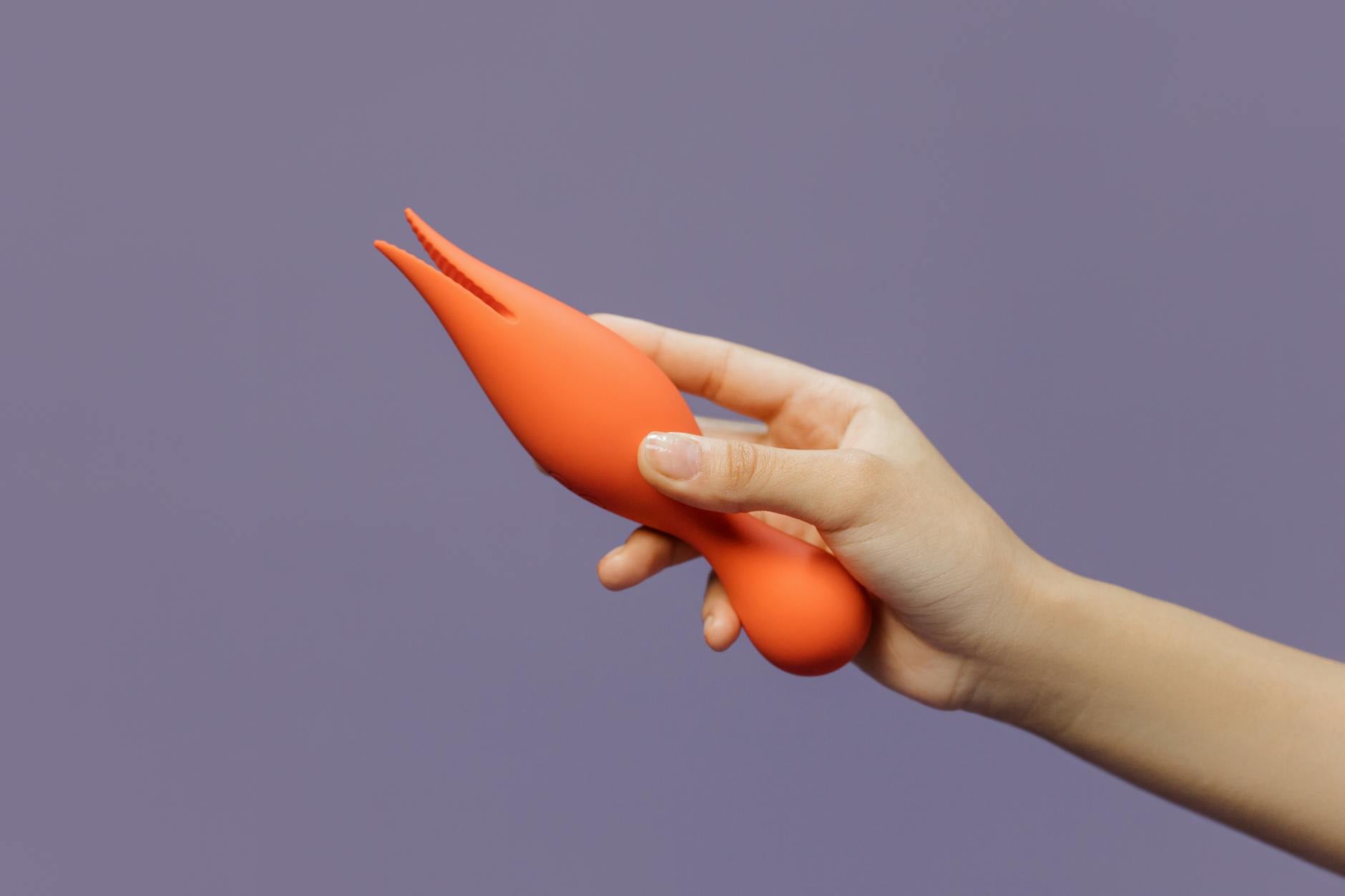
Let's start with what everyone gets wrong
Clitoral sensitivity doesn't decline with age. It changes. The two are wildly different things, and that distinction reshapes everything about how you experience pleasure across decades.
I've worked with hundreds of people navigating this shift, and the most common story I hear is the same: they assume their body is broken, when actually their body is just different. That assumption costs them years of pleasure they could have had.
Here's what's actually happening physiologically, and why a tool like a lemon clitoral vibrator can actually work better as time passes.
How clitoral sensitivity actually shifts
Your clitoris doesn't lose nerve endings as you age. What changes is how those nerves respond to stimulation. In your 20s and 30s, direct touch often feels amazing. By your 40s and beyond, that same direct pressure can feel sharp, too intense, or almost uncomfortable.
This happens for a few reasons. Collagen in the skin shifts. Blood flow patterns change. Estrogen fluctuations (whether from perimenopause, menopause, or just natural hormonal drift) alter tissue thickness and lubrication. Your nervous system also becomes more selective. What triggered instant arousal at 25 might need a different approach at 45.
Here's the thing though: that selectiveness is not a problem to solve. It's information. Your body is telling you what it actually wants now.
Why lemon vibrators hit different as you age
Traditional vibrators use direct vibration against tissue. That works beautifully when your clitoris is less sensitive. When sensitivity shifts, direct vibration can feel overwhelming or numb.
Lemon vibrators work differently. They use air-pulse suction technology. Instead of pushing vibration into tissue, they create a gentle rhythmic pressure that stimulates the entire clitoral complex, not just the external tip. This means:
You're not fighting sensitivity changes. You're working with them. The suction approach distributes pressure across a larger area, so no single spot gets overloaded. Many people find that their most intense, consistent orgasms come after 40, 50, even 60 because their body has learned what actually works.
I've had clients tell me that trying a lemon clitoral vibrator for the first time after decades of direct vibrators felt like discovering pleasure all over again.
The pattern of sensitivity shifts across the decades
In your 30s to early 40s, most people experience a subtle shift. Direct stimulation still works, but you might notice you need a bit more warm-up time. Some people find their orgasms are less frequent but more intense. This is often when people first notice direct vibrators feel different than they used to.
In your 40s to early 50s (the perimenopause window for many), sensitivity changes accelerate. Estrogen starts its decline, tissue becomes thinner, and the clitoris becomes more reactive to pressure. Direct vibration that felt nice at 35 might feel sharp at 48. This is when a tool designed for sensitive tissue starts making sense.
After 50, many people find a sweet spot. The adjustment period is over. Your nervous system has stabilized. You know exactly what you want and how you want it. Lemon adult toys designed for this phase of pleasure often become someone's favorite tool ever because they stop fighting their body and start working with it.
Why direct vibration becomes problematic
Direct vibrators press against the clitoris with constant rhythmic force. When tissue is thin and hypersensitive, that can feel like tapping a nerve with a hammer instead of stroking it.
Lemon vibrators use a different mechanism. The suction creates a pressure wave rather than a point of impact. It's the difference between someone poking you repeatedly and someone gently cupping their hand over an area and releasing pressure rhythmically. Both can feel good, but they work on totally different principles. As your body changes, the principle matters more.
Most people don't realize they've been fighting their own nervous system for years until they try a tool built for sensitive tissue. Suddenly arousal builds faster. Orgasms feel less like you're chasing a target and more like you're meeting your body where it actually is.
Adjusting your approach as things shift
Extend warm-up time. You likely already know this, but it matters. In your 20s, 10 minutes of warm-up might have been plenty. In your 40s and beyond, 15 to 25 minutes is more realistic. That's not a decline. That's just biology. Build it in.
Start at lower intensities. If you're used to setting a direct vibrator to high, try starting a lemon clitoral vibrator on settings 2 or 3. The suction pressure builds differently than vibration does. You can always turn it up. You can't un-overstimulate easily.
Explore different rhythms. Lemon vibrators often have multiple pulse patterns. As sensitivity changes, what feels good shifts too. Spend time with different settings. Your pleasure map is redrawn every decade or so, and that's worth exploring rather than resisting.
Use lubrication intentionally. This matters at any age, but especially as tissue thins. Water-based lube isn't about being "broken." It's about creating the conditions where pleasure feels best. Use it.
The mental piece matters as much as the physical
Here's what I see clinically: people aged 40 and up often carry this narrative that they're supposed to want less pleasure, need less time, be "over it." Then their body stops cooperating with that story, and they blame themselves instead of the story.
Your 40s, 50s, and 60s are not a downgrade in your sexual timeline. They're a plot twist. Different doesn't mean worse. Different often means better, more intentional, more honest about what actually feels good.
When you switch from tools designed for generic clitoral pleasure to ones designed for sensitive tissue, you're not admitting defeat. You're upgrading to precision equipment. A lemon vibrator isn't a consolation prize for aging. It's what happens when you stop accepting an average-fit tool and start using something engineered for your actual body.
When to experiment with a new approach
If direct vibrators have stopped feeling as good. If you've noticed numbness or overstimulation. If arousal is building slower. If you're having trouble reaching orgasm or your orgasms feel muted. If you've been reaching for the same tool for a decade and lately it doesn't quite land the same way.
Those are all signals that your body has changed, and you deserve a tool that matches where you are now.
A lemon clitoral vibrator is not a replacement for everything else you've tried. It's a different category of tool designed for the actual nervous system of someone in their 40s, 50s, 60s, and beyond. Try one without any expectation. Pay attention to what your body tells you.
Most people find that switching to air-pulse suction actually makes the rest of their pleasure life easier too. Your body relaxes into this tool because it's not fighting it. Arousal builds. Orgasms land. And suddenly you're not thinking about what's wrong. You're thinking about what's next.
FAQ: Clitoral sensitivity, aging, and lemon vibrators
Does clitoral sensitivity actually get worse, or does it just feel different?
It feels different, full stop. The nerves are still there. The nerve endings haven't diminished. What changes is how the surrounding tissue responds and how your nervous system interprets that response. Some people describe sensitivity as dull. Others describe it as sharper but requiring a different touch. Neither is worse. Both are your body giving you new information about what it needs.
At what age do most people notice sensitivity shifts?
It varies widely, but many people notice small changes in their late 30s and 40s. Perimenopause (which can start in the early 40s or even late 30s) speeds up the process. But some people don't feel a significant shift until their 50s. Hormones, stress, relationship changes, and overall health all play a role. There's no universal timeline.
Can I use the same vibrator forever, or do I actually need to switch tools?
You can use whatever tool works for you. But if what worked at 30 stopped working at 45, that's your body telling you something has changed. Many people find that updating their tools feels like an upgrade rather than a loss. A lemon clitoral vibrator is designed to work with aging bodies, which means it might feel better than your old standby does now.
Is decreased clitoral sensitivity the same as decreased desire?
No. They're completely separate. You can have wildly strong desire and shifting sensitivity. You can have low desire and unchanged sensitivity. Don't assume one predicts the other. If desire has dropped alongside sensitivity changes, that often points to hormonal or emotional factors worth exploring separately, maybe with a healthcare provider.
Do lemon vibrators work for people in their 20s and 30s?
Absolutely. Sensitivity varies within any age group. Some 25-year-olds find direct vibration too intense. Some 60-year-olds prefer it. The technology works for anyone with a clitoris, regardless of age. It's just especially well-suited for bodies experiencing the sensitivity shifts that age often brings.
Will switching to a lemon vibrator feel weird after using direct vibration for decades?
Usually, it feels surprisingly good pretty quickly. The sensation is gentler and more distributed, which many people find they've actually been wanting for years without realizing it. Give yourself three to five sessions before deciding. Your body learns new sensations. That learning is half the pleasure.
The bottom line
Your clitoris doesn't expire. It evolves. That evolution is worth paying attention to and working with rather than fighting. A lemon clitoral vibrator isn't a bandage for aging. It's recognition that your body is smarter than you are and has already figured out what it needs.
The best pleasure you'll ever have might still be ahead of you. It just might look different than it did before.
If you're curious about what lemon vibrators can offer, we're here to help answer questions. Reach out to the team at Hello Nancy if you want personalized guidance on finding the right tool for where you are now.
Related reading: Many people also find that understanding why lemon vibrators feel better as you get older and learning about best lemon vibrator settings for different arousal speeds deepens their approach to pleasure across decades.