
Here's what nobody tells you about clitoral sensitivity and aging
Your clitoris doesn't age the way your skin does. It doesn't lose elasticity or become a liability. What it does is shift. Around 35 to 40, the threshold for sensation changes. The clitoral glans loses some of its surface nerve density, not because something's wrong but because collagen turnover slows and tissue composition evolves. This is normal. It's also completely fixable.
The confusion happens because sensitivity change gets bundled with desire loss, vaginal dryness, and hormone stuff. It's not the same conversation. Your clitoris can feel fantastic in your 40s, 50s, and beyond. You just might need different tools and a different rhythm to get there. That's where lemon clitoral vibrators, and specifically air-suction stimulation, become genuinely useful.
What actually changes with your clitoris as you age
Let's break down the physiology without the clinical fog.
Your clitoris contains about 8,000 nerve endings packed into a structure the size of a pea. With age, those nerve endings don't disappear, but the epidermis (the top layer of skin) thickens slightly and the sensory receptors become less densely packed. This means direct, repetitive vibration sometimes feels less effective. It's not numb. It's just that the signal-to-noise ratio changes.
Blood flow also shifts. Arousal takes longer because the tissues need more time to engorge. Estrogen changes (whether from age, medication, or other factors) affect how much fluid is present on mucosal surfaces, which changes how stimulation translates into sensation.
Here's what doesn't change: the neural pathways for pleasure. Your brain still fires the same way. The clitoral bulbs still swell. Orgasm is still absolutely possible, often intensely so. You're not broken. The hardware is the same. The connection just needs different input.
Why lemon vibrators work differently after 35
Standard vibrators rely on mechanical oscillation. When sensitivity thresholds go up, traditional vibration sometimes feels buzzy rather than pleasurable. You have to crank the intensity, which can lead to fatigue or overstimulation.
Air-suction technology, like the Hello Nancy Lem, works on a completely different principle. Instead of vibrating against the clitoris, it creates a gentle seal and pulsing suction around it. This stimulates a much larger area of tissue at once and engages nerve bundles that deeper vibration misses.
For aging bodies, this matters. You're not trying to penetrate numb tissue. You're orchestrating nerve response across a broader surface. The sensation feels different because the mechanism is different. Most of my clients in their 40s and beyond report that suction-based lemon clitoral vibrators feel more satisfying than traditional vibrators they used in their 20s.
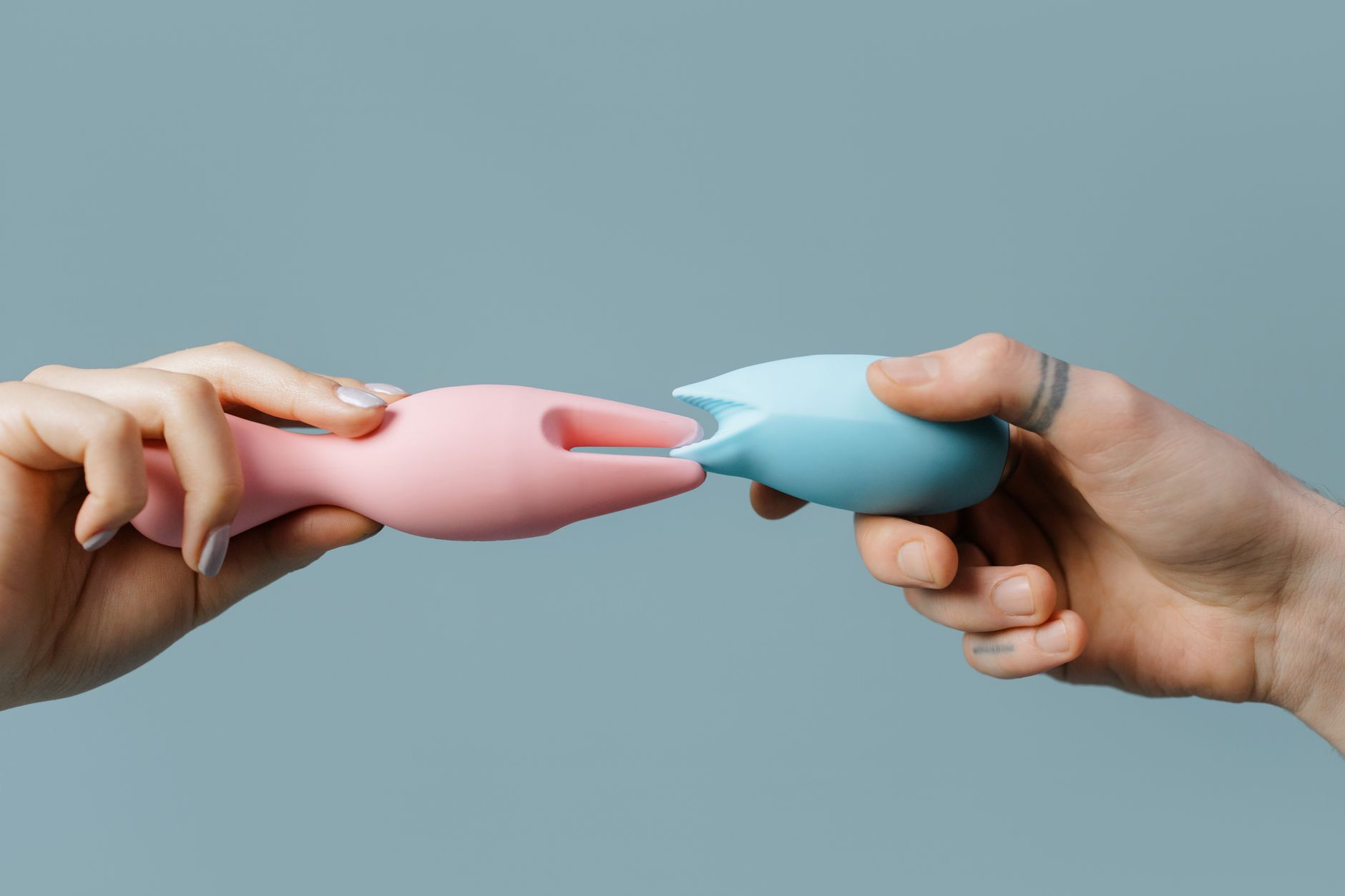
Photo by cottonbro studio on Pexels
The pattern adjustment that matters most
You'll often see advice to "start lower and build up." That's partially right but incomplete. With age and changing sensitivity, the real shift is from intensity to pattern variety.
Younger bodies often prefer sustained high intensity. Older bodies often prefer pattern complexity at lower or medium intensity. The Lem and similar lemon sucker toys typically offer 7-12 different pulse patterns. The specificity of pattern matters more than raw power now.
When you're exploring, spend time on pattern 3 or 4 rather than jumping to the highest settings. Let your body tell you which pattern creates the strongest response. It might not be the most intense. It might be a gentle, varied pulse that hits a specific nerve cluster.
Warm-up time extends, but not for the reason you think
Everyone says arousal takes longer after 40. That's true, but it's not because your body is lazy. It's because your nervous system is more complex. You've had decades of experience. You notice context more. Stress lands harder. A random thought about work genuinely interrupts the signal chain.
This means warm-up time isn't just about physical arousal. It's about clearing mental space. Budget 20-30 minutes before using any vibrator, including lemon clitoral vibrators. But spend the first 10 minutes on non-genital touch. Hands on your own body, a partner's hands, light stimulation everywhere except the clitoris. This primes the entire nervous system, not just the local tissue.
When you finally move to the Lem or another suction vibrator, you're not starting from zero. You're building on a foundation.
Lubrication changes and what actually helps
Tissue thinning and reduced natural lubrication are real. But they're also completely manageable. Here's the honest part: even when hormone levels are stable, direct clitoral stimulation with a toy creates heat and friction. Lube helps.
Use a water-based lubricant, applied generously around the clitoral area before you start. This isn't because your body is failing. It's because external lubrication improves sensation. It reduces friction that might feel sharp rather than pleasurable. It also makes the seal better on suction-based toys, which means more efficient stimulation.
Reapply if things start feeling dry. This isn't a sign something's wrong. It's basic maintenance.
The psychological piece that changes everything
Here's something I see in my practice constantly: pleasure confidence drops after 35, even when physical capacity doesn't. You've picked up messages about what's "normal" for your age. You've internalized that your body is supposed to become less responsive. You might have experienced a partner's frustration or your own shame about needing different touch.
This psychological framework is often more limiting than the physiology.
When you shift your understanding of what's happening (your clitoris is evolving, not declining; you're learning what works, not losing capacity), permission returns. And permission changes sensation. Your brain is your most important sex organ. If you believe your body is still capable of intense pleasure, the signals flow differently.
Using a lemon clitoral vibrator or other tool designed for your actual current physiology, not your imagined aging body, reinforces this. You're not accommodating loss. You're optimizing for who you are now.
Photo by cottonbro studio on Pexels
Cycling and partner communication
If you have a partner, this is a good time to name what's changing, not as a problem but as new information. "My body responds to a different rhythm now" opens a conversation. "I'm not as sensitive as I used to be" sounds like decline. It's not the same thing.
The lemon vibrator becomes a tool for everyone. A partner can learn which pattern your body prefers. They can watch what works. This is genuinely intimate information, and sharing it often deepens connection rather than threatening it.
For solo play, the benefit is simpler. You get to explore without performance pressure. You get to notice what your actual body wants, not what you think it should want.
When to check in with a provider
If sensation changes suddenly (not gradually over months but in weeks), or if touch becomes painful where it wasn't before, that's worth a conversation with a gynecologist. Sometimes rapid changes signal something like genitourinary syndrome of menopause (GSM), which is very treatable.
If you're on medications that affect sensation (certain antidepressants, blood pressure meds, some antihistamines), changes in clitoral response might be medication-related rather than age-related. That's a conversation worth having with whoever prescribed them.
But routine sensitivity shifts? That's not a medical problem. It's a normal evolution. Lemon sucker toys and adjusted technique are the fix, not medication.
FAQ: Your actual questions about aging and clitoral pleasure
How much does clitoral sensitivity actually decrease with age?
There's no single number, because every body is different. Studies suggest about 10-15% decrease in nerve density on the clitoral surface between 30 and 50, but that doesn't translate to 10-15% less pleasure. Sensation is complex. Psychological factors, arousal capacity, and pattern preference often matter more than raw nerve density. Many people report stronger orgasms after 40, even with measurable changes in baseline sensitivity.
Can I use the same vibrator I used at 25?
You can, but you probably won't want to. Direct vibration feels less effective when sensitivity thresholds rise. Some people keep their old vibrators and add new ones like lemon clitoral vibrators for variety. Others find switching completely gives them better sensation. There's no rule. Your body knows what it wants if you experiment without judgment.
Does hormonal birth control affect clitoral sensitivity the same way after 40 as it did at 25?
Not necessarily. Hormonal contraception affects everyone differently. After 40, if you're using it, the interaction with your natural hormone fluctuations might be less pronounced (especially if you're in perimenopause or menopause). But some people find sensitivity shifts more noticeably on hormonal birth control at any age. If you suspect your birth control is dulling sensation, talk to your provider about testing different formulations. The problem usually isn't the concept of hormonal birth control but finding the right type for your body right now.
Is it normal that I need more stimulation to orgasm after 35?
Completely normal. It's one of the most common changes people report. The shift usually isn't dramatic. You might go from needing 5 minutes to needing 8-10 minutes. Or the intensity needs to be slightly higher. Or the pattern needs to be more specific. None of these are problems. They're information about what your nervous system needs to trigger that response. That's exactly what lemon clitoral vibrators help with. They give you options for delivery that straight vibration doesn't.
Can pelvic floor strength affect clitoral sensitivity?
Yes. A very tight pelvic floor can reduce sensation because the muscles are in constant tension. They can't fully relax to receive stimulation. Conversely, a weak pelvic floor sometimes feels less responsive. The sweet spot is flexible strength. Pelvic floor physical therapy is worth considering if sensitivity is off and you've ruled out other factors. Many women find pelvic floor work changes their orgasm response more than any toy swap.
Is there anything that can improve clitoral sensitivity, or is it just what it is?
Multiple things help. Regular arousal and stimulation actually maintains and improves nerve response over time (use it or lose it, basically). Certain medications can dull sensation, so talking to your provider might help. Reducing stress and improving sleep both improve nervous system function, which affects sexual response. Adding a tool like a lemon sucker vibrator that works with your physiology rather than against it. And honestly, reframing your expectations. If you stop thinking of yourself as "less sensitive" and start thinking of yourself as "needing different input," the whole experience shifts.
Your pleasure is not a countdown
I talk to a lot of women who think the sexual peak happens at 25 and it's downhill from there. This narrative is useful to nobody. The research doesn't support it. My practice doesn't support it. The people I interview for Hello Nancy don't support it.
Your clitoris at 45 isn't a failed version of your clitoris at 25. It's a different instrument. It requires different technique. It might surprise you with what it's capable of. Most importantly, it's still absolutely yours. Investing in tools like lemon vibrators that match your current physiology isn't settling. It's meeting yourself where you actually are.