The problem that nobody names
Let's be real: foreplay disappears. Not always, not for everyone, but in enough relationships that I hear about it constantly. One partner gets aroused in 90 seconds. The other needs 15 minutes of actual touch and attention to feel anything. Guess whose timeline wins.
So you're lying there, getting touched for what feels like a commercial break, and then it's time to move forward. Your body hasn't caught up. Your arousal is maybe at a 4 out of 10. You go along with it anyway because the rhythm is set, the mood is "ready," and mentioning it would kill the flow.
That kills more than the flow. It kills your capacity to feel good. Do this enough times and your body learns: foreplay doesn't matter because it won't last long enough anyway.
Why this pattern starts
It's not usually malice. Most of the time it's simple biology meets cultural conditioning. Penetrative sex feels good faster for some bodies. Once that pleasure is available, the impulse is to reach for it. From their perspective, you're right there, you're available, so they move forward.
Meanwhile, you're still in the warm-up phase. Clitoral arousal doesn't build as quickly or as automatically. It needs focus, repetition, sometimes a specific type of touch. When that gets skipped, your body doesn't catch up. You end up pushing through sex that doesn't feel like much of anything.
Over time, this trains a weird dynamic. You stop expecting foreplay. Your partner stops offering it because they're not getting signals that you need it. The conversation about "we need more time" never happens because it would require admitting something's wrong, and admitting that feels vulnerable on both sides.
How a clitoral vibrator resets this
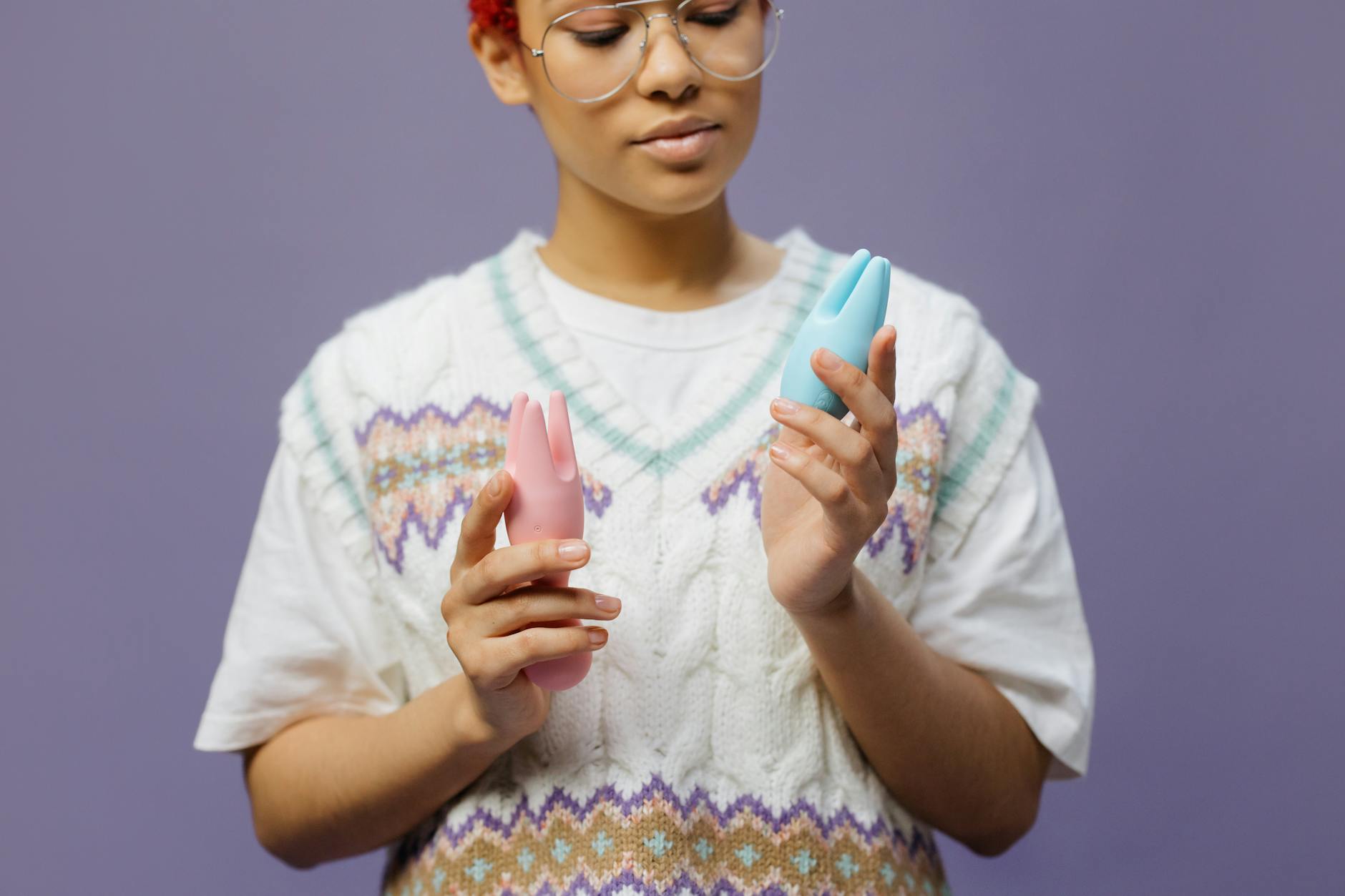
Here's the leverage move: a lemon vibrator like the Lem gives you a tool that works in minutes, not 20 minutes. That changes the equation entirely.
You can use it solo before sex starts, bringing yourself to arousal before your partner is even fully engaged. Then you arrive to shared touch already warm, already responsive. Your body's not playing catch-up anymore.
Or you can use it during foreplay, making it clear that this is part of the process, not a shortcut around it. This does two things at once: you get the stimulation you actually need, and your partner sees visually and physically that you require this kind of attention. It's impossible to rush past.
The third option, which takes real confidence but works best: you use it as part of partnered sex itself. It's not a replacement for touch. It's an addition. Your partner's doing one thing. The Lem's doing another. Your arousal responds to the combination, and suddenly you're both getting what you need from the experience.
The conversation this opens up
Introducing a lemon clitoral vibrator into foreplay is not a subtle thing, and that's actually the point. Your partner will notice. They'll ask questions or they won't, but they'll understand that foreplay matters enough to you that you've decided to take it seriously.
That's permission for a conversation. "I need more time to warm up. This helps me get there without it taking forever. Can we try it together?" That's not criticism. That's logistics.
If your partner resists, that's a different conversation entirely, and it's probably the one you actually need to have. Because resistance to your pleasure usually isn't about the toy. It's about something else, and the toy is just where the friction shows up. That might be worth exploring with a couples therapist.
But most partners, once they understand that you're more responsive and more present with a bit of extra help, get it. They want you to feel good. They just didn't realize how much you weren't, because you weren't saying anything.
Practical ways to use the Lem
Start with solo time. Get familiar with what patterns feel best, what intensity level gets you to arousal, how long it actually takes. That's valuable data for your own pleasure, and it also takes the pressure off your partner to figure you out.
Then bring it into foreplay gradually. Use it while they're kissing you or touching you elsewhere. This isn't about replacing their touch. It's about stacking sensations. Your brain gets input from multiple places at once, which actually accelerates arousal in most bodies.
If penetrative sex is the goal, you can use the Lem right up until it's time to switch. You're already warm, already responsive, already in your body. Then the experience is different because you're not starting from a cold start.
The Lem works particularly well for this because it's designed for external clitoral stimulation without requiring pressure or friction in a specific direction. You can position it however feels best and adjust while your partner does other things. It's not a workflow interruption. It's an addition that makes the whole thing work better.
When this is about more than foreplay
Sometimes a rushed foreplay pattern is actually a symptom of a bigger intimacy gap. One partner wants sex more frequently or more urgently. The other is touched out, tired, or just moving slower. The foreplay gets compressed because one person's trying to close the distance as fast as possible.
If that's happening in your relationship, a vibrator helps but it's not the full fix. How Lemon Vibrators Help When Sex Feels One-Sided covers that terrain more directly. You might also benefit from a conversation about what "sex" actually means to each of you.
For some people, it means penetration and nothing else. For others, it means any intimate physical touch. For others, it means arousal and pleasure, regardless of what form that takes. When those definitions don't match, foreplay gets a lot shorter, because one person's definition of sex is already happening.
The permission piece
Here's the thing that nobody says explicitly but matters a lot: using a vibrator during partnered sex is not you admitting that your partner isn't enough. It's you saying that your pleasure matters too, and you're not willing to sacrifice it for convenience anymore.
That's not selfish. That's actually what a healthy sexual relationship looks like. Both people getting what they need. Both people showing up willing to adjust and add and adapt instead of just going through a motion that works for one person.
A lemon clitoral vibrator makes that possible in a really concrete way. It's hard to ignore. It's hard to rush past. It makes your need for arousal time totally visible. And once it's visible, you can't unknow it.
That's worth a lot.
FAQ: Foreplay, vibrators, and getting what you need
How do I bring up using a vibrator without making my partner feel inadequate?
Don't lead with "you don't turn me on." Lead with "I need more time and this helps." Huge difference. One's a criticism. The other's a logistics statement. You might say something like: "I've realized I warm up slower than you do. I want to enjoy sex more, so I got a vibrator to help with that. Want to try it together?" Frames it as you solving a problem about your own body, not about their performance.
Can I use a lemon vibrator if we're trying to have more intimacy, not less?
Completely. If your partner feels like foreplay is getting rushed, introducing a vibrator can actually create more intimacy, not less. It gives you a shared project. You're working together to figure out what feels good instead of one person just doing the same thing they've always done and hoping it lands. That's deeper, not shallower.
What if my partner wants to skip foreplay entirely and just use the vibrator to get me ready?
That's still not foreplay. That's using a tool to speed up a problem that actually needs conversation. The vibrator is meant to enhance what's already there, not replace the physical presence and attention. If your partner wants to avoid touch entirely, that's a separate issue worth exploring. Maybe they're tired, maybe there's a deeper disconnection, maybe they just need a different conversation about what sex means to both of you.
How long does it actually take to get aroused with a lemon clitoral vibrator?
Depends on you. Some people get to decent arousal in 3-5 minutes. Others need 10-15. That's still faster than most hands-on foreplay, but the point isn't to rush. It's to take the amount of time you actually need without apologizing for it. Your partner can be present during that time, touching you elsewhere, kissing you, talking to you. The vibrator's doing one job. They can do others.
What if I feel self-conscious using a vibrator with my partner watching?
That's normal. Most people feel a little exposed the first time. Two things help: first, remember that your partner presumably wants you to feel good. Wanting to watch you get pleasure isn't creepy. It's actually a good sign. Second, you don't have to make it a big production. It's just a tool. Use it like you'd use lube or any other thing that helps your body work better. Normalize it by treating it normally.
Can a lemon vibrator actually make foreplay feel less one-sided?
Yes, because it makes it impossible to ignore that your arousal matters. Before, you could silently not be aroused and nobody had to address it. Now there's a tool on the table saying "this person's pleasure is part of this equation." That changes how your partner thinks about foreplay. It's harder to rush past something you can literally see and hear happening.
What comes next
Foreplay that gets skipped is foreplay that never had a chance to become part of your relationship's sexual rhythm. Introducing a lemon clitoral vibrator isn't about fixing your partner or criticizing them. It's about making your own pleasure impossible to ignore.
Once you do that, the conversation gets easier. Once the conversation happens, you can actually figure out what works for both of you together. And when both of you are getting what you need, sex stops feeling like someone's compromise and starts feeling like something you both actually want.
That's the point. Not the vibrator. The vibrator's just the tool that makes the point visible.
If this resonates and you want to explore more about how to rebuild pleasure in a relationship where something's been missing, reach out. Couples work is my specialty, and these patterns are more fixable than they feel right now.