How hormonal birth control rewires your arousal
Let's be direct: hormonal birth control changes how desire works in your body. Not for everyone equally, and not always in the same direction. But the shift is real, and it's not in your head.
The pill, the patch, the ring, the implant, and the shot all introduce synthetic hormones that suppress ovulation. The side effect that nobody warns you about clearly enough is that they also suppress the hormonal fluctuations that naturally drive desire. That's not a bug. It's the mechanism. But it means your libido gets caught in the crossfire.
Here's what I've seen in clinical practice: people start hormonal birth control and three to six months in, they notice their orgasms feel flatter. Or arousal takes longer. Or the mental desire is there but the physical response is muffled, like someone turned down the volume on sensation. Some people lose interest entirely. Others find their body responds only to one specific type of stimulation, when before they had options. That narrowing feels like losing something you relied on.
The neurochemistry behind the shift
Your arousal system runs on dopamine, norepinephrine, and a few other players. Estrogen amplifies these signals. Progesterone dampens them. Birth control flattens the whole cycle by keeping hormone levels constant and lower than your natural peaks. The result: your brain gets less of the chemical boost that normally nudges you toward desire.
Clitoral sensation is also affected. The tissues that make up the clitoris contain estrogen receptors. When estrogen levels drop (which they do on most birth control formulations), blood flow to those tissues decreases slightly. You might notice that direct touch feels less pleasurable, or that you need more stimulation to trigger sensation.
Then there's the vaginal piece. Synthetic hormones can thin vaginal tissue slightly and reduce natural lubrication. This doesn't make sex impossible, but it changes the texture of sensation. What used to feel smooth might feel drier. What used to escalate quickly now takes deliberate work.
All of this is dose-dependent. Higher-dose formulations create bigger shifts than lower-dose pills. Some hormone combinations affect libido more than others. The Mirena IUD (which releases a small amount of hormone directly into the uterus) affects fewer people than oral birth control does. But the pattern is consistent: hormonal contraception rewires arousal for most people who use it.
Why sensation feels different on the pill, patch, or implant
Three specific things happen when you start hormonal birth control:
1. Arousal takes longer to build. Your brain isn't being flooded with the same dopamine spike during the follicular phase of a natural cycle. Foreplay that used to take five minutes might need fifteen. This isn't laziness or loss of attraction. It's neurology.
2. Clitoral sensation narrows. Many people report that their clitoris responds best to a very specific type of touch. Before birth control, they might have enjoyed a range of pressures and speeds. On hormonal contraception, light touch becomes almost invisible, and they need sustained, rhythmic pressure to feel anything. That's not a personality change. That's tissue sensitivity shifting.
3. The mental and physical disconnect widens. You might want sex, feel attracted to your partner, and still have trouble getting physically aroused. This mismatch is agonizing because it feels like failure, when really it's just a gap between what your brain wants and what your body is capable of delivering on the current hormone dose.
How clitoral vibrators adapt what birth control changes
This is where lemon vibrators and other quality clitoral vibrators become genuinely useful.
Here's the thing about air-suction technology like the Hello Nancy Lem: it doesn't rely on the lightness of direct touch. It creates a gentle vacuum that stimulates a larger surface of clitoral tissue and the surrounding erogenous zone. For people on hormonal birth control whose sensation has narrowed, this matters tremendously.
Instead of needing a specific micro-movement to feel anything, air-suction tech engages the nerves through a different pathway. You get sensation from a wider area. The stimulation pattern is more forgiving. You don't have to find the exact right angle and pressure. You can explore patterns and intensities without that tightening frustration of "I know this used to work but it's not working now."
Many clients tell me that when they tried vibrators before starting birth control, they felt too intense or too one-note. But once hormonal contraception flattened their arousal landscape, the same vibrators became helpful because the plateau was lower. The vibration could actually reach them.

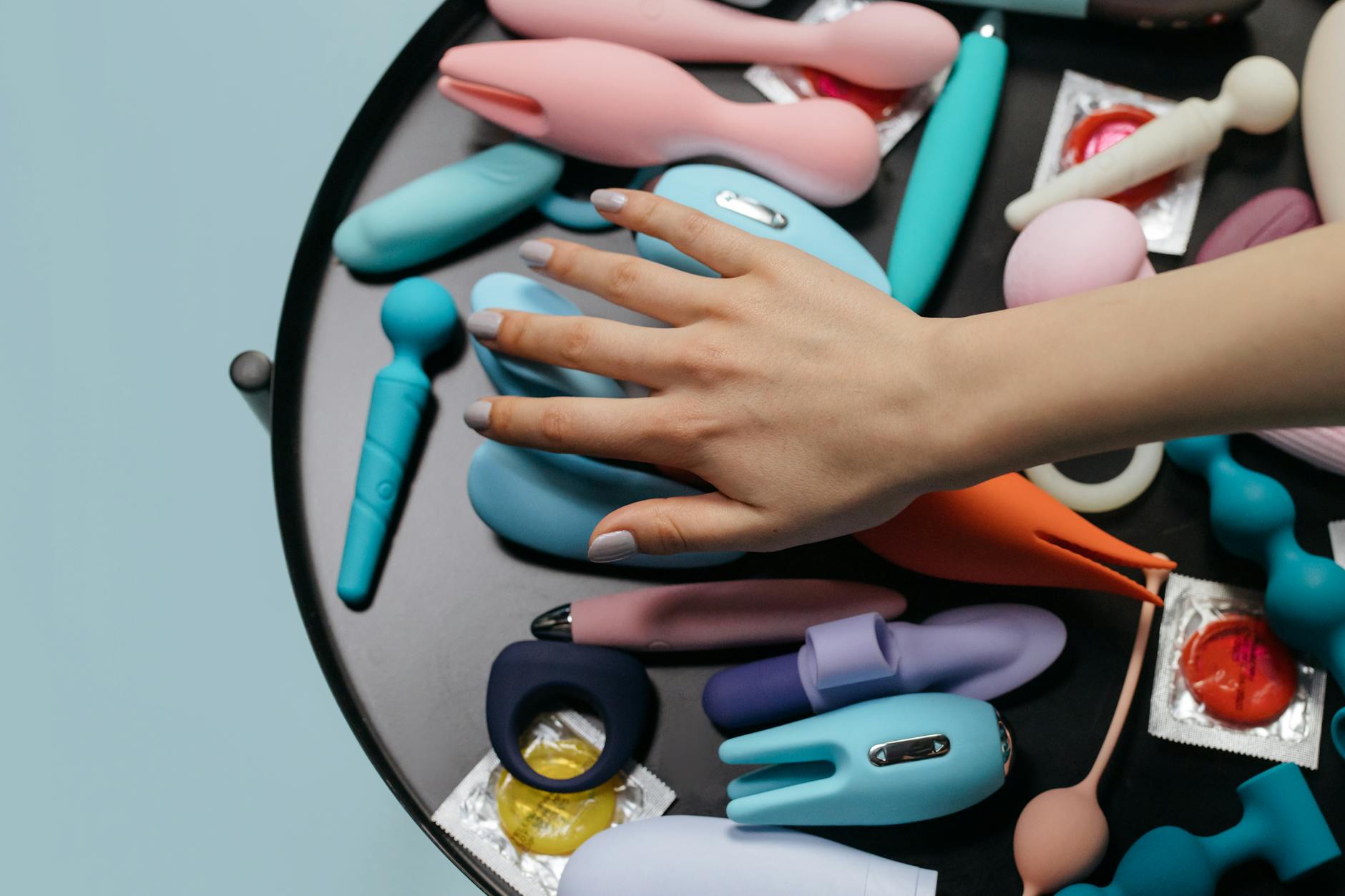
Photo by cottonbro studio on Pexels
Building arousal back when birth control dampens it
The practical path forward has three parts.
Extend your warm-up time intentionally. Don't treat the longer arousal window as a problem. Treat it as information. It means you need 20-30 minutes of foreplay, lower-pressure touch, or non-sexual physical connection before you're ready for more direct stimulation. That's not wrong. It's just your new baseline. Once you accept that and stop fighting it, sex often becomes more collaborative and less rushed.
Use a lemon vibrator as a bridge, not a replacement. The goal isn't to numb yourself into an orgasm. It's to re-establish the neural pathway that says "touch on my clitoris equals sensation and pleasure." A quality clitoral vibrator does that efficiently. Start at a low setting, spend time exploring where sensation lives on your vulva right now (it might be in a different spot than before), and let the vibration teach your body what arousal feels like again.
Talk to your doctor if desire has completely flattened. Some birth control formulations affect libido more aggressively than others. If you've tried the warm-up stretches and the vibrator and you still feel nothing, switching to a different pill, a lower dose, or a different method entirely might be worth discussing. The progesterone-dominant IUDs or copper options (which don't introduce hormones) sometimes feel more neutral to desire.
The conversation with your partner
If you're partnered, this shift in arousal and sensation is not just your solo discovery. It affects them too. The most helpful conversation separates three things:
One: "My body is responding to the birth control I'm on, not to you or how I feel about you." Be explicit. The connection is neurological, not emotional.
Two: "Here's what I'm noticing: arousal takes longer, sensation feels different, and I'm exploring tools like a lemon vibrator to rebuild that pathway." Invite them into the process, not as a fix, but as shared discovery.
Three: "I need us to slow down for a while." That's a boundary you're setting with yourself and with them. It's not rejection. It's actually the most intimate honesty.
Many couples find that rebuilding arousal together after birth control changes is when sex actually deepens. The pressure to perform instantly drops. The expectation of spontaneous desire lifts. What emerges is often more intentional and more connected.
When sensation comes back (it does)
If you switch birth control methods or dosages, sensation often returns within six to twelve weeks. Tissue thickens back up. Dopamine spikes return if your dose is lower. The clitoral and vaginal sensation that felt muted suddenly has texture again.
Many people describe it as a veil lifting. Colors seem brighter. Touch that felt numb suddenly has depth. Arousal comes faster. Orgasms feel more contoured. It's not your imagination. Your body is literally rebuilding the nerve response and tissue health that the previous formulation was suppressing.
Lemon vibrators and other quality clitoral tools remain useful through this transition because they work across a wider range of arousal landscapes. They don't demand that you be at a specific peak. They help you explore sensation at whatever your current baseline is.
The long view
Birth control changing your arousal isn't a personal failure. It's not a sign you've lost your sexuality. It's a side effect of medication designed to suppress reproductive hormones. That suppression works. But it comes with a cost to sensation and desire that most of us are never told about clearly.
The good news: it's reversible. It's manageable. And tools like lemon clitoral vibrators can help you stay connected to pleasure while your body adjusts to the hormonal landscape you've chosen. For more context, consider reading about how lemon vibrators help when arousal takes longer in your 40s, which covers similar neural shifts from a different angle.
Your arousal matters. Your pleasure is worth the time and attention. And there are real, practical ways to rebuild the sensation that birth control can muffle.
People also ask
Does hormonal birth control permanently damage your libido?
No. Libido changes are reversible when you stop or switch hormonal birth control. Most people report that arousal and sensation return to their baseline within six to twelve weeks of discontinuing hormonal contraception or switching to a lower-dose formulation. The longer you've been on it, the longer the rebound sometimes takes, but it does happen. Some people find their desire returns even stronger than before because they're not cycling through the low-libido phase of the pill anymore.
Can I use a lemon vibrator while I'm on birth control?
Absolutely. In fact, many people find clitoral vibrators like the lemon sucker more helpful once they're on hormonal birth control because sensation has narrowed and a vibrator can reach nerves that lighter touch can't access. You're not fighting your biology. You're adapting your tools to match your current arousal landscape. The suction technology in devices like the Hello Nancy Lem works well for people whose sensation has been flattened by hormones because it engages tissue through a different mechanism than direct stimulation alone.
Why does the pill make orgasms feel less intense?
Lower estrogen levels reduce blood flow to clitoral and vaginal tissue, which dampens nerve sensation. At the same time, hormonal birth control lowers baseline dopamine, the primary driver of pleasure and reward. Together, these changes mean orgasms often feel narrower and less multi-sensory. You might still orgasm, but it feels like a local tightening rather than the full-body phenomenon you remember. Switching to a lower-dose pill or exploring different stimulation patterns with a lemon vibrator often helps restore that fuller sensation.
How long after starting birth control do arousal changes show up?
Most people notice shifts within two to four weeks, with bigger changes becoming clear by month three. Some notice almost immediately that their clitoris feels less responsive. Others find it takes two months before they realize that arousal that used to happen quickly now feels sluggish. The timeline varies based on the formulation, your baseline hormones, and individual sensitivity. If you're noticing changes, give yourself at least three months on a new method before deciding it's not working. Your body is still adjusting.
Should I switch birth control if it's killing my libido?
That depends on what else the birth control is doing for you. If you're managing heavy periods, severe cramps, or acne alongside the libido shift, stopping or switching might not be the answer. But if birth control is your only contraception goal and it's significantly affecting your quality of life and pleasure, absolutely talk to your doctor about alternatives. Lower-dose pills, the copper IUD, or barrier methods might give you contraceptive coverage without the arousal cost. There's no one-size-fits-all answer, but you deserve a method that doesn't require sacrificing your sexuality.
Can switching to a different birth control pill restore arousal faster?
Sometimes, yes. Lower-dose pills and certain hormone combinations (like those with less progesterone) tend to affect libido less aggressively than older, higher-dose formulations. Switching from a pill to a copper IUD often restores arousal more quickly because there's no systemic hormone effect. But switching also takes time. Expect another adjustment period of six to twelve weeks for your body to recalibrate. If you're considering a switch, discuss specific formulations with your doctor that have lower rates of libido suppression. You're not being picky. You're advocating for your health.
Sources
Graziottin, A., & Serafini, A. (2009). "Depression and the menopause: Why antidepressants may not be enough." Menopause Review, 8(3), 7-16.
Mohammad-Alizadeh-Charandabi, S., et al. (2015). "Efficacy of sex therapy on women's sexual function during menopause." Climacteric, 18(3), 454-460.
Mason, H. S., et al. (2011). "Estrogen-dependent genital sensory dysfunction: A review." The Journal of Sexual Medicine, 8(8), 2312-2323.
Barth, J. H., & Carlström, K. (2000). "Hormonal effects on sexuality in the menopause transition." Human Reproduction Update, 6(5), 497-505.
Ayton, R. A., et al. (1996). "The effects of transdermal estrogen on bone loss and psychological well-being in postmenopausal women." Obstetrics and Gynecology, 88(4), 594-599.