Let's start with the hardest part
Trauma doesn't just affect your mind. It rewires your nervous system to treat touch as a threat, even when you logically know it's safe. That hypervigilance is not a personal failing. It's a survival response that once protected you and now stands between you and pleasure.
Rebuild takes time. It also takes control. And that's where solo exploration with the right tools becomes healing work.
How trauma changes your nervous system's response to touch
When your body has experienced violation, your nervous system learns to tense before touch even happens. The amygdala, your threat-detection center, starts firing at the first sign of physical contact. Your muscles contract. Your breath shortens. Pleasure becomes impossible because your body is in a constant state of readiness against danger.
This is not weakness. This is your system doing exactly what it was designed to do after harm.
But here's the clinical truth: the nervous system can be retrained. Neuroscientists call this "polyvagal regulation." What that means in plain language is that your vagus nerve (the longest nerve in your body, running from your brain to your pelvis) can learn new patterns. It can learn that sensation is safe again.
The key is agency. When you control the pace, the pressure, and the intensity of touch, you send your nervous system a very specific message: "This is not happening to me. This is happening with me, by me, for me."
Why solo play with a lemon vibrator is different from partnered touch
Three reasons:
1. You control everything. There's no partner watching for signs you're enjoying it. No pressure to perform. No fear that if you freeze or tense up, someone will take it personally. You can pause mid-sensation, sit with it, breathe, and continue when you're ready. That control is not selfish. It's necessary.
2. There's no emotional labor. Recovery from trauma often means managing your partner's feelings about your trauma. "I didn't realize this hurt you." "I want to help." Those feelings are valid, but they're not your job to process during your own healing. Solo exploration removes that layer entirely.
3. Sensation is predictable. A lemon clitoral vibrator follows a pattern you set. It doesn't escalate unexpectedly. It doesn't make demands. It doesn't finish before you're ready. That predictability is grounding.
How the lemon's design helps specifically
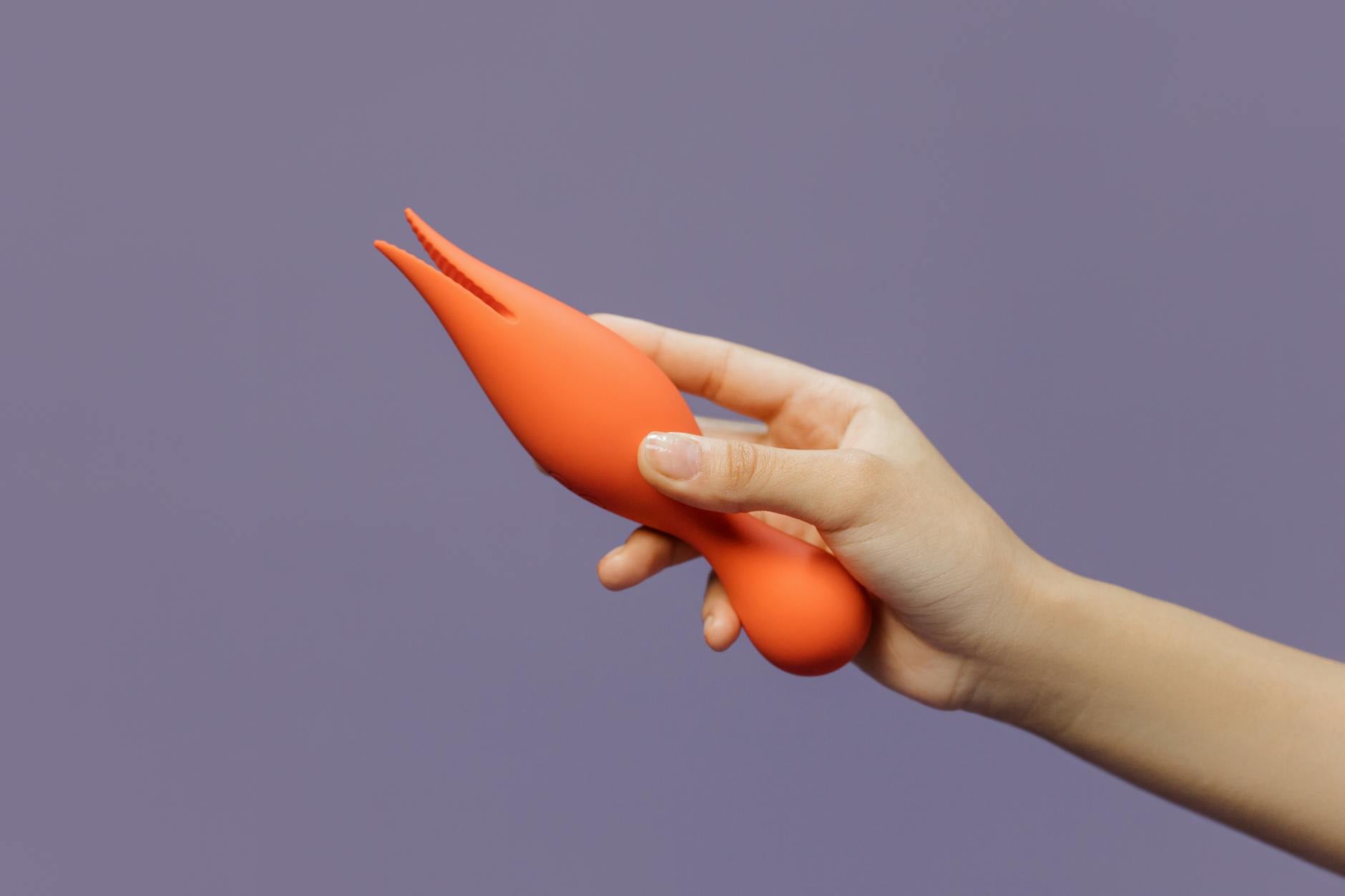
Lemon vibrators work through gentle suction rather than direct friction. That matters for trauma recovery because suction-based stimulation is fundamentally different from pressure or penetration. It's softer. It doesn't trigger the same defensive response in your pelvic floor that direct contact might.
The gentle pulse of a lemon vibrator can help your nervous system practice the experience of pleasure without overwhelming it. You can start at the lowest setting, spend 20 minutes just noticing sensation without needing to reach an orgasm, and build from there.
Many of my clients who have experienced sexual trauma report that the Lem's air-suction design feels less invasive than other lemon vibrators or toys. The sensation is external and diffuse, not concentrated pressure at a single point. For a nervous system learning to trust touch again, that difference is significant.
The protocol that actually works
If you're starting from a place of deep touch-aversion, here's what the research and clinical experience suggests.
Week 1-2: Exploration without expectation. Hold the lemon vibrator. Look at it. Turn it on away from your body. Notice what that sound triggers in you. Your job is not to feel pleasure yet. Your job is to let your nervous system know that this object is not a threat. No time pressure. If you only hold it for 30 seconds, that's a win.
Week 3-4: Skin contact with low intensity. Turn the Lem on to pattern 1 or 2 and place it against your skin, somewhere other than the vulva first. Your inner thigh. Your hip bone. Your lower belly. Notice what you feel. Does the vibration remind you of something? Does it feel okay? Pause whenever you need to. There is no finish line.
Week 5+: Clitoral touch at your pace. Once your nervous system has practiced with external sensation, you might try the gentlest setting directly on the clitoris. Some people find that even this feels like too much. If that's you, go back to week 3. There's no timeline.
The whole process might take months. That's not slow. That's exactly how nervous system recovery works.
What feelings might come up (and why that's normal)
When you start to experience pleasure again after trauma, your brain might feel confused. Pleasure means vulnerability. Your nervous system learned that vulnerability meant pain. So when sensation starts to feel good, you might experience unexpected grief, anger, or dissociation.
You might also experience what's called "somatic flashback." Your body might suddenly feel like it's in the traumatic moment, even though your mind knows you're safe. If this happens, stop immediately. Ground yourself. Touch your feet on the floor. Name five things you can see. Remind your body that it's 2026, you're alone, and you're safe.
A good trauma-informed therapist can help you understand these responses as they happen. Solo exploration with a lemon vibrator is healing work, not replacement work. Consider both.
When partnered pleasure feels possible again
For some people, solo healing with a lemon clitoral vibrator eventually opens the door to partnered pleasure. For others, solo pleasure becomes the primary form of sexual expression. Both are okay.
If you do eventually want to bring a partner into this, the rules are:
Your partner doesn't touch you until you ask them to. They don't initiate. They don't suggest. They respond to your pace entirely. And you get to say "no" at any moment without explanation. If your partner struggles with that level of constraint, you now have clarity about whether this relationship can hold your healing.
The nervous system needs proof
Trauma recovery is not linear. You'll have days where touch feels easier, and days where the thought of it makes your skin crawl. That's not backsliding. That's your nervous system still learning that safety is real.
Each time you engage in solo exploration with a lemon vibrator and nothing bad happens, your nervous system collects evidence. Evidence that sensation can be safe. Evidence that your body belongs to you. Evidence that pleasure is not the same as vulnerability to harm.
That evidence rebuilds slowly. But it rebuilds.
People also ask
Is it normal to feel nothing when using a lemon vibrator after trauma?
Yes. Numbness is a common trauma response. Your nervous system dissociates from sensation as a protection mechanism. If you feel nothing, that doesn't mean the lemon vibrator won't work for you eventually. It means your system needs more time, and possibly professional support, to begin feeling again. Work with a trauma-informed therapist and adjust your timeline accordingly.
Can I use a lemon clitoral vibrator if I've been sexually assaulted?
Yes, but with care and ideally with a therapist's support. Sexual assault is trauma, and trauma changes how your nervous system responds to all touch, including self-touch. A lemon vibrator can be part of reclamation, but the pace matters enormously. Start slow, expect emotions, and consider professional guidance as part of your healing plan.
What if my partner wants to use a lemon vibrator with me and I'm not ready?
Your readiness timeline is yours alone. Say no. If your partner pressures you or makes you feel guilty for healing at your own pace, that's a sign that they're not equipped to support you through this. Your nervous system's safety is not negotiable.
Does using a lemon vibrator solo mean I can't have partnered sex again?
No. Solo exploration is a step in nervous system retraining. For some people, it's the whole journey. For others, it's a bridge to partnered intimacy. Neither outcome is better. Both are healing.
How long before trauma-related touch-aversion gets better?
There's no standard timeline. Some people notice shifts in weeks. Others need months or years. Nervous system healing is not linear. You might have weeks where touch feels possible, then weeks where it feels threatening again. That's not failure. That's the nervous system slowly rebuilding trust.
What if I start using a lemon vibrator and have a flashback?
Stop immediately. Ground yourself with the 5-4-3-2-1 technique: name five things you see, four you can touch, three you hear, two you smell, one you taste. This brings your nervous system back to the present moment. After a flashback, rest. Don't push yourself back into exploration that day. Your nervous system needs recovery time, just like a muscle after exertion.
Moving forward at your own pace
Recovery from trauma is not about forcing yourself to feel pleasure again. It's about slowly, carefully teaching your nervous system that sensation can be safe. That your body can belong to you. That pleasure is possible without exploitation.
A lemon vibrator can be part of that teaching. But only if you use it on your own terms, at your own pace, with zero pressure to perform or achieve.
Your healing timeline is not too slow. Your caution is not excessive. Your body's protection mechanisms are not the enemy. They kept you alive.
Now they can learn something new.