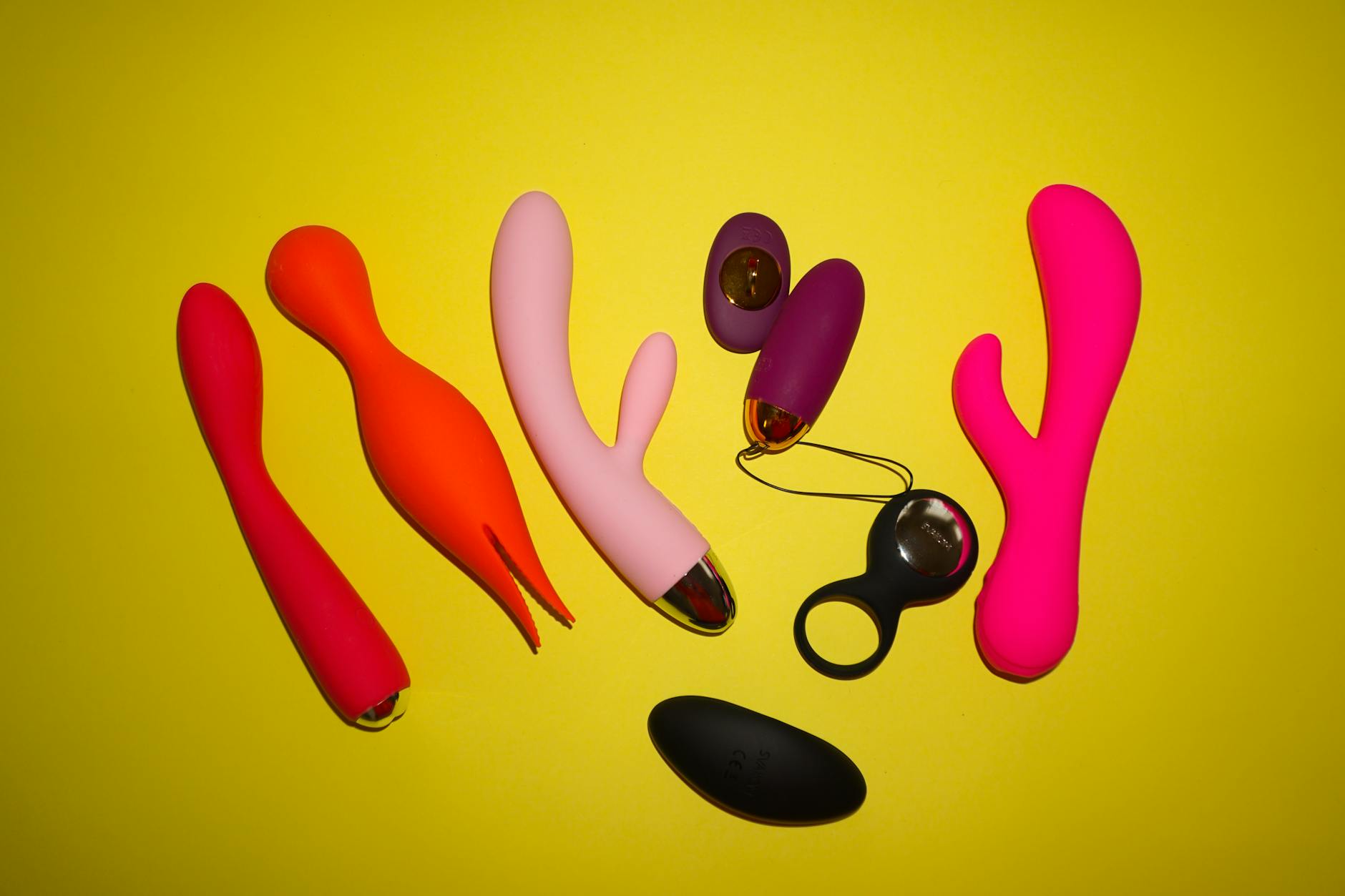
How to Use Lemon Vibrators When Antidepressants Affect Your Arousal
SSRIs and other antidepressants can numb arousal and delay orgasm. A therapist's guide to working with your body, adjusting technique, and reclaiming pleasure without ditching your meds.
Your antidepressant is saving your life. Your orgasm may have filed a missing person report in the process. That's not a side effect you're supposed to just live with, and it's not a sign you should quit the medication either. It's a signal that your approach to pleasure needs recalibrating.
Here's what actually happens when SSRIs and other serotonergic antidepressants hit your system, why your body responds differently to touch, and how tools like lemon clitoral vibrators can bridge that gap.
Selective serotonin reuptake inhibitors work by keeping serotonin circulating longer in your brain. That's what lifts your mood and steadies your anxiety. But serotonin also modulates dopamine, which is your brain's accelerator for desire and reward. When serotonin levels stabilize, dopamine can flatten, which means arousal doesn't ramp up the way it used to.
Additionally, SSRIs can dampen the parasympathetic nervous system response, which is what lets your body relax into pleasure. You might notice your clitoris feels less sensitive, or that it takes much longer to feel anything at all. Some people describe it as touching yourself through a glove. Orgasms, when they come, might feel muted or take 45 minutes instead of 15.
This is not your imagination. Studies show that 40-60% of people on SSRIs experience some form of sexual side effect, with delayed or absent orgasm being the most common. The good news is that your nervous system isn't broken. It's recalibrated, which means you can work with it.
The suction-based technology in lemon clitoral vibrators creates a distinctive pattern of stimulation that bypasses some of the sensation-dampening effects of antidepressants. Instead of relying on the fine-tuned nerve sensitivity that serotonin reuptake inhibitors tend to blunt, suction stimulation engages a broader area of nerve endings at once, creating what feels like a more intense, consolidated signal to the brain.
Think of it this way. Traditional vibration is like tapping on a door. Suction is more like someone pressing their hand firmly against it. When your nerve endings are partially asleep, the second approach reaches through the fog more reliably.
Most people on antidepressants report that lemon sexual toys feel more effective than their pre-medication toys ever did. This isn't because the toy is magically better. It's because the pattern of stimulation actually matches what your altered nervous system needs to feel something.
If you already own a lemon vibrator, you might be using it the way you would have before medication. That approach often fails, which is why people assume the medication has permanently killed their pleasure. It hasn't. Your setup just needs adjusting.
Start lower and slower. Begin at pattern one or two, not three or four. Your nervous system is overstimulated by medication in some ways and understimulated in others. A gentler opening gives your body permission to wake up without shock.
Budget time differently. Expecting orgasm in 10 minutes is setting yourself up for frustration. Plan 30-45 minutes. This is not a failure. This is your new normal, and accepting that removes the pressure that actively prevents arousal.
Use lube. Even if you didn't before. Antidepressants often reduce natural lubrication, and the combination of reduced wetness plus reduced sensitivity makes friction feel uncomfortable rather than good. A water-based lube gives your tissues the glide they need to actually enjoy the sensation.
Build a ritual around it. Arousal on antidepressants is fragile. A single intrusive thought can pop the bubble. Create conditions that protect your mental space. That might mean headphones, a locked door, phone in another room, or 10 minutes of breathing work beforehand. The medication has already taxed your ability to drop into pleasure. Don't add logistical stress on top.
Some antidepressants are harder on sexual function than others. Sertraline and paroxetine tend to blunt arousal more than escitalopram or bupropion. If your current medication is crushing your pleasure and you've been on it for at least 8-12 weeks, a conversation with your prescriber is worth having.
You might be able to lower the dose slightly without losing mood stability. You might add a medication that counteracts sexual side effects. You might switch to a different SSRI or class of antidepressant altogether. These are legitimate medical options, and they're worth exploring if pleasure matters to your wellbeing, which it does.
The conversation should never be framed as "this is ruining my sex life, give me something else." Instead: "I've noticed my arousal has changed since starting this medication, and I'd like to explore whether there are alternatives that might work as well for my mood while being gentler on my sexual response."
Half the work is physical. The other half is psychological, and most people underestimate it. When you've spent months or years unable to orgasm, your brain starts protecting itself. You stop trying. You stop expecting pleasure. You might feel resentment toward your partner or your body. All of that baggage has to be addressed separately from the medication side effect itself.
This is where working with a therapist who understands both antidepressants and sexual function becomes genuinely valuable. You're not broken. Your medication isn't a sexual death sentence. But your brain has learned a protective pattern, and that pattern won't unwind just because you've adjusted your lemon vibrator settings.
If you're partnered, this is a two-person conversation. Your partner needs to understand that slower arousal is not a reflection of desire for them. It's a pharmacological reality. Many partners interpret delayed arousal as lack of interest, which then creates resentment and pressure, which then makes arousal even harder to access.
Instead, frame it as information: "My body is responding differently to medication, and I need more time and different kinds of touch. This isn't about you. This is about what my nervous system needs right now." Then show them what that means practically. If a lemon clitoral vibrator is part of your pleasure, they should know that. Not every time you use it, but they should know it's in your toolkit.
Many people find that partnered pleasure actually becomes more intentional and connected once they stop expecting spontaneous arousal and start creating conditions for it together.
Your first orgasm on antidepressants with adjusted technique might take 45 minutes and feel noticeably different from what you remember. It might also be genuinely great, just in a new way. Give yourself at least four weeks before you decide whether this approach is working. Your nervous system learns slowly, and pleasure is as much about expectation as it is about sensation.
Some people find that their orgasms actually improve after the adjustment period, because they're no longer chasing the impossible standard of "what it used to feel like." They're in their body, in the present, without performance pressure. That's not a consolation prize. That's often better.
No. The safest thing you can do for your sex drive is stay mentally healthy. Stopping antidepressants without medical guidance can trigger withdrawal and relapse into depression, which is far worse for arousal than the medication side effect. Work with your prescriber on adjustments or alternatives instead.
Sometimes, but not reliably. About a third of people experience improvement in sexual side effects within 6-12 months as their body adjusts to the medication. Another third see improvement with specific adjustments or additional medications. The final third continue to experience blunted arousal for as long as they're on that particular medication. The good news is that awareness and technique changes help across all three groups.
Completely. There are no drug interactions between antidepressants and sex toys. The suction-based stimulation in lemon clitoral vibrators is actually well-matched to the neurological changes that SSRIs cause, which is why many people find them more effective than other toy styles when they're on medication.
That varies enormously depending on the medication, the dose, your individual neurology, and your mental state. Some people need 20 minutes. Others need an hour. The research suggests an average of 30-40 minutes, compared to 10-15 minutes for people not on SSRIs. The key is letting go of the timeline and trusting your body to arrive at pleasure when it's ready.
Both work, but they serve different purposes. Solo use lets you explore what feels good without performance pressure, which is especially valuable when arousal is fragile. Partnered use can be deeply connecting if both people understand that it's not replacing spontaneous arousal, it's creating the conditions for it. Many people do both.
If you've genuinely adjusted your approach, given yourself time, and explored different patterns and settings, and a lemon vibrator still isn't working, that's information. It might mean a medication adjustment is worth pursuing. It might mean exploring other toy styles alongside or instead. It might mean working with a sex therapist who can help you process what pleasure means to you in your medicated body. Your pleasure matters enough to keep troubleshooting.
Antidepressants don't end your sex life. They change the map. Your job is to learn the new territory, adjust your tools and expectations, and give yourself the grace to explore without judgment. A lemon vibrator can be part of that exploration, but it's not the whole answer. The answer is you, staying on medication that keeps you stable, getting support when you need it, and refusing to accept numbness as the price of mental health.
Your pleasure and your mental health are not in competition. You deserve both. If you're struggling to find that balance, reaching out to a therapist or your prescriber is exactly the right move. You can also reach out to Hello Nancy for guidance on which tools might work best for your specific situation.
Baldwin, D. S. (2001). "Sexual dysfunction associated with antidepressant drugs." Expert Opinion on Drug Safety. 1(3): 159-168.
Modell, J. G., Katholi, C. R., et al. (1997). "Sexual dysfunction and clomipramine." Journal of Clinical Psychiatry. 58(12): 533-537.
Montejo, A. L., et al. (2015). "Antidepressants and sexual dysfunction: prevalence, clinical significance, and management." Journal of Sexual Medicine. 12(1): 38-49.
Segraves, R. T., & Balon, R. (2003). "Psychopharmacology and sexual function and dysfunction." Clinical Neuroscience Research. 3(1): 52-61.
American Psychiatric Association. (2013). Diagnostic and Statistical Manual of Mental Disorders (5th ed.).
World Association for Sexual Health. (2020). "Sexual Health in the Context of Psychiatric Care." Position Statement.