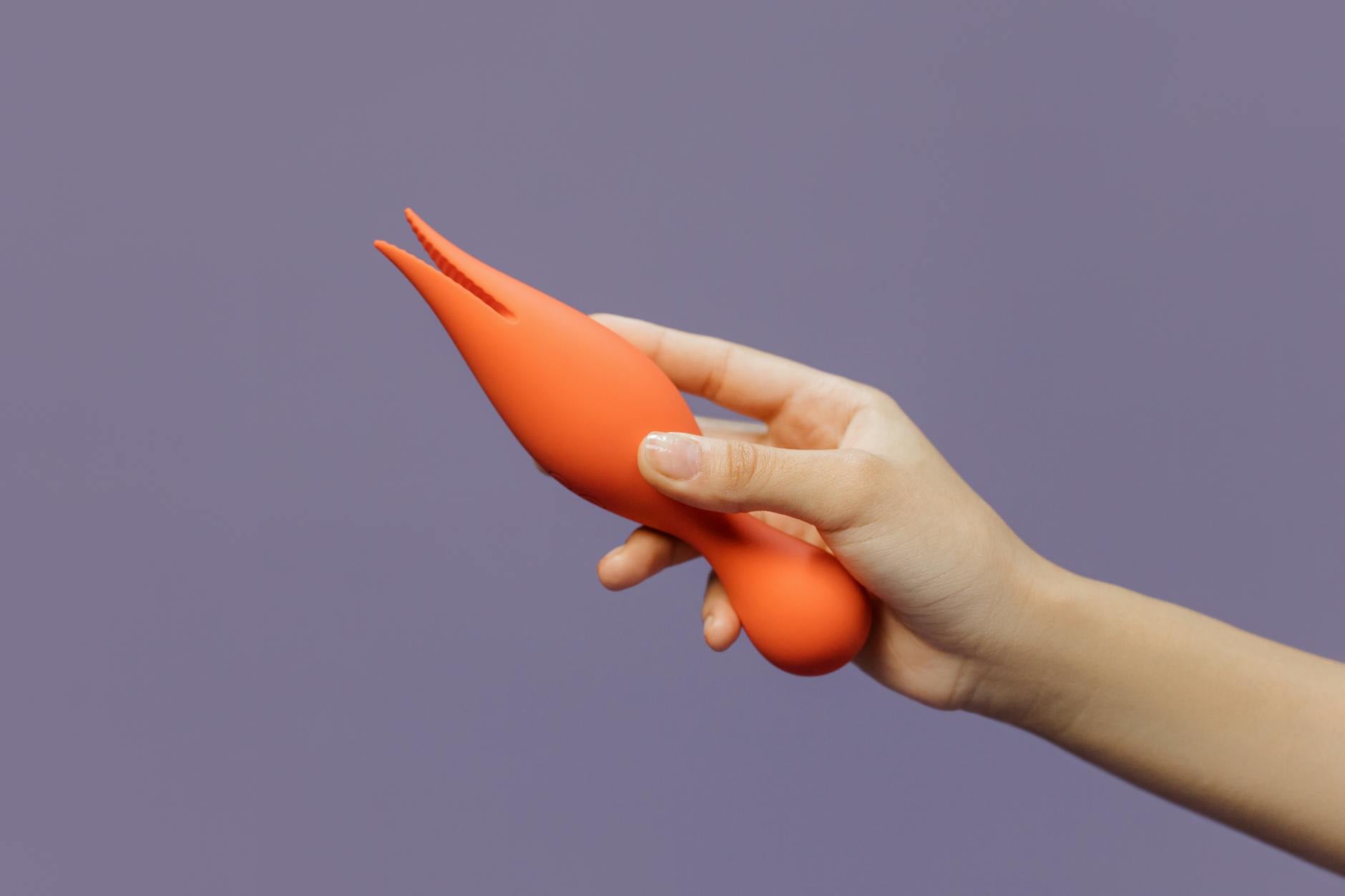
Let's talk about the pattern hunt
You've probably noticed this already: not every vibration feels the same. One person climaxes from a steady hum. Another needs a pulsing rhythm. Someone else swears by patterns that skip and jump. The frustrating part isn't that these preferences exist. It's that you might not know which one is yours yet, and guessing can feel exhausting.
This is what I call the pattern hunt, and it's way more common than you'd think. The good news is that lemon clitoral vibrators are specifically designed to help you find your rhythm without the pressure of a partner watching or the self-doubt that creeps in when nothing seems to work.
Why pattern matters more than intensity
Here's what most people get wrong: they assume if a vibrator isn't working, they need it to be stronger. That's backwards. Intensity is volume. Pattern is the song itself. You can turn up the dial on a song you hate and it'll still be unbearable. But the right song at a moderate volume? You'll listen all the way through.
Your clitoris has about 8,000 nerve endings, and they respond to rhythm more than raw power. A lemon vibrator's unique suction and pulse mechanism works differently than the straight vibration of a traditional wand. Where a wand gives you consistent tremor, lemon sexual toys give you waves. That wave pattern is closer to how manual stimulation actually feels, which is why so many people find their pattern faster with a suction-based tool.
In clinical terms, this is about neural adaptation. Your nerves get used to the same input fast. New patterns keep them engaged. That's not a sign you're broken. That's your body being smart.
Starting the pattern exploration
First, give yourself permission to make this boring and methodical. You're not trying to orgasm. You're collecting data. This mindset shift is crucial because the moment you attach "success" to coming, you've added performance pressure, and pressure kills exploration.
Here's the system I recommend:
Begin with zero expectation. Set aside 20 to 30 minutes when you're not tired and you have privacy. Start with your lemon vibrator on the lowest setting. Don't place it yet. Get familiar with what each pattern actually feels like on your arm or inner wrist first. This sounds silly, but it removes the vulnerability of wondering if you're doing it right.
Once you've felt each pattern, move to your inner thigh. Stay there for a minute or two. Notice what makes your skin tingle, what feels too sharp, what feels soothing. You're training your awareness, not chasing sensation.
Then move inward, but don't rush. Spend 30 seconds on each pattern. Don't change settings until you've given each one a real chance. Your body needs a few moments to recognize a rhythm and respond to it.
The three core patterns to test
Most lemon clitoral vibrators offer variations on three basic patterns: steady, pulsing, and escalating. They sound simple, but subtle differences matter.
The steady pattern is your baseline. It's relentless, even pressure. Some people find this meditative. Others find it numbing after a few minutes. If steady doesn't spark anything after two minutes, that's fine. It doesn't mean you're numb. It means your body's asking for something else.
Pulsing patterns interrupt the stimulation. Off, on, off, on. The rhythm can vary. Some lemon vibrators pulse slowly, like a heartbeat. Others pulse faster, like a tremor. Pay attention to which rhythm makes you hold your breath without meaning to. Held breath often signals "my body likes this."
Escalating patterns start low and build. These can feel like the toy is responding to you, which is psychologically powerful. If you find yourself pushing into the toy or tensing on certain beats, you've found something.
When you need to slow down
One pattern-hunt mistake I see constantly: people think they need to progress to higher intensity to feel anything. That's often backwards. If you're struggling to feel much of anything, lower intensity plus the right pattern will unlock sensation faster than high intensity plus the wrong rhythm.
Take the escalating pattern at the lowest setting, for example. Let it build slowly. Breathe. Don't pull away. The instinct to pull away often means the intensity is too high, not that the pattern is wrong. Back off the intensity, stick with the pattern, and give it 90 seconds.
You might also notice that some patterns feel better at different times of your cycle, or when you're more or less aroused at the start. That's not inconsistency. That's real data. Write down what you notice. "Pulsing pattern 2 at level 3 felt best on day 14 of my cycle" is useful information, not a failure.
Building pattern memory
Once you've identified a pattern that creates consistent sensation, the next layer is building what I call pattern memory. Your body needs repetition to trust a rhythm and relax into it. That relaxation is where pleasure lives.
Use the same pattern for three to five sessions. Don't switch it up. This feels boring, but boring is what builds neural pathways. After five sessions, you can experiment. But in those first five, consistency wins.
You might also notice that as your body gets used to a pattern, you want slightly different pressure or a faster rhythm. That's normal. It's not that the original pattern stopped working. It's that you've adapted to it, and your nervous system is asking for the next increment. Increase the intensity or speed by one level and stay there for another few sessions.
One thing that helps: many lemon vibrators let you customize how patterns escalate. If your toy has a way to adjust the pace of a pulsing rhythm, use that. Even small tweaks can make a huge difference. A pulsing pattern that's one beat per second might feel tedious. At two beats per second, it becomes compelling.
Testing with a partner without pressure
If you're partnered and want to bring this exploration into shared time, the pressure can multiply fast. Here's how to avoid that.
Tell your partner exactly what you're doing: "I'm trying to figure out which patterns feel best, so I'm going to use this for a bit and focus on what my body's feeling. No performance. No expectation that this leads anywhere." That clarity is a gift to both of you.
Some people find it easier to explore solo first, then show their partner what you discovered. Others want to explore together. Neither is wrong. The key is no spectating. Your partner isn't a coach yelling "keep going!" They're either a participant or they're not there.
If you're using a lemon clitoral vibrator with a partner, remember that suction-based tools like the Lem work best when you have space. You don't need penetration happening at the same time. In fact, it's often easier to find your pattern with clitoral focus only, then layer in other elements once you've nailed the rhythm.
When patterns shift unexpectedly
You found your pattern. You've had great sessions. Then suddenly, nothing works. The pattern that made you come last week feels numb now.
This happens, and it's not failure. It's adaptation. Your nervous system is genuinely good at learning, which means it stops responding to repetition the same way. Before you panic, try this: switch to a different pattern entirely. Not a slight variation. A completely different rhythm. Give that new pattern three sessions of dedicated focus.
Alternatively, take a week off from that specific pattern. Come back to it in seven days and it'll probably feel fresh again. Your nervous system gets bored. That's a feature, not a bug.
If an entire family of patterns stops working across the board, that can signal hormonal shifts, stress levels, medication changes, or even that your toy needs charging. Before assuming something's wrong with your body, troubleshoot the external stuff first.
The patterns that tend to work across bodies
From my work with clients and the data I've seen, a few patterns show up again and again as the "aha" patterns for people in the pattern hunt phase.
Pulsing patterns with medium gaps (roughly one beat per second) work for a surprising number of people. It's fast enough to sustain arousal but slow enough that you don't feel like your body's being shaken.
Escalating patterns that build gradually, not in sudden jumps, tend to feel nurturing rather than frantic. This matters psychologically. You're not startled into pleasure. You're invited in.
Mixed patterns, where a tool combines steady stimulation with periodic pulses, can work beautifully for people who liked aspects of two different rhythms but couldn't commit to either alone.
What usually doesn't work: starting on the highest pattern speed at full intensity. You've blown past subtlety. You're less likely to find what your body actually prefers, and you're more likely to numb out quickly.
Questions people ask about finding their pattern
Can you become dependent on one vibration pattern?
No, but your body can become habituated to it, which feels the same in the moment. Habituation is normal neural adaptation. You don't become "dependent." You just get used to that input. The solution is variety. Once you've found your core pattern, adding variety keeps things interesting and prevents numbness. Explore multiple patterns weekly rather than using one exclusively.
How long does it usually take to find your pattern?
Three to five sessions if you already have pretty clear arousal. Seven to ten if you're starting from lower baseline arousal or recovering from sexual avoidance. Some people find it immediately. Others need a couple of weeks. Speed doesn't correlate with anything. Everyone's nervous system learns at its own pace.
What if no pattern feels right after trying for weeks?
Take a break for three days completely. Then start again, but this time focus on your breath and relaxation, not on finding the "right" pattern. Sometimes the search itself becomes stressful, which overrides sensation. Make it exploratory and calm, like you're researching something you're curious about rather than trying to fix something broken.
Do different bodies need different patterns, or is it mostly preference?
Both. Some anatomical variation means certain rhythms will feel better for certain bodies. But within that, huge variability exists based on arousal level, stress, cycle day, and what you find psychologically appealing. That's why solo exploration matters. You're learning your body's specific profile, not learning the universal pattern.
Should you stay with one pattern, or switch it up regularly?
Start with consistency to build neural pathways. Once you've found your core pattern and you've used it successfully for five sessions, add rotation. Use your primary pattern 60 percent of the time, experiment with variations 40 percent. This keeps novelty alive while you maintain your base rhythm.
Can using a lemon vibrator change what patterns work for partnered sex?
Possibly, and that's often good. If you learn that you need a specific pattern, partnered sex can incorporate that knowledge. "Can we use my vibrator during penetration?" is a much clearer conversation than guessing. Some lemon clitoral vibrators are partner-friendly. Others are designed for solo exploration. Know yours.
Finding your rhythm is not a waste of time
Between you and me, this kind of methodical self-knowledge feels like work, not play. Spreadsheets and timers don't sound sexy. But here's what I know from my work: people who understand their own arousal pattern have better sex with partners, more consistent solo pleasure, and less frustration overall.
This isn't about optimization. It's about permission. Permission to know your body. Permission to ask for what works. Permission to stop guessing.
Your pattern is waiting. It just needs attention, not force.
Ready to explore?
If you're starting this journey and you'd like support, whether that's more personalized guidance or just knowing other people are figuring this out too, reach out to us. We're here to answer questions about tools, techniques, or anything else on your mind.