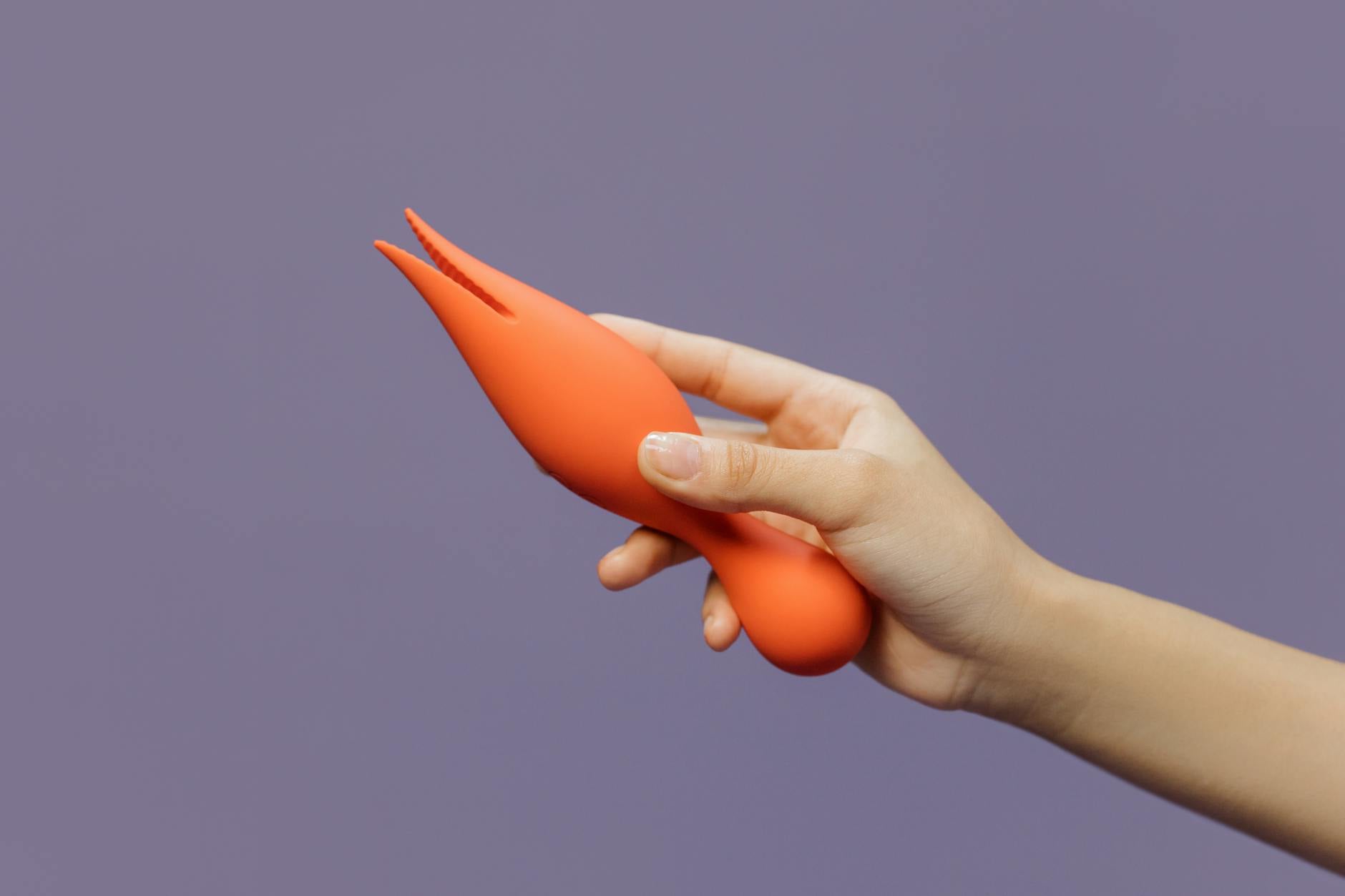
Here's the thing about toy anxiety
Most people feel it. You're not broken, you're not alone, and you're definitely not weird. Toy anxiety shows up as doubt, overthinking, or that low-grade worry that whispers, "Am I going to like this? Will it hurt? Am I doing this right?" The fear isn't really about the toy itself. It's usually about change, about stepping into a version of yourself that owns her own pleasure.
That hesitation makes sense. Introducing a new lemon vibrator or any clitoral vibrator into your routine is a small vulnerability. But I've worked with hundreds of people who moved through that anxiety and came out the other side grateful they tried.
Why suction toys specifically trigger anxiety
Lemon vibrators work differently than most toys people have tried. Instead of vibration alone, suction stimulates the clitoris by creating gentle pressure and release. That unfamiliarity is part of what makes people nervous. "What if it feels weird? What if the sensation is too intense?"
Here's what I know from clinical work: unfamiliar doesn't mean bad. It just means unfamiliar. The suction sensation that feels strange on first contact often becomes deeply pleasurable once your nervous system realizes there's nothing to defend against. Your brain is wired to be cautious about new sensations. That's a survival feature, not a character flaw.
The good news? The lem vibrator design is genuinely gentle compared to what people imagine. It's not aggressive, it's not violent, and it gives you total control over intensity through seven different patterns.
The anxiety-to-confidence ladder
Don't jump straight to using it. Build familiarity first.
Step 1: Unpack it when you're not trying to use it. Hold it, look at it, charge it. Let your brain register that this is just a piece of silicone. Spend five minutes with it while you're reading or watching TV. No pressure, no performance.
Step 2: Explore it solo first. Not necessarily for orgasm yet. Just feel what the different patterns feel like. Start at pattern 1 on your inner arm, your neck, your lower abdomen. You're teaching your nervous system that this sensation is safe. Most of toy anxiety dissolves once you realize the suction is genuinely pleasant before it goes anywhere near your clitoris.
Step 3: Try it over clothing. The gentle suction through fabric feels almost nothing like direct contact. It's muffled, it's soft, and it gives you a preview without the intensity. Spend a session here. Notice what you feel.
Step 4: Move to external contact only. Not yet inserting anything, not yet over your underwear, just you and the lemon vibrator exploring. This is where most people realize their anxiety was larger than the reality.
Step 5: Use it the way you'd naturally use it. By now your body knows what to expect. The anxiety has had time to settle. You're not performing for anyone or proving anything. You're just experiencing something new on your own terms.
This progression might take two sessions or two months. There's no timeline. Honor your own pace.
What actually happens to your body
When you're anxious about a new toy, your nervous system is in a mild state of alert. That tension actually mutes pleasure. Your pelvic floor tightens, your breathing becomes shallow, and blood flow is diverted from your genitals toward your limbs (ancient survival wiring). None of that supports pleasure.
As you repeat exposure to the lemon vibrator in low-stakes ways, your nervous system learns that this sensation is not a threat. Your body starts to settle. That settling is when pleasure becomes possible.
I think of it like introducing a dog to a vacuum cleaner. The first time, alarm bells. By the fifth exposure in a safe way, just background noise. Your nervous system works the same way.
The partner conversation, if there is one
If you're exploring this with a partner, manage expectations first. "I'm trying something new solo. I'm not doing this for your approval or your pleasure. I'm doing it for me. And if it becomes something we do together, we'll talk about it." This boundary actually strengthens most relationships because you're claiming your own pleasure as real and separate from your partner's needs.
Many people worry their partner will feel threatened. Sometimes that anxiety is real; sometimes it's projected. Only your partner can tell you. But from a relationship perspective, what actually threatens intimacy is pretending you don't want things you want. Owning your pleasure, even in small ways, makes you more present and more alive in partnership.
If your partner is skeptical about toys in general, check out how other people have navigated that specific dynamic. The pathway between skepticism and curiosity is usually shorter than it feels.
When discomfort is not anxiety
There's a difference between "I'm nervous about something new" and "this hurts." If you try the lemon clitoral vibrator and experience pain, discomfort that doesn't soften with time, or genital irritation, that's your body giving you real information. Stop, pause, and possibly check with a healthcare provider. Suction toys are safe for most bodies, but not all. Your comfort matters more than pushing through.
Anxiety feels like mental resistance. Pain feels like physical resistance. Learn to distinguish between the two.
The permission piece
Here's what I say to clients when toy anxiety peaks: you are allowed to want this. You don't need your partner's permission, your upbringing's permission, or anyone's permission except your own. Your pleasure is not selfish. It's not needy. It's not frivolous.
The lemon vibrator exists because your body deserves sustained attention. Because suction stimulation is genuinely different from what most people experience. Because you might be one of those people who's been waiting years for a sensation that finally feels like home.
Your anxiety about trying something new is completely human. Moving through it anyway is growth.
FAQ: Common questions about toy anxiety
Will the lemon vibrator feel weird on my clitoris?
Most likely yes, at first. Suction feels fundamentally different from vibration or friction. "Weird" in the research typically resolves into "amazing" after 2-3 sessions once your nervous system adjusts. Think of it like the first time you tried a food you'd never had before. Different doesn't mean bad. Start at the lowest pattern and let yourself get curious instead of judgmental.
How long should I wait before trying it on my clitoris directly?
There's no set timeline, but most people find that exploring with clothing on or over less sensitive areas first (like your inner arm or neck) takes the edge off the nervous system's alarm response. Spend at least one session building familiarity this way. You're not stalling; you're smart-loading your nervous system for pleasure.
What if I try it and I don't like it?
Then you tried something, you learned about yourself, and you move on. That's it. Not every toy is for every body. Trying it doesn't obligate you to keep it. But my experience is that most people who get past the initial anxiety find something they love in suction stimulation, especially if they give themselves permission to explore without a performance goal.
Can I use a lemon vibrator if I have a sensitive clitoris?
Actually, yes. The suction mechanism is gentler than direct vibration on sensitive tissues. Many people with high sensitivity find that suction stimulation feels more sustainable than buzzing vibrators. Start with the lowest patterns and listen to your body. If direct contact feels too intense, you can also try it over clothing or fabric as your entry point.
Should I tell my partner I'm trying this?
That depends on your relationship and what feels true for you. Some people want privacy for their solo exploration. Some people want to invite their partner in from the start. Neither is right or wrong. What matters is that you're making an intentional choice instead of hiding out of shame. If you do decide to share, lead with what you want, not with apology or justification.
Will using a toy alone make partnered sex feel incomplete?
Quite the opposite. People who explore their own pleasure solo typically report better partnered sex because they know what they want and can ask for it. You're not replacing your partner; you're investing in your own sexual literacy. That literacy makes everything better.
Moving forward
Toy anxiety is real, and it's also workable. You don't have to white-knuckle your way through nervousness or pretend you're not scared. You just have to take one small step at a time and let your nervous system do its job. Exposure plus safety equals comfort. That's not theory; that's neuroscience.
When you're ready, the lemon vibrator will be waiting. No judgment, no timeline, no performance required. Just you, your pleasure, and the permission you're giving yourself right now to want something for yourself.