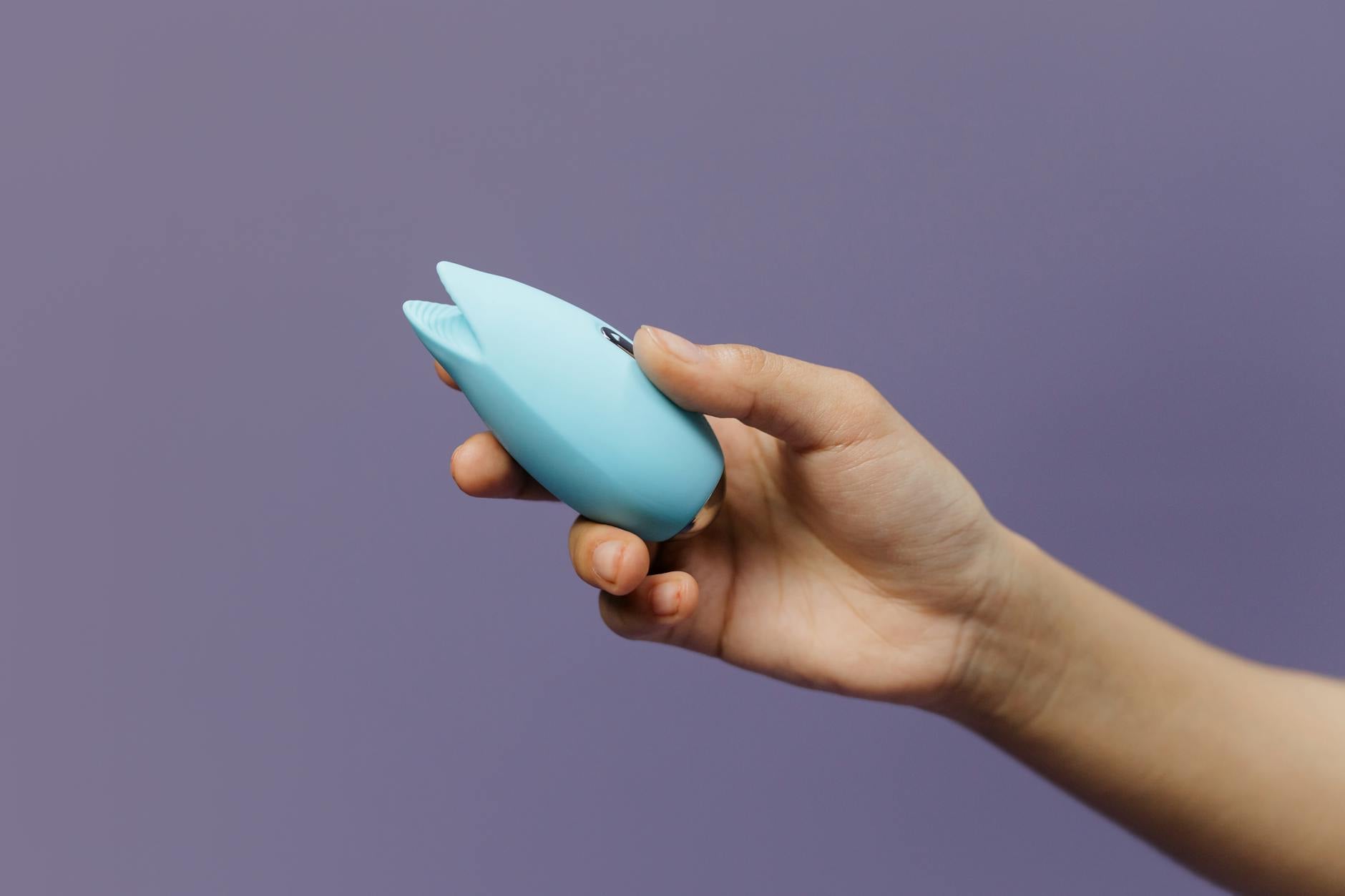
Let's talk about friction
During partnered sex, friction is the whole story. It's how stimulation happens, it's what builds sensation, and it's also what can become uncomfortable or even painful depending on your body, your hormones, your mood, or just how long you've been at it. If you're someone who's ever felt that particular rawness that comes from extended penetration, or if you've noticed that what felt amazing for the first twenty minutes suddenly doesn't anymore, you're not broken. Your body is asking for a different kind of input.
That's where lemon vibrators come in. They let you get clitoral stimulation without relying on friction. Instead of more rubbing, you get suction and pulsing. Instead of pressure building from repeated contact, you get targeted waves. The effect is like discovering you've been reading by candlelight your whole life, and someone just turned on the lamp.
Why friction becomes a problem during partnered sex
Here's the thing nobody explains clearly: the clit doesn't actually need friction the way penetration does. It needs stimulation, yes. But the most sensitive nerve endings respond to suction, vibration, and pressure changes more than they respond to friction itself. When you're in the middle of partnered sex, friction is what you've got available, so it becomes your default. But it's not necessarily your best option.
Friction can cause several issues depending on your body. First, there's the simple wear factor. After sustained friction, tissue gets irritated. It doesn't have to hurt during the moment to hurt afterward, or to make you less responsive the next day. Second, if you have vulvovaginal atrophy (common after hormonal shifts, during perimenopause, or from certain medications), the tissue is thinner and more prone to microabrasions. Friction that would have felt fine five years ago might sting now. Third, if you're someone who needs a lot of stimulation to finish, friction alone might not be enough, and you end up in a frustrating loop where the harder you try, the less sensation you feel.
A lemon vibrator changes the equation entirely.
How clitoral vibrators work differently than friction
The Lem and other air-suction lemon vibrators don't vibrate the way you might be picturing. They use gentle suction combined with pulsing patterns. This activates a different set of nerve fibers than friction does. You get sensation without the mechanical pressure that comes from repetitive movement against skin.
During partnered sex, you can use a lemon clitoral vibrator simultaneously with penetration. Your partner provides one form of sensation, and the vibrator provides another. But here's the key difference: the vibrator's work is self-contained. It doesn't depend on friction buildup. It doesn't need you to get more aggressive or intense. It just sits there, doing its job, while everything else happens around it.
For people with vulvas, this is huge. You get continuous, consistent stimulation that doesn't degrade over time. You don't have to choose between enjoying penetration and finishing from clitoral stimulation. You get both.
Positioning during partnered sex
The logistics matter more than most guides admit. If you're on your back and your partner is on top of you, a lemon vibrator works beautifully. You hold it, they can see what's happening, and there's no awkward reaching or repositioning needed.
If you prefer a position where you have less access to your clit, you have options. Some people tuck a smaller vibrator between themselves and their partner. Others use a hands-free approach. The important thing is experimenting beforehand so sex isn't a puzzle you're solving in real time.
Try this: use the lemon vibrator solo first, figure out which patterns you like and which positioning makes you feel most sensation, then introduce your partner to that. When they know what you're using and why, it becomes collaborative rather than something you're just hoping they won't judge.
Communication is the real tool
Better sensation during partnered sex isn't actually about the toy. It's about saying out loud what feels good and what doesn't. Using a vibrator gives you a vocabulary for that. "I want to try this" becomes a conversation instead of something you're doing secretly or something you're too nervous to bring up.
If your partner has any hesitation, the honest conversation is simple: you're not replacing them. The vibrator is addressing something that friction alone can't. You want them to stay right there. You just want the vibrator too. Most partners appreciate the specificity. It's way easier to understand "I want more clitoral stimulation, and this vibrator delivers it without additional friction" than it is to guess why someone suddenly seems less into partnered sex.
What happens to sensation over time
Here's something worth knowing: using a lemon clitoral vibrator during partnered sex doesn't dull your sensitivity to other types of stimulation. That's a myth. What it does do is give you a baseline of what good sensation feels like. You might discover you actually prefer being penetrated with less intensity when you've got a vibrator on your clit. Or you might find that you can have multiple orgasms when previously you needed long recovery time between them.
Some people also discover that their partners actually finish faster when there's less pressure on them to provide all the stimulation. When you're independently stimulated and having a good time, your partner doesn't feel like they're racing against the clock. Everyone relaxes. Everyone has more fun.
Practical setup tips
Charging: most lemon vibrators charge via USB and hold a charge for several hours. Build it into your routine. Charge it the same way you charge your phone. Done.
Lube: with a vibrator, you need less lube than with friction alone, but using a small amount of water-based lubricant helps the suction seal better and feels nicer. Silicone lube lasts longer but can damage silicone toys, so stick with water-based.
Timing: some people like turning on the vibrator before penetration starts. Others like waiting until they're already aroused. There's no right answer. The beauty of a vibrator is that it works at any point in the experience.
Cleanup: water and mild soap. That's it. Dry it after, store it somewhere cool and dry, and you're done. If you want detailed care instructions, we have those at.
When this approach transforms things
You'll notice the difference immediately if friction has been your barrier. The first time you use a lemon clitoral vibrator during partnered sex, you'll probably feel more sensation than you have in months. If you've been faking it or skipping that part of sex entirely, you might actually finish. If you've been touching yourself while your partner is inside you, the vibrator probably does it better and leaves your hands free.
Over time, sex feels more predictable and more fun. You know you can finish. Your partner knows you can finish. That changes the whole dynamic. There's less performance anxiety, less resentment, less of that creeping feeling that something is missing.
When to go deeper
If you're noticing that friction has become painful, not just uncomfortable, that's worth mentioning to a healthcare provider. You might have vulvovaginal atrophy, inflammation, or another treatable condition. A vibrator helps, but so does addressing the underlying issue.
If your partner is resistant even after you've explained, that might be pointing to a bigger conversation about what's happening in your relationship. We have resources on how to use lemon vibrators when your partner is skeptical about toys that might help frame the discussion differently.
The reality of pleasure with less friction
Sex doesn't have to hurt to be real. Pleasure doesn't have to come from friction. When you introduce a lemon clitoral vibrator into partnered sex, you're not adding something weird or unnecessary. You're removing an unnecessary physical demand and replacing it with something that feels better. That's it. That's the whole story.
People also ask
Can you use a lemon vibrator during penetrative sex?
Yes. In fact, that's exactly when they're most useful. You can use a clitoral vibrator at the same time as penetration without any conflict. Many people hold it themselves, while others prefer their partner to hold it. The positioning depends on which position you're in, but it works with most standard positions. Experiment beforehand so you know what feels good before you're in the moment.
Does using a vibrator during sex make you lose sensitivity to your partner?
No. Vibrators don't numb you or cause permanent changes to sensation. In fact, the opposite often happens. When you get consistent, good stimulation from a vibrator, you're rewiring what good sensation feels like. You're not losing sensitivity to your partner. You're gaining clarity about what you need, and that often makes partner sex better, not worse.
What's the best lemon vibrator for partnered sex?
The Lem is specifically designed for this. It uses air-suction technology instead of traditional vibration, which means it creates a seal and delivers stimulation that works independently of friction. The pulsing patterns are adjustable, so you can dial in exactly what feels good. Other clitoral vibrators work too, but suction-based devices are generally better than bullet vibrators for this particular scenario because they don't rely on rapid movement.
Will my partner feel the vibrator inside me?
No, not in the way you might be thinking. Your partner might feel very subtle vibrations, but they won't feel the vibrator itself moving around inside you because it's external and focused on your clitoris. What they will notice is that you're more aroused and probably finishing faster. Most partners are actually relieved because it takes the pressure off them to provide all the stimulation.
How do I bring this up without offending my partner?
Keep it simple and specific: "I want to try using a vibrator during sex because I think it'll help me finish more reliably, and I want you right there with me while I do." That's it. You're not critiquing their technique. You're not saying penetration isn't enough. You're saying you want to add something that will make the experience better for you. Frame it as collaborative. Most people respond well to specificity and honesty.
Is it weird to use a vibrator if I've never needed one before?
Not at all. Bodies change. Hormones shift. Your needs might be different at 30 than they were at 20, different after a stressful period than they were before, different after starting certain medications. That's not a sign something is wrong. It's a sign you're paying attention to what actually feels good. Using a lemon vibrator isn't about something being broken. It's about optimizing your experience.
Ready to try
If friction has been keeping you from enjoying partnered sex the way you want to, this is worth a conversation and an experiment. Start with a vibrator you can hold yourself so you have full control. Talk to your partner beforehand so there are no surprises. Then notice what changes. Your pleasure matters, and you deserve stimulation that actually works for your body. If you want to explore more, check out our buying guide or reach out with questions at /contact.