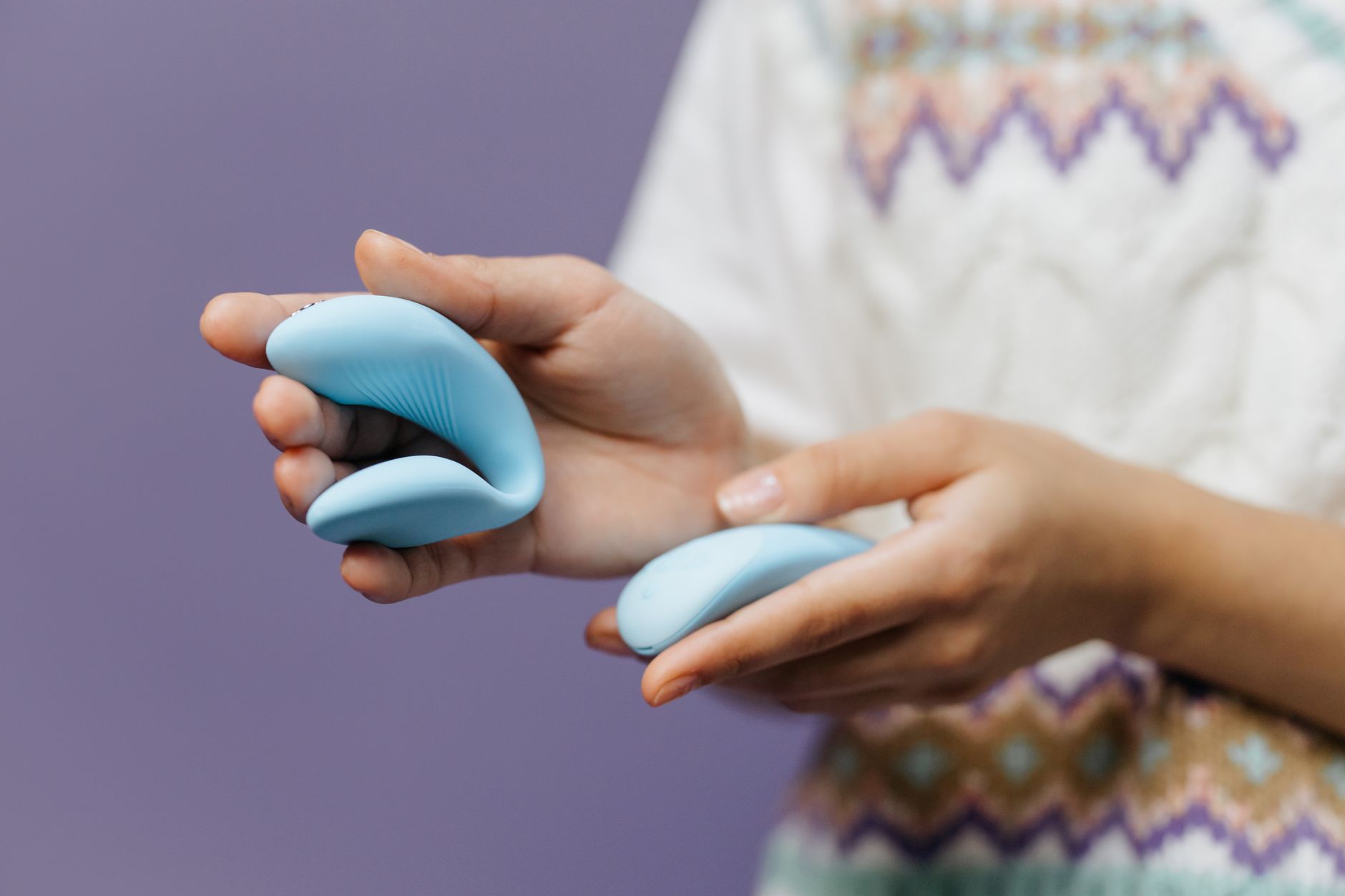
How to Use Lemon Vibrators When Your Cycle Affects Arousal Timing
Let's be real: your libido doesn't arrive on a schedule that matches your partner's, your calendar, or your own expectations. It arrives when your hormones say it does.
For anyone with a menstrual cycle, arousal timing is genuinely wild. Some weeks, you're thinking about pleasure before breakfast. Other weeks, nothing happens until deep into the evening, or not at all. This isn't a problem you're solving wrong. It's a signal your body is sending about its current state. And if you're using a lemon vibrator or any clitoral vibrator, understanding your cycle's influence on arousal timing isn't a luxury detail. It's the difference between frustrated sessions that don't land and moments of real connection with your body.
How your cycle actually affects when you're ready for pleasure
Estrogen and testosterone don't just control whether you want sex. They control how easily your body responds to stimulation. During the follicular phase, roughly days 1 to 14 of your cycle, estrogen is climbing. Your tissue becomes more sensitive. Arousal builds faster. You're primed.
During the luteal phase, days 15 to 28, estrogen drops and progesterone rises. Your nervous system shifts into a different mode. Arousal takes longer to build. Your body needs more time, more touch, more context before it wakes up. Neither phase is better or worse. They're just different operating systems running in the same body.
Many people feel a surge around ovulation, then a dip in the week before their period. Others feel almost nothing in the luteal phase until the very end. Some notice arousal is strongest on days when they're not bleeding at all, early in the follicular phase. The pattern is individual.
What's universal: trying to force arousal on a timeline that doesn't match your biology creates friction. Using a lemon vibrator on day 21 with the same expectations you had on day 8 is like expecting your car to perform the same way when the engine temperature has changed. The tool isn't the problem. The timing mismatch is.
Tracking your own rhythm before introducing toys
Before you reach for a lemon vibrator, spend one cycle noticing when arousal actually happens. Not when it "should" happen. When it does.
Start a simple tracking system. It doesn't need to be an app. A note in your calendar works fine. Mark the days you feel genuinely interested in pleasure, even if you don't act on it. Mark the days you feel nothing. Mark the days you feel touch-averse. You're building a map, not a judgment.
After four weeks, you'll probably see a pattern. Maybe you notice that arousal clusters in days 8 to 12. Maybe it only appears on certain evenings. Maybe it's tied more to your partner's schedule or your stress level than to your cycle at all. All of that information is useful.
The point isn't to become obsessed with prediction. It's to stop blaming yourself for not being "in the mood" on a day when your body is genuinely in a lower-arousal phase. Once you see the rhythm, you can stop fighting it.
Why lemon vibrators work better when you sync with your cycle
Clitoral vibrators like the lemon design work by creating specific stimulation that your body either responds to or doesn't, depending on hormone levels. During your follicular phase, when arousal comes faster, you might find that the lemon vibrator kicks in quickly and builds sensation easily. You're meeting the toy halfway. During your luteal phase, that same vibrator might feel less responsive because your body is requiring more setup work, more lubrication, more warm-up before sensation registers.
This doesn't mean the toy isn't working. It means you're bringing it into a body that's in a different gear. A lemon sucker vibrator is an excellent tool, but no tool replaces understanding your own timing.
During phases when arousal is slower, you'll get better results if you:
Give yourself longer warm-up time. On days when arousal doesn't come fast, add an extra 10 to 15 minutes of solo touch before introducing any vibrator. Let your body cross its own threshold first.
Add external lubrication. During the luteal phase, natural lubrication is often lower. A good water-based lube makes the difference between a lemon vibrator feeling good and feeling outstanding.
Start at lower intensities. If you're on the lower-arousal half of your cycle, begin with patterns 1 or 2 on the lem vibrator, then gradually increase. You're not undestimating yourself. You're meeting your body where it actually is.
Talking about cycle-synced pleasure with a partner
If you're in a relationship, cycle timing becomes a conversation topic. Not a clinical one. A practical one.
Here's what works: "My body has a rhythm. On certain weeks, arousal comes faster. On other weeks, I need more time and setup before I'm ready. I want to use that rhythm instead of fighting it." Your partner doesn't need a fertility chart or detailed hormone data. They need to know that sometimes you'll enthusiastically grab them at 9 p.m. on a Tuesday, and sometimes you'll need to plan something for Friday evening instead. Both are genuine versions of you.
Introduce your lemon vibrator in this context. You're not replacing your partner. You're showing them what helps your body work with its own cycle instead of against it. Many partners find it genuinely hot to watch you understand yourself better. Others just feel relieved that the "why aren't you interested" confusion lifts.
For solo exploration, cycle syncing removes all the pressure. You're not trying to replicate the same experience every week. Week 1 of your cycle, maybe you have a 20-minute session with your lem vibrator that feels powerful and fast. Week 3, maybe you spend an hour just touching yourself and the vibrator feels like a bonus, not the main event. Different doesn't mean worse.
When to reach for your lemon vibrator across the month
Follicular phase (days 1 to 14): Arousal is faster, tissue is more sensitive, orgasms may come more quickly. This is when many people get the most out of clitoral vibrators. Your lemon vibrator can work at higher intensities, and you might find yourself orgasming in less time than you would later in the month.
Ovulation window (around day 14): Libido typically peaks. This is prime time for pleasure. You might have multiple orgasms more easily. Your lemon sucker vibrator can reach full potential.
Early luteal phase (days 15 to 21): Arousal starts to slow. You still feel interested, but you might notice it takes slightly longer to build. This is still a great time for vibrator use, but you may want slightly longer warm-up.
Late luteal phase (days 22 to 28): Arousal is lowest. This doesn't mean you can't have pleasure. It means expecting it to arrive in the same way, at the same speed, with the same intensity as week 2 sets you up for disappointment. If you want to use your lemon vibrator here, plan for longer, gentler sessions. Or skip it entirely and use non-vibrator touch. Both are fine.
The permission you actually need
Here's the thing nobody tells you: your arousal doesn't owe anything to anyone. Not your partner, not a fantasy, not a vibrator. Your cycle is giving you real information about when your body is ready, and the answer changes throughout the month.
A lemon vibrator is a tool that works brilliantly when you bring it into a body that's already in motion. If you use it during a phase when arousal is naturally lower, you might create an experience of pressure instead of pleasure. That's not the vibrator failing. That's you overriding your own signal.
Once you sync your use with your cycle, something shifts. You stop trying to force arousal on day 24. You stop wondering why the vibrator "didn't work" on Tuesday. You start using your lemon vibrator as a way to deepen a pleasure that's already starting to happen, not as a way to manufacture pleasure from scratch.
Your cycle isn't an obstacle. It's a rhythm. Learn it. Trust it. Your body will thank you.
Frequently Asked Questions
How do I know if my cycle is actually affecting my arousal, or if it's something else?
Track for two months. Note arousal alongside bleeding, stress, sleep, and relationship dynamics. If you see a consistent pattern that aligns with the same days each cycle, it's likely hormonal. If arousal shifts randomly, or only during high-stress weeks, something else is at play. Often it's both. Your cycle influences arousal, and stress, sleep, and emotional connection also matter. They're not either/or.
Can I use a lemon vibrator during my period?
Absolutely. Some people find that sensation during their period feels different, muffled, or uncomfortable. Others feel heightened pleasure. Experiment and trust what feels good. If you want to use your lemon clitoral vibrator during menstruation, you can. Use an internal barrier like a cup, disc, or tampon first if you're concerned about mess. Or use it externally only. Your body, your choice.
If my arousal is low during my luteal phase, does that mean I'm not actually attracted to my partner?
No. Arousal speed and depth vary across your cycle. Low arousal in one phase of your cycle is biology, not a referendum on your relationship. Some of the most connected, intimate sex happens slowly, with a partner who understands that you're meeting their touch from a different place. That's not less. It's different.
Should I skip my lemon vibrator during low-arousal weeks?
Not necessarily. Some people love using vibrators during their luteal phase because it feels gentler, more exploratory, less goal-oriented. Others do better with manual touch or no genital touch at all. Try both. If you do use your lemon sucker vibrator on a low-arousal day, extend warm-up, use lubrication, start at low intensity, and let go of expectations about speed or intensity. The experience will be different. Different isn't worse.
What if I have an irregular cycle or cycle symptoms that interfere with pleasure regularly?
If your cycle is unpredictable or if certain phases bring pain, numbness, anxiety, or heavy symptoms that genuinely interfere with your ability to feel pleasure, talk to a gynecologist or pelvic health specialist. Conditions like endometriosis, PCOS, or cycle-related mood changes are real and treatable. Understanding your cycle's influence on arousal is useful solo work. Professional support is necessary if your cycle is creating genuine suffering.
Can cycle tracking apps predict when I'll feel aroused?
Apps can give you probabilities based on hormone data, but your actual experience will vary. Use an app for pattern recognition, not prediction. Your body might not follow the typical textbook cycle. That's fine. Your own tracking is always more accurate than an algorithm's guess about your rhythm.
Understanding how your lemon vibrator works best across your cycle takes time and attention to your own body's reality, not someone else's formula. That attention is the real tool. The vibrator is just what you use once you've already started listening.