
Here's the thing about toys and partnerships
The moment you mention a lemon vibrator, your partner hears a threat. Not because toys are inherently threatening, but because they assume pleasure is a zero-sum game. Either you get it from them, or you need it from something else. Both of you lose.
I've watched this dynamic tank relationships that were otherwise solid. The toy itself isn't the problem. The conversation is.
Why your partner is actually scared
Let's cut past the surface defensiveness. When a partner says "I'm enough," or "You didn't need that before," what they're really saying is: "I'm afraid I'm not doing my job." That fear comes from a few places.
First, sex is one of the only arenas where men especially are taught they should instinctively know what to do. Asking for help feels like admitting failure. A toy feels like proof they've failed. Second, there's this ancient idea that if a woman's pleasure is hard to access, it's because she needs to relax or trust him more. A clitoral vibrator suggests the opposite. Maybe her pleasure isn't a performance he can unlock with the right technique. Maybe it's a thing she needs to know about herself.
That's threatening. And honestly, a little true.
The conversation that actually works
Don't lead with the toy. Lead with data.
"I want to tell you something I've learned about my body. My arousal takes longer than it used to. When I'm stressed, it takes even longer. And sometimes the kind of stimulation I need is specific enough that I haven't been able to ask for it without feeling self-conscious." That's not a criticism of him. That's information about you.
Then: "I've been doing some research, and I found something that helps. It's a lemon vibrator. It's designed for clitoral stimulation using suction instead of vibration, which feels different from everything else I've tried. I want to use it. And I want you to understand what it actually is."
The key shift: you're not asking permission. You're not saying "Would you be okay with..." You're saying "This is something I'm doing for my pleasure. Here's what it is. Here's how you fit into this."
What to actually show them
Don't hand them a toy and hope for the best. Show them the science. A lemon vibrator uses air-pulse technology, not traditional vibration. It doesn't replace partner touch. It's engineered for a specific kind of stimulation that's hard to replicate manually. Same reason athletes use ice baths. It's not because water is better than training. It's because the tool does something the body alone can't.
Then show them the role they actually play. "I want to use this sometimes solo. And sometimes I want you here while I do. Not necessarily touching me. Just present. Just understanding what makes me come."
That last part matters. Many partners don't realize they're welcome to stay. They assume a toy means they need to leave the room. The opposite is often true. Watching your partner discover what genuinely works for them is more intimate than generic sex. It's information. It's vulnerability.
The solo foundation you need first
Here's what I tell clients: before you introduce a clitoral vibrator to your partner, spend time with it alone. Figure out what intensity actually works for you. Figure out your own rhythm. Figure out how long it takes to build, what distracts you, what you actually like.
Why? Because your partner can't help you find pleasure they haven't seen yet. If you're still figuring it out, the pressure of them watching makes everything harder. Solo exploration is the foundation. Your partner comes after you've already mapped your own territory.
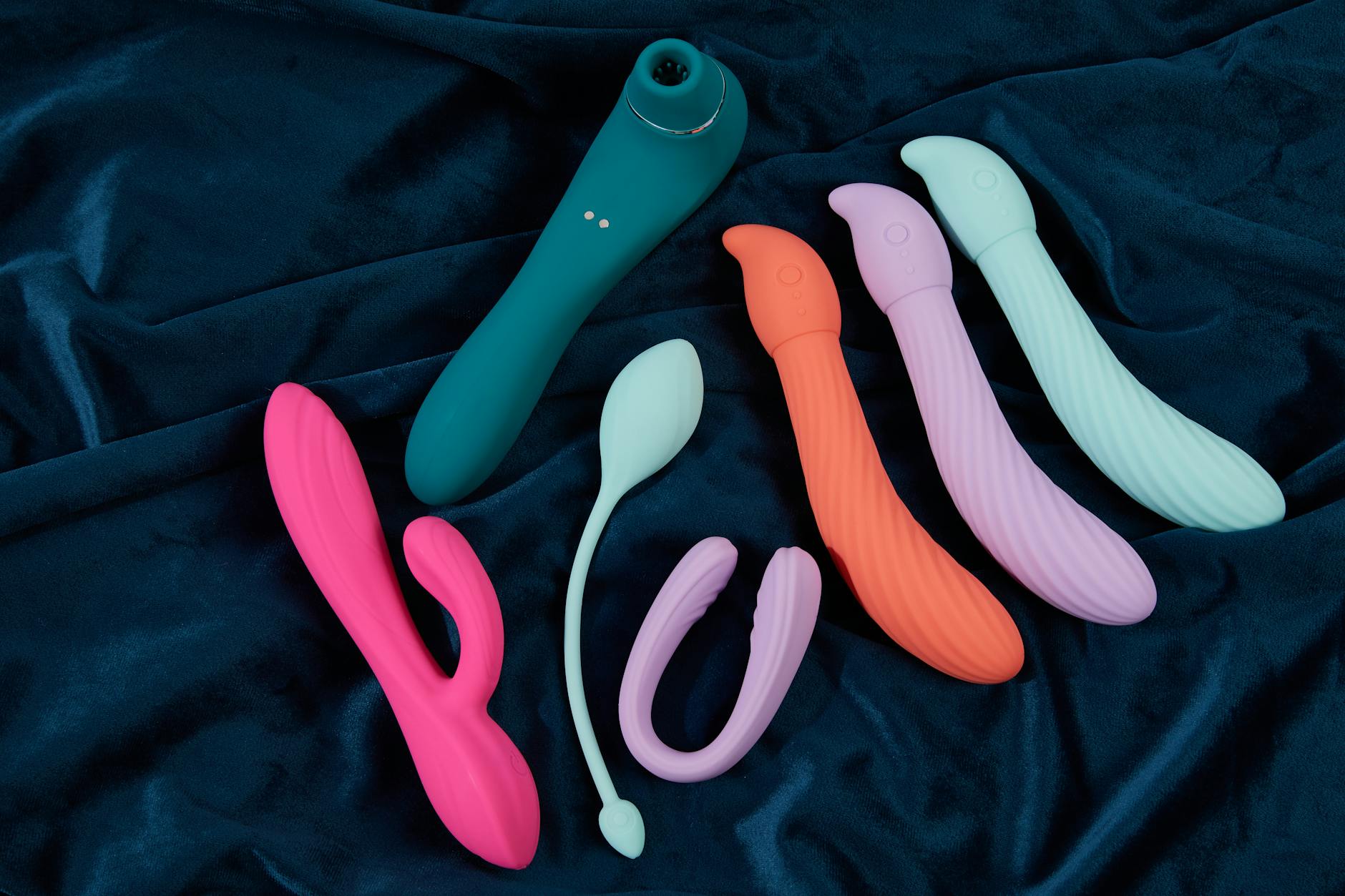
Photo by IFONNX Toys on Pexels
How to frame using it together
When you're both ready, the lemon vibrator becomes a tool for connection, not a threat to it. Start by using it while your partner is present but not touching. They watch. They learn your body's actual response. Then, once you're close, they can use their hands on you while the vibrator does its work. Or they can hold the vibrator while you guide them. The point is collaboration, not replacement.
This is where a lemon clitoral vibrator changes the game. Because it's designed for precision suction rather than broad vibration, it leaves room for your partner's hands. You're not fighting over the same real estate. You're layering sensations. That's genuinely new.
When they still resist
Some partners won't come around immediately. That's worth taking seriously. But there's a difference between "give me time" and "never." If they say "I need to think about this," that's a conversation you can have in a month. If they say "I won't allow that," that's a different problem entirely.
You're not asking permission to buy a book or a coffee. You're asking for space to understand your own body. If a partner can't offer that, the issue isn't the toy. It's whether they respect your autonomy at all.
I've worked with couples where one partner got there eventually, after weeks of feeling defensive. And I've worked with couples where the resistance never budged, and they had to decide what that meant for the relationship. Both are valid outcomes. The toy just makes the underlying dynamic visible.
What changes when he finally gets it
Once your partner understands that a lemon vibrator isn't a threat but a tool for discovering what actually works, something shifts. He stops trying to be the sole source of your pleasure. He becomes part of your pleasure ecosystem. You're partners in figuring out what your body needs, not competitors for credit.
That's when sex actually gets better for both of you. Not because the toy is magic. But because you've both agreed to prioritize your actual pleasure over ego.
FAQ: Your Partner and Your Lemon Vibrator
Why does my partner feel threatened by me using a vibrator?
Most partners link their worth to their sexual performance. A toy feels like proof they're not enough. Reframe it: the toy is information about your body, not a judgment of him. Many partners feel better once they understand they're still essential, just in a different way.
How do I explain that a lemon vibrator isn't replacing him?
Show him the specifics. Air-pulse clitoral vibrators use suction to stimulate differently than manual touch or traditional vibrators. It's a sensation variation, not a replacement. Compare it to food. Wanting a coffee doesn't mean breakfast was bad.
Should I use my lemon vibrator solo or with my partner first?
Solo first, almost always. Understand your own body, your own timing, your own needs. When your partner eventually joins in, you'll know what you're asking for instead of exploring under pressure.
Can my partner hold or control my lemon clitoral vibrator during sex?
Absolutely. Many couples find this is actually more intimate than using it solo. Your partner can learn exactly what sensation you respond to and build that into partnered touch. It's collaborative, not exclusionary.
What if my partner refuses to accept that I use a vibrator?
That's worth examining beyond the toy itself. Is he respecting your autonomy? Does he trust you? Is he open to your pleasure mattering as much as his? The vibrator is just the catalyst for a bigger conversation about control and respect.
How long until my partner stops feeling insecure about my lemon vibrator?
It varies, but most partners shift within a few months of consistent, honest conversation. The key is showing them they're still essential. Invite them into the experience. Let them see it working. Reassure them in actions, not just words.
The real conversation underneath
Using a lemon vibrator when your partner doesn't understand it forces both of you to get honest about what pleasure actually means. Is it a performance you're giving him? Or is it something that belongs to you? Can he celebrate your pleasure even if he's not the one causing it? That's where real intimacy lives.
Your body knows what it needs. The toy is just the translation. Your partner's job is to support that, not to feel threatened by it. When he gets there, everything shifts.