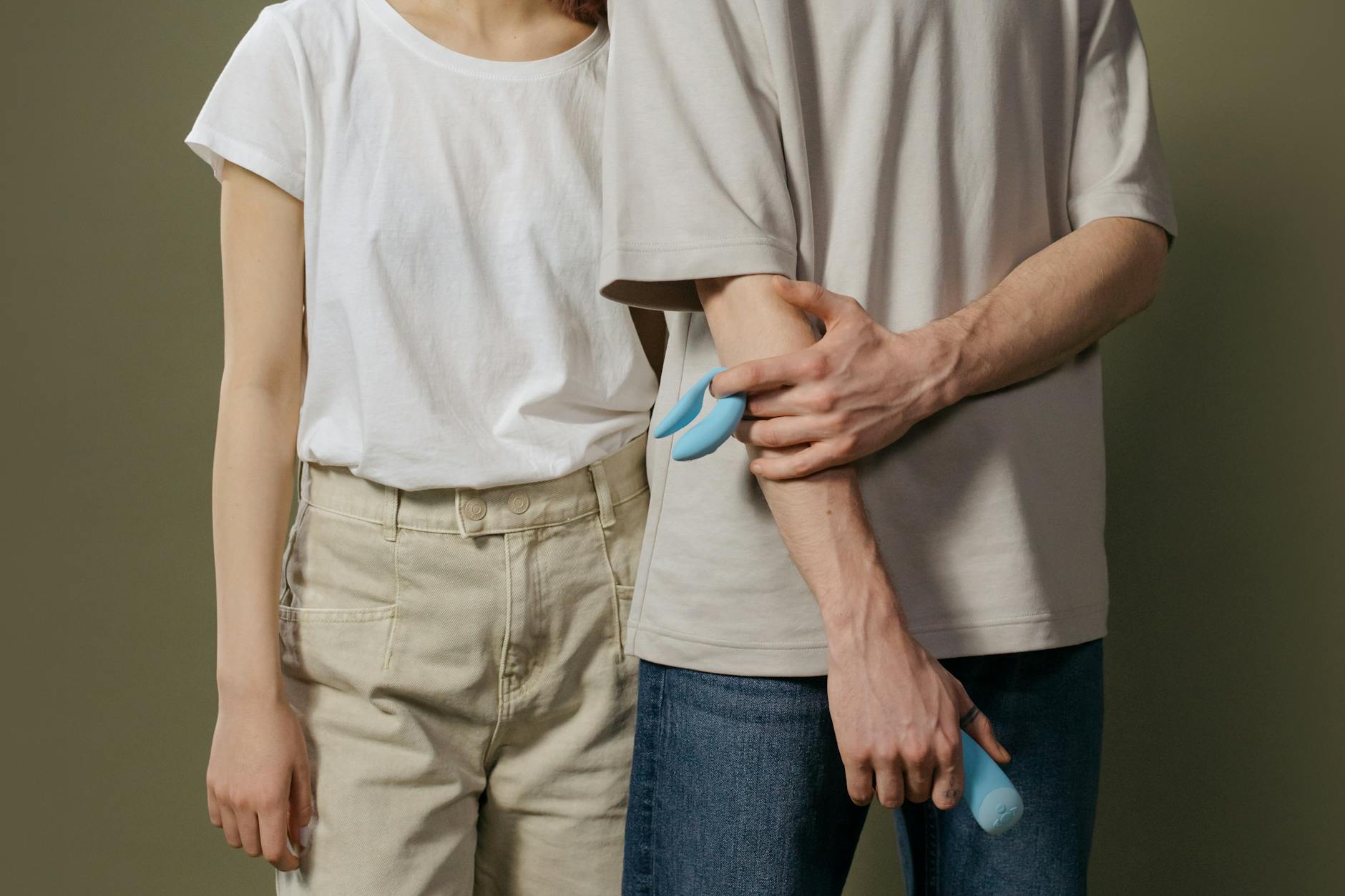
How to Use Lemon Vibrators With a New Partner for the First Time
The awkwardness you're imagining is smaller than the pleasure waiting on the other side. Here's exactly how to introduce a lemon clitoral vibrator without killing the mood.
You want to use a lemon vibrator with someone new. That's the part that feels risky. Not the vibrator itself, but the moment you say it out loud. Here's what usually happens: you imagine it as this huge confession, and then you delay because the "right moment" never comes. Then either you resent them for not reading your mind, or the topic feels too loaded to bring up naturally.
Introducing a lemon sexual toy to a new partner isn't about the device itself. It's about signaling three things: your pleasure matters, you trust them enough to be vulnerable, and you want them involved in what turns you on. Get those three things right, and the device becomes almost secondary.
The conversation fails when it sounds like criticism ("I can't come without this"), shame ("I shouldn't need this, but..."), or logistics ("So anyway, I got this vibrator..."). All three versions make your partner defensive instead of excited.
Here's the version that works: "I've figured out what feels really good for me, and I want to share that with you. It's a lemon vibrator. I'd love to use it together."
That's it. You're saying three things. You're not apologizing for your body. You're not making it about them. You're making it about what you both get.
Don't introduce a lemon clitoral vibrator on the first time you sleep together. Not because there's anything wrong with it, but because early sex needs a baseline. You both need to know how you work with each other before adding tools.
Aim for the third or fourth sexual encounter, or when you've already had a few conversations about what you like. This isn't a hard rule. It's just scaffolding. If you've already been together for weeks and haven't brought it up, the conversation becomes bigger because of the delay. So actually have it sooner rather than later.
The best moment is a quiet one. During the day. Not right before sex, not after sex. Just a normal conversation where you mention it like you'd mention any preference. "Hey, so I've been using this vibrator and it feels amazing. Would you want to try it together next time?"
If they say yes, you're done. If they ask questions, answer honestly. If they hesitate, ask why. Some partners worry about performance. Some think it means they're not enough. Those conversations are worth having before you're naked.
Start with your partner doing what they normally do. Don't introduce the vibrator immediately. Let things build for ten or fifteen minutes the way they usually do. This gives you both a chance to relax into intimacy and reminds you both that the vibrator is an addition, not a replacement.
When you're ready, stop and say something simple. "Want to try it now?" Let them hand it to you, or you can take it. Some partners feel more included if they hold it. Others prefer you to. There's no rule. Just communicate.
Start with lower intensity settings. A lemon vibrator typically has multiple patterns. Begin at pattern one or two. Your tissues need time to adjust, and honestly, the fastest route to pleasure isn't always the most intense one. Let sensation build.
Your partner can use hands while you use the vibrator. They can kiss you. They can watch. They can talk. None of this is weird. Your job is to keep communicating. "That feels good." "Try this pattern." "A little slower." This is normal partnered sex. You're just adding a tool.
After the first time, something often happens. Your partner feels either incredible because they got to participate in something new with you, or slightly threatened because the vibrator worked too well. Sometimes both feelings arrive simultaneously.
If they seem distant afterward, ask. "That felt good. How was it for you?" Don't assume silence means regret. They might just need processing time.
If they seem concerned, listen without defending. "I feel like you need that more than you need me" is a real feeling, even though it's not factually true. Your response isn't to prove them wrong. It's to separate the tool from your desire for them. "I love what we do together. This just adds to it. I want you to be part of it."
Lemon vibrators don't replace partners. They supplement sensation. Partners who understand this become more confident in the role they play. Partners who feel threatened usually just need reassurance that the vibrator is a tool, not a replacement.
After you've used a lemon clitoral vibrator together once, the next time doesn't require a conversation. You just ask in the moment. That simplicity is huge. It means you've normalized the tool, and it stops feeling like a big deal.
Over time, you might discover that certain patterns feel better with certain kinds of touch. You might find that you want it used in specific ways. Your partner might develop preferences about when and how they're involved. These conversations come naturally once you've done it once.
One thing I recommend: don't make every session about the vibrator. Use it maybe half the time, maybe less. This keeps manual stimulation important, keeps your partner's hands and mouth part of your pleasure, and prevents either of you from becoming dependent on one tool.
Your pleasure belongs in the room with your partner. Not hidden. Not apologized for. Shared.
If after using a lemon vibrator with your partner you feel disconnected or they seem withdrawn beyond normal conversation, that's data. It might mean the tool isn't right for this partnership yet. It might mean you need to have a deeper conversation about sex and pleasure and what you each want.
If your partner refuses outright, that's also data. You get to decide what that means for you. Some partners warm up over time. Some don't. Both are valid. Your job is to know yourself well enough to understand what you need and to be honest about whether someone who can't meet you there is the right person for you.
Similarly, if using a lemon vibrator with a new partner makes you feel ashamed or hidden, stop. Either the dynamic isn't right, or you need more time before introducing tools. There's no race.
Here's what I tell my clients: introducing toys like a lemon vibrator to a new partner requires exactly the same confidence as asking for anything else you want in sex. If you're nervous about communicating in general, the vibrator becomes a symbol of that nervousness. If you're someone who speaks up about pleasure easily, the vibrator becomes just another sentence in an ongoing conversation.
So actually, the work isn't about the vibrator. It's about getting comfortable owning what you want and saying it out loud, even when it feels vulnerable. The lemon vibrator is just the practice round.
You deserve a partner who gets excited about your pleasure. You deserve to feel that your wants belong in the room. Starting that conversation, handling the vulnerability of it, and moving forward anyway. That's the skill that changes everything.
Clitoral vibrators are mainstream now. Millions of people own them. If your partner thinks a lemon vibrator is weird, that's about their sex education or their own shame, not about you. You can educate them. You can also decide whether someone willing to shame your pleasure is someone you want to keep sleeping with. That's your call to make.
Pick it yourself. You know your body better than anyone. Choose a lemon clitoral vibrator based on what feels good for you, then introduce it. If your partner wants to explore other options later, great. But the first one should be driven by your pleasure, not their comfort. They're along for the ride.
That's extremely common, and it's not a problem. Many people need external clitoral vibration to reach orgasm. Your body isn't broken. Your partner's touch isn't insufficient. You just need both things. A lemon sexual toy and your partner's hands and attention working together. That's not less. It's just what works for you. Own it.
Ask directly. Not in the moment. Later, in a non-sexual context. "I want to check in. How did you feel about using the vibrator last time?" Listen to the answer. Partners usually want to be included in something that brings their lover pleasure. If they don't, that's worth examining.
Yes. Many partners enjoy this because it adds stimulation that intercourse alone doesn't provide. Depending on position and your comfort, you or your partner can hold it. Water-based lubricant helps. Start with a lower intensity. Communication is still the rule. Some positions work better than others. Experiment.
That's normal. You're letting someone see you in a vulnerable moment. The antidote is reminding yourself that pleasure looks different on everyone. Some people are vocal. Some are quiet. Some move. Some stay still. All of it is fine. You're not performing. You're just being present with sensation while your partner is present with you. That's intimacy, even if it doesn't look like what you expected.