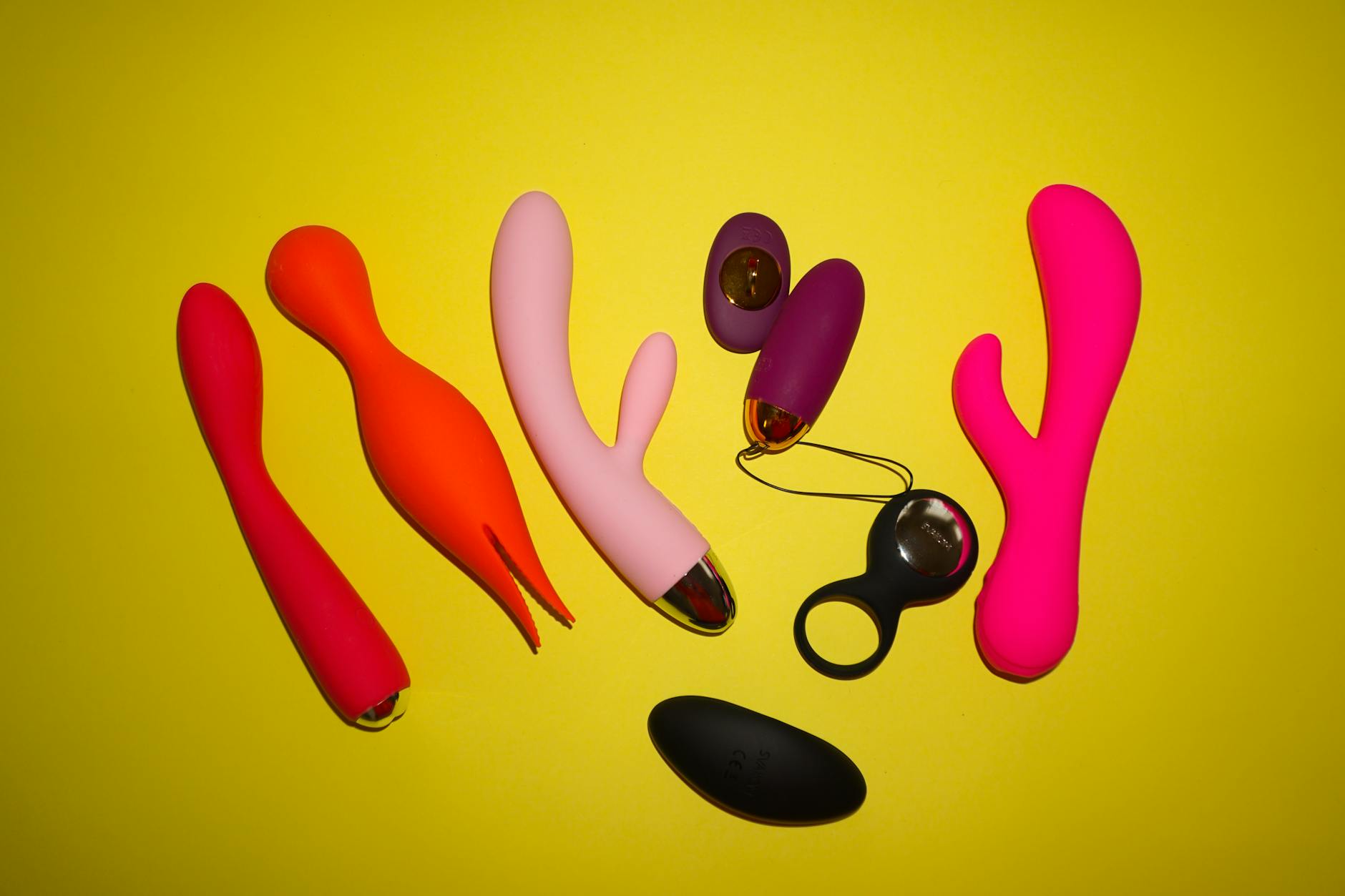
Why you might need gentler stimulation
If you've ever felt that raw, almost bruised sensation after using a traditional vibrator, you're not alone. Many people with vulvas experience discomfort or irritation from direct, high-frequency vibration, especially if their tissue is naturally thin, easily irritated, or if they're navigating hormonal changes that affect tissue thickness and sensitivity.
The culprit isn't always the toy itself. It's the stimulation pattern. Vibration moves side-to-side or up-and-down at rapid speeds. For sensitive tissue, that constant friction can feel intense pretty quickly, leaving soreness in its wake. There's a better way, and it changes everything.
How air-suction feels different from vibration
Lemon vibrators use a completely different technology. Instead of buzzing, they create gentle waves of suction and release around the clitoris. Think of it like the difference between someone tapping your shoulder repeatedly versus someone softly squeezing your hand.
The mechanics matter here. Air-suction stimulates the clitoral nerve endings without the same mechanical friction that traditional vibrators require. You get intense stimulation without the surface-level irritation. For people with sensitive tissue, this is genuinely life-changing.
Many of my clients who'd given up on vibrators after years of discomfort have rediscovered pleasure with lemon clitoral vibrators. The sensation feels closer to oral sex than to traditional buzzing. It's more surface-level comfort combined with deeper, more diffused nerve activation.
The tissue science you actually need to know
Your vulva has roughly 8,000 nerve endings concentrated in and around the clitoris. But not all of those endings respond the same way to stimulation. Surface nerves react quickly to light touch and friction. Deeper nerve clusters need more sustained, broader pressure to fire.
Traditional vibrators primarily activate surface nerves through rapid mechanical movement. The faster and more intense the vibration, the more surface friction, and the more potential for irritation. Lemon vibrators activate both surface and deeper nerves through suction, which spreads the stimulation across a wider area instead of concentrating it in one spot.
This distinction matters especially if your tissue is thinner (which happens after hormonal changes, after pregnancy, or just naturally for some people), easily irritated, or if you've experienced vulvodynia or other sensitivity conditions. Air-suction gives you intensity without the inflammatory response that vibration can trigger.
Who benefits most from gentler stimulation
Lemon vibrators aren't just for people with diagnosed sensitivities. Anyone can benefit. But certain groups often find them especially helpful.
If you're post-menopausal or navigating hormonal shifts, tissue thickness decreases with estrogen. Traditional vibration that felt fine at 30 might feel irritating at 50. Lemon clitoral vibrators adapt to this change without losing intensity.
If you've experienced childbirth, especially with tearing or episiotomy, tissue sensitivity can linger for months or years. Air-suction lets you rebuild pleasure safely.
If you have a diagnosis like vulvodynia, provoked vestibulodynia, or general vulvar pain, lemon vibrators often feel accessible in ways other toys don't, because they avoid the direct friction that triggers pain.
If you're just naturally sensitive or easily irritated (which is totally normal), you deserve a tool that matches your body instead of forcing your body to adapt to a tool.
Using a lemon vibrator safely and effectively
Here's what I recommend to clients starting with air-suction technology.
Start at the lowest setting. If your lemon vibrator has multiple intensity levels, begin at level one and spend 5-10 minutes there. Your body will signal whether you want to increase intensity. This is not a race. The whole point is that you don't need high intensity to feel a lot.
Apply directly or with a small amount of fabric between. Some people prefer direct contact with the silicone. Others find that placing a thin fabric layer (like a washcloth or underwear fabric) between the toy and skin reduces intensity further. Both are fine. Listen to what feels good.
Use solo sessions to learn your response. The first few times you use air-suction stimulation, use the device alone. You'll learn your sensitivity baseline, your preferred intensity level, and how long you can comfortably use it before needing a break. This knowledge transfers to partner play and makes communication easier.
Build in rest days. Even though air-suction is gentler, tissue still needs recovery time. If you masturbate daily, use your lemon vibrator every other day instead. This prevents cumulative irritation and keeps sensation fresh.
Skip lube unless you want it. Unlike traditional vibrators that benefit from lubrication to reduce friction, lemon vibrators work fine without lube. That said, if you like the glide or if you're naturally dry, water-based lube is always okay. Just make sure it's water-based if you're using a silicone toy.
The pleasure difference people actually report
When I ask clients how air-suction feels compared to traditional vibration, the language shifts. Instead of "it gets the job done," I hear "it actually feels amazing." Instead of "it works but then I'm sore," I hear "I can use it as long as I want."
Many people report that orgasms from lemon vibrators feel different too. Deeper, less surface-focused, more full-body. Some describe waves of sensation instead of peaks and valleys. For others, it's the ability to last longer and explore different patterns without fatigue setting in.
The most common response is relief. Relief that they didn't have to choose between pleasure and comfort. Relief that their body wasn't broken. Relief that a different tool exists.
When sensitivity is a signal to see someone
If you're experiencing new-onset pain, persistent rawness, or increasing irritation even with gentler stimulation, that's worth bringing to a healthcare provider. Most of the time it's nothing serious, but conditions like dermatitis, bacterial imbalances, or tissue changes sometimes need professional support.
A good provider will listen without judgment and can often offer topical treatments or referrals that help. You don't have to white-knuckle through discomfort. You also don't have to stop exploring pleasure. You just need the right information and sometimes a little professional support.
The bottom line
Your tissue sensitivity is not a flaw. It's just information about what your body needs. Lemon vibrators respect that information by offering intense stimulation without the friction that creates irritation. If traditional vibrators have left you sore, frustrated, or convinced that you're just "too sensitive" for toys, try air-suction technology. Many people find it's not that they were too sensitive. They were just using the wrong tool.
People also ask
Are lemon vibrators actually quieter than traditional vibrators?
Yes. Air-suction toys are significantly quieter than vibrators. There's no motor buzzing, just a gentle whisper of air movement. If noise is a concern for you (shared walls, sleeping partner, privacy), lemon clitoral vibrators solve that problem while delivering more intense sensation.
Can lemon vibrators cause irritation if used wrong?
Yes, but it's rare and different from vibrator irritation. The main risk is using it for too long without a break. Since air-suction doesn't feel as surface-level intense, it's easy to go longer than you realize. After 30-45 minutes of continuous use, some people develop mild irritation. The fix is simple: build in breaks or use it on alternating days until you know your body's tolerance.
Do lemon vibrators work on all body parts?
They're designed for external clitoral stimulation and work best in that zone. You can explore other areas, but the sensation is optimized for the clitoris. Internal vibrators still exist for internal pleasure. Many people use both types for different kinds of stimulation.
How is a lemon sucker different from other air-suction toys?
The design matters. Lemon vibrators are engineered to create consistent, gentle suction patterns with multiple intensity levels. Lower-quality air-suction toys sometimes feel too strong or create uncomfortable sensations. The silicone quality, seal design, and motor power all affect how it feels. That's why brand matters here.
Can partners use lemon vibrators together?
Absolutely. Some couples use lemon clitoral vibrators during partnered sex for added sensation. Others use them during foreplay. The quietness actually makes partner play easier because you can focus on each other without noise distraction. Communication about intensity preference is the main thing to discuss beforehand.
Do lemon vibrators require special cleaning?
No more than any other silicone toy. Wash with warm water and mild soap after each use, dry thoroughly, and store in a clean, dry place. If you want to be extra careful, toy cleaner spray designed for silicone works well. They're low-maintenance devices.
References
Whipple, B., Komisaruk, B. R. (2002). "Brain (PET) responses to lumbosacral stimulation in sexually responsive women with complete spinal cord injury." Journal of Sex & Marital Therapy, 28(1), 79-86.
Ong, S., Rienzo, P., & Katz, A. (2018). "Sexual well-being in oncology patients: A systematic review." Supportive Care in Cancer, 26(12), 3945-3956.
Meston, C. M., & Frohlich, P. F. (2000). "The neurobiology of sexual function." Archives of General Psychiatry, 57(11), 1012-1030.