The problem nobody talks about clearly
Low desire that lasts for years doesn't feel like a temporary dip. It feels like the permanent state of who you are now. Your body stops sending signals. Your brain stops getting interested. And after enough time passes, you start to believe the two of you simply aren't compatible anymore, or that you're broken somehow.
Here's what's actually happening: your nervous system has learned to stay quiet. Low desire that stretches across months or years doesn't vanish because you're tired that day, or stressed about work. It persists because your body has learned that arousal isn't safe, or isn't available, or doesn't lead anywhere worth investing in. That might be from relationship dynamics, from burnout, from unprocessed trauma, or from years of disconnection. The reason matters less than understanding this: rewiring takes intention and consistency.
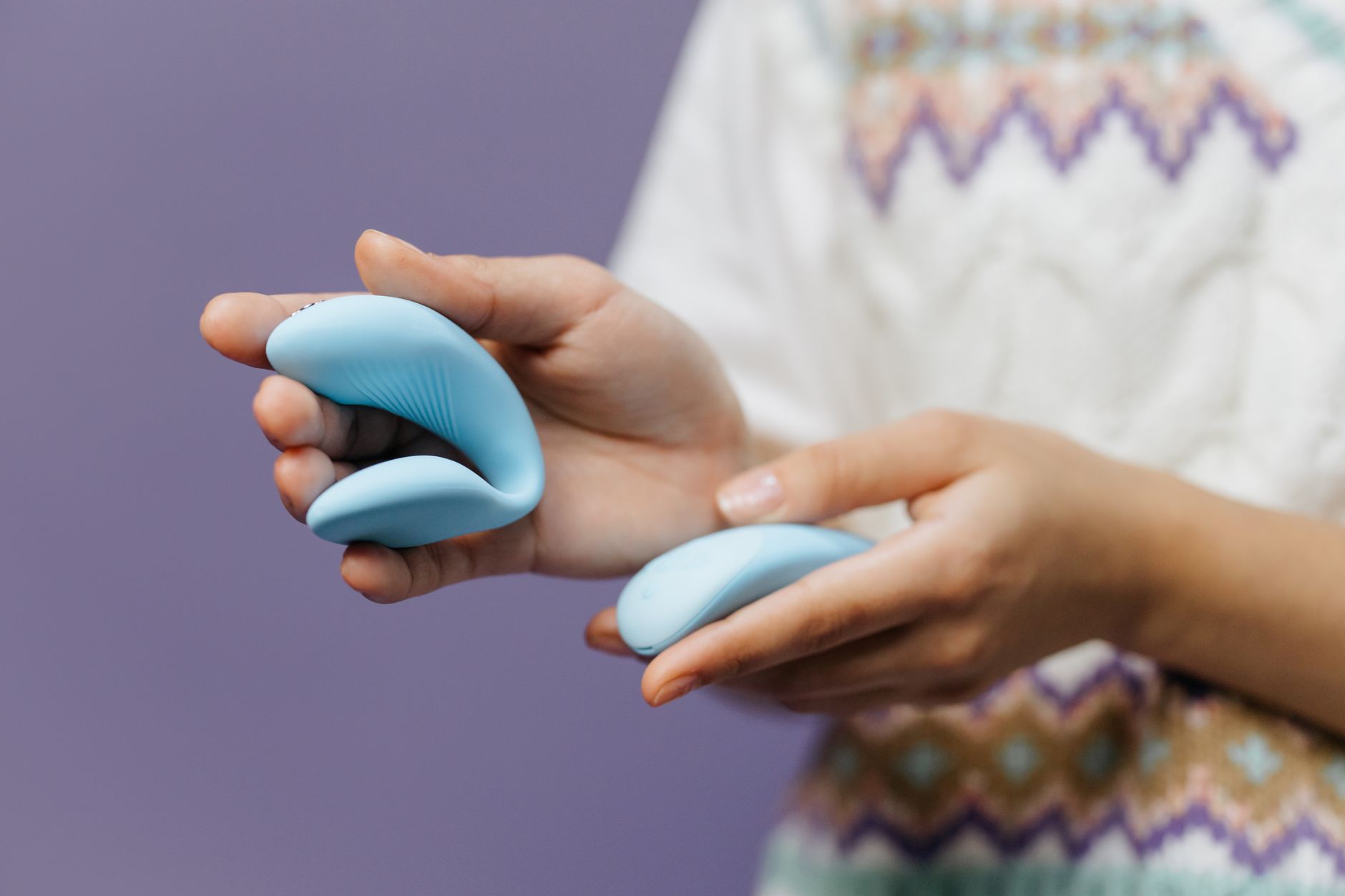
A lemon vibrator isn't a fix on its own. But it can be the tool that makes rewiring possible.
Why sensation matters more than willpower
If you've spent years ignoring your body's signals, your clitoris doesn't just wake up because you decide it's time. Your nervous system has developed a genuine pattern of inhibition. Willpower doesn't override that. Trying harder makes it worse.
What works is sensation without pressure. This is where the design of a lemon clitoral vibrator becomes critical. Air-suction technology gives you consistent, gentle stimulation that doesn't require you to perform arousal or fake intensity to make it "worth it." You're not trying to feel something. You're just noticing what happens when your body is given reliable input.
This distinction changes everything. Instead of: "Am I getting turned on yet?" you shift to: "Okay, what does this actually feel like?" That's curiosity instead of performance. Curiosity rebuilds the neural pathways that low desire shuts down.
The body memory problem
When desire has been low for years, your clitoris often becomes hypersensitive to touch, or paradoxically, sensation feels muted or distant. Both are normal nervous system responses to prolonged low arousal or anxiety around sex. Direct finger stimulation can feel overwhelming or underwhelming. A lemon vibrator's pulsing air-suction pattern bypasses both extremes. It's strong enough to register if sensation has dulled, but diffuse enough that it doesn't trigger the overwhelm response.
I recommend starting on the lowest setting. Pattern 1 or 2. Spend 10-15 minutes just noticing. Not trying to reach climax. Not measuring progress. What does the sensation actually feel like on different parts of your vulva? Does it feel better on the hood, or directly on the glans? Does your body want more speed, or does that feel like too much? These questions are rebuilding the connection between your brain and your body.
The privacy and control piece
Many people with long-term low desire came by it through relationship dynamics where their pleasure didn't feel important, or felt conditional. They learned to monitor their partner's response instead of their own sensation. Using a lemon clitoral vibrator alone, on your schedule, with control over speed and duration, is a correction to that learned pattern.
You're not performing for anyone. You're not racing to finish. You're not checking whether this is "enough" for someone else's idea of satisfying sex. You're just giving your body permission to explore what it actually wants. That permission is radical after years of learned suppression.
Building back to partnered sex (if that's the goal)
Rebounding from long-term low desire doesn't mean jumping straight back into partnered sex. If that's part of your plan, there's a helpful intermediate step. Once you've spent a few weeks exploring solo sensation with your lemon vibrator, you can involve your partner in a bounded way that keeps the focus on your pleasure and sensation.
This might look like: your partner is present while you use the vibrator, but they're not directing anything. They're not touching you. They're not timing you. They're just witnessing your pleasure without input. For many people in relationships where desire eroded over time, being seen as someone who experiences pleasure separate from what a partner wants is transformative.
If your partner has never used toys with you before, the article on how to use lemon vibrators with a partner who's never tried toys walks through that conversation in detail.
The timeline is not linear
Don't expect desire to come roaring back. That's not how the nervous system works. What you're looking for in week one is curiosity. In week two, maybe a small increase in sensation. By week three or four, you might notice your body responding faster, or sensation feeling sharper. These are tiny wins, and they matter.
Some weeks you'll feel nothing new. Some weeks you'll regress. That's normal when you're rewiring a pattern that took years to develop. The point isn't to be aroused all the time. The point is to gradually rebuild the signal between your body and your brain that pleasure is possible, and that it's worth your attention.

Photo by Frank Schrader on Pexels
What helps most: consistency, not intensity
Using your lemon vibrator twice a week for 15 minutes is infinitely more powerful than a three-hour marathon session once a month. Your nervous system learns through repetition. Showing up regularly, even when nothing dramatic happens, sends a message to your body: this is safe, this is worth time, this matters.
I recommend picking two set days. Tuesday and Friday, or whatever fits your life. Not because those days are magic, but because consistency creates a container. Your nervous system knows: okay, on Tuesday, I'm going to pay attention to sensation for a bit. That predictability is calming. It also removes the decision fatigue of "should I do this today?" The decision is already made.
When to check in with a professional
If your low desire is connected to relationship disconnection, a therapist who specializes in couples work can help you and your partner rebuild the non-sexual intimacy that often erodes alongside desire. That's not something a vibrator solves on its own.
If low desire is connected to depression, anxiety, or medication side effects, talking to your doctor matters. Sometimes rebuilding sensation requires addressing what's underneath the suppression.
If sensation doesn't improve after 6-8 weeks of consistent exploration, or if touch becomes painful, that's worth discussing with a gynecologist. Hormonal changes, pelvic floor issues, or other physical factors might need attention.
The permission part
Here's what I tell most of my clients who are rebuilding from long-term low desire: your pleasure doesn't have to earn its place. It doesn't have to serve a relationship. It doesn't have to be efficient or goal-oriented. You get to spend 15 minutes on a Tuesday evening learning what your body actually enjoys, and that's enough reason on its own.
A lemon vibrator is just a tool. But it's a tool that says: I'm worth the time. My sensation matters. My body is still capable of feeling good. And I'm going to find out what that actually looks like. That's the rewiring that changes things.
FAQ
How long does it actually take to feel desire returning after years of suppression?
There's no universal timeline, but most people report noticing small shifts in sensation or responsiveness within 3-4 weeks of consistent exploration. Desire, as in genuine interest in sex, often takes longer. I see most of my clients report meaningful changes in their relationship to their own pleasure within 8-12 weeks. The key is consistency, not intensity. Two 15-minute sessions a week creates more neurological change than sporadic longer attempts.
Can a lemon vibrator help if I'm in a relationship but have lost desire for my partner?
Yes, but with an important caveat. If your low desire is specifically about your partner, reconnecting with your own pleasure won't automatically fix the relationship. What it does do is give you clarity about whether low desire is about your body, or about the relationship itself. That clarity is the first step to making real decisions about what you want. Some couples then rebuild together. Some discover they need different things. Either way, you're making the choice from a place of knowing your own body again, not from a place of assumed brokenness.
Is it normal to feel absolutely nothing the first few times?
Completely normal. When sensation has been suppressed for a long time, your body often needs multiple exposures to register that something is actually happening. You might feel pressure, or vibration, or nothing distinct at all for a couple of sessions. That's not failure. That's your nervous system gradually turning the volume back up. Keep showing up to the sensation, not to the outcome.
What if I feel pain or discomfort when I use a lemon vibrator after years of low desire?
Pain is a signal to stop and check in with yourself. Sometimes it's related to pelvic floor tension, which is common when desire has been suppressed. Sometimes it's an emotional response, like anxiety about pleasure. If pain persists, see a pelvic floor physical therapist or gynecologist who takes this seriously. How Lemon Vibrators Help When Pelvic Floor Tension Makes Pleasure Painful covers this in detail if pelvic tension is the issue.
Is using a lemon vibrator alone going to rebuild my desire for partnered sex?
Not automatically, but it's a foundation. Rebuilding your relationship to your own pleasure is the prerequisite for genuine partnered sex. Once you know what your body actually needs and enjoys, you can communicate that to a partner, or you can decide whether partnered sex is actually what you want. Some people discover they're much more interested in their own pleasure solo than they ever were in partnered sex, and that's valuable information. Others rebuild desire for partnered sex once they're not approaching it from a place of anxiety or obligation.
What's the difference between using a lemon clitoral vibrator and a regular vibrator for rebuilding desire?
The air-suction technology in a lemon vibrator creates a pulsing sensation that's gentler and more diffuse than direct vibration. For people rebuilding sensation after long-term suppression, that matters. Direct vibration can feel overwhelming if your nervous system is still in protection mode. Air-suction feels more like a wave than a buzz. It also stimulates the whole clitoral complex, not just one nerve cluster. Most people rebuilding from long-term low desire find that easier to work with than traditional vibration, especially in the first few weeks.
If nothing changes after two months, should I give up?
Not necessarily. Two months is still relatively early when you're rewiring a pattern that took years to develop. That said, if you genuinely notice zero change in sensation, responsiveness, or interest after 8-10 weeks, it's worth checking in with a doctor or therapist. Sometimes what feels like low desire has a medical component. Sometimes it's rooted in relationship dynamics that require professional support. A vibrator is a powerful tool, but it's not a substitute for care that addresses what's actually underneath the suppression.