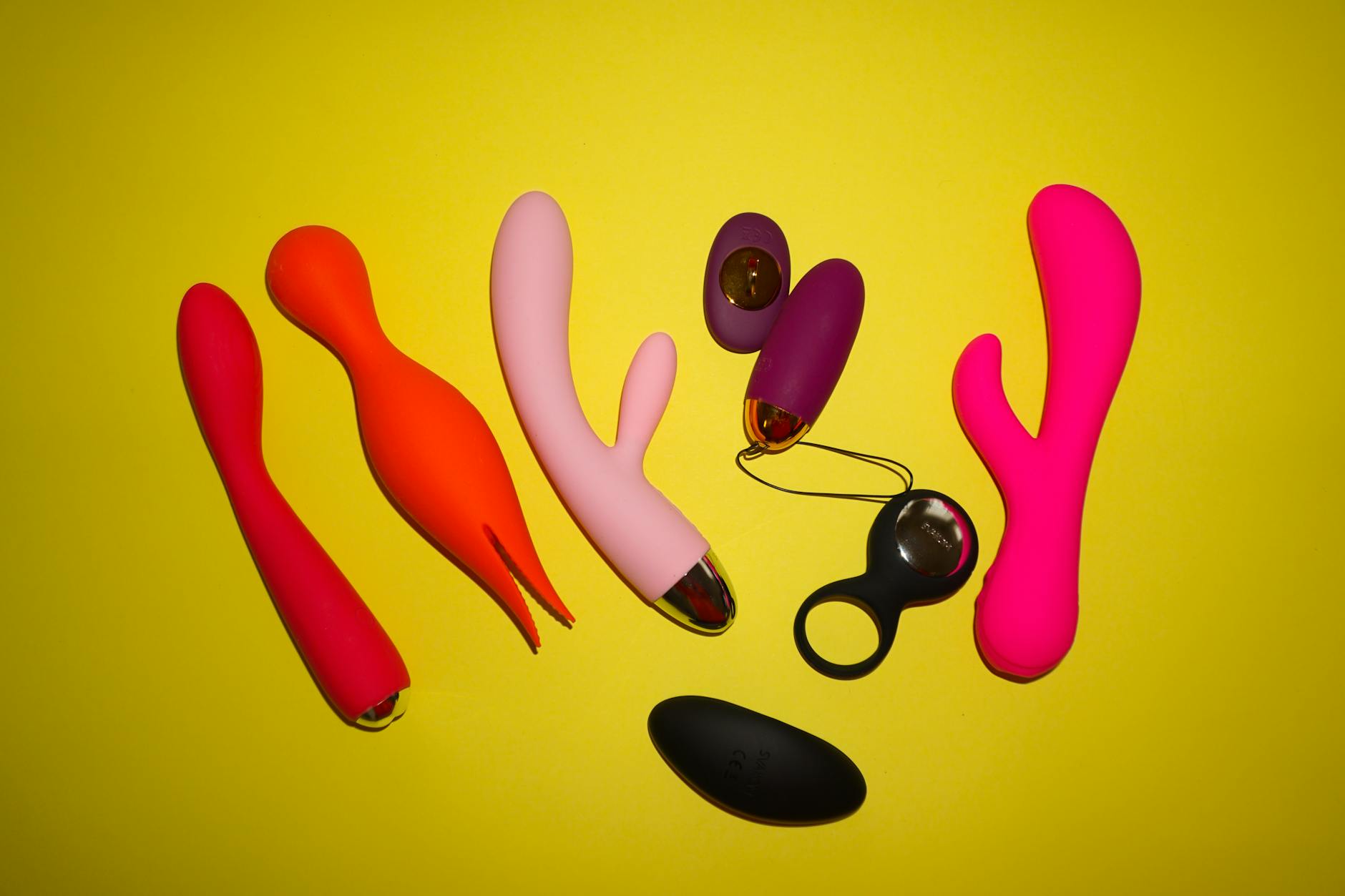
Let's start with the real conversation
You started antidepressants for your mental health. That was the right call. But somewhere between the second week and the second month, you noticed: arousal takes forever now. Or it doesn't show up at all. Or it shows up but feels muted, like you're watching pleasure happen behind glass instead of living it.
That's not a side effect you imagined. It's a neurochemical reality, and it's one of the most undertalked-about costs of SSRIs and SNRIs.
Here's what helps: understanding what changed, what didn't, and why a lemon clitoral vibrator becomes genuinely useful when your brain chemistry has shifted.
What antidepressants actually do to arousal
SSRIs (selective serotonin reuptake inhibitors) and SNRIs (serotonin-norepinephrine reuptake inhibitors) work by keeping serotonin hanging around longer in your synapses. That's what stabilizes mood. But serotonin also regulates dopamine and norepinephrine, two neurotransmitters that are absolutely central to sexual response.
Here's the chain reaction: higher serotonin can suppress dopamine, and dopamine is the "want" chemical. It's what makes you notice attraction, feel desire, and move toward pleasure. When dopamine dips, desire flattens. You might not crave sex at all, or it might feel like a checkbox task instead of something your body is pulling you toward.
The second thing that happens: arousal becomes slower to build. Your genitals might respond eventually, but the automatic, reflexive speediness goes quiet. It takes longer to get blood flow, longer to feel tingles, longer to cross the threshold from "yeah, we could" to "yes, I actually want this."
The third part: sensation itself can feel muted. This isn't pain. It's more like the volume got turned down. Everything still works technically, but the intensity is lower.
Why this doesn't mean you're stuck like this
Three important things that do not change:
Your capacity to orgasm. Most people on SSRIs can still orgasm, it just takes more direct stimulation and more time. The neural pathways are still there.
Your ability to feel pleasure. This is critical. Numbness feels total from the inside, but it's almost never total. It's a muting, not an off-switch.
Your right to have sex feel good. Too many people assume delayed arousal is the cost of mental health, and they just... accept it. You don't have to.
The three strategies that actually work
Strategy one: Separate arousal from desire.
For people on antidepressants, waiting to feel desire before touching usually means waiting forever. The antidepressant is actively suppressing the signal that says "I want this." So instead, you build arousal through touch, and desire follows.
Start with a lemon clitoral vibrator on a low setting. Not because you're in the mood, but because the physical stimulation will wake up your nervous system. The suction pattern does something that manual touch doesn't: it sends a consistent, targeted signal to your clitoris that doesn't depend on you feeling anything first.
Your job is not to feel aroused before you start. Your job is to give your body a reason to become aroused. That's the inversion that changes everything.
Strategy two: Budget real time.
If you used to reach arousal in five minutes, assume thirty now. Not because something is wrong with you. Because your neurotransmitters are literally working against the speed. Once you accept that, the waiting stops feeling like failure.
Lie down. Use your lemon vibrator on pattern two or three. Don't race to orgasm. Spend fifteen minutes just letting sensation build. You'll notice something interesting: arousal is starting to register, even if you didn't feel the urge to begin with. That's how the process works for you right now.
How lemon vibrators specifically help this situation
A standard vibrator gives you buzz. Helpful, but if sensation is muted, buzz alone doesn't always break through. A lemon clitoral vibrator works differently. The suction mechanism creates rhythmic pressure and release, which recruits more nerve endings and creates a sensation pattern that feels more distinct, more intense, without being painful.
For someone whose arousal is slowrolling and sensation is turned down, that pattern matters. It's not just vibration. It's a conversation between the toy and your body that's harder to ignore. That's why so many people find that a lemon vibrator works better than other toys when antidepressants have flattened their baseline sensation.
Secondly, a lemon vibrator lets you find a rhythm that matches where you are neurologically. You can start at pattern one (gentle) and stay there for ten minutes, then move to pattern two. You're not pushing for intensity. You're following what your nervous system can actually register right now.
The medication conversation you might need to have
If arousal stayed flatlined after three months, or if it's interfering with your desire to have sex at all, that's worth raising with your doctor. Not because you should stop taking your antidepressant. Because there are sometimes alternatives.
Some SSRIs have lower sexual side effects than others. (Sertraline and paroxetine tend to be rougher. Bupropion actually tends to enhance desire.) Some doctors add a small dose of bupropion to an SSRI specifically to counteract the dopamine suppression. Some people split their SSRI dose or take it at a different time of day.
None of that is guaranteed to fix the problem. But it's a conversation worth having if you're six months in and things haven't shifted.
What rebuilding arousal actually looks like
Honestly, it's boring and unglamorous. You use your lemon vibrator two or three times a week. You don't wait to be in the mood. You don't perform for anyone else. You're just practicing the skill of noticing sensation and letting arousal build slowly.
Something shifts after four or five weeks. Not a magic switch flipping. Just a gradual increase in how much sensation registers. Patterns that felt like pressure now feel like pleasure. Arousal starts to appear even before you pick up the toy. Your baseline is calibrating upward.
That's not your antidepressant failing. That's your nervous system learning a new operating system and your brain creating new associations with pleasure, now that the chemical stakes are different.
One more thing: talk to your partner if you have one. Not "my medication broke my sex drive" but "my arousal takes longer to build now, and here's how we can make that work." The shift from passive waiting to active touch is actually an intimate practice, if you frame it that way. Some couples find this period strengthens their physical connection because there's less pressure and more presence.
The reality check
Antidepressants save lives. If you need one, you need one. And yes, the arousal cost is real. But it's not permanent, it's not total, and it's not a reason to white-knuckle through an unfulfilled sex life. A lemon clitoral vibrator, a little patience with your new neurology, and maybe a conversation with your doctor can rebuild something that feels good again.
Your mental health comes first. Your pleasure deserves to come second.
People also ask
How long does it usually take for antidepressants to affect arousal?
Most people notice changes between two to six weeks after starting. Sometimes it's immediate. Sometimes it takes longer. The effect depends on the specific SSRI, your dose, and how your individual brain responds. If it hasn't happened by week two, it might not happen at all, but changes can emerge over months as your body adjusts to the medication.
Can I switch antidepressants if mine is killing my sex drive?
Maybe. Bupropion and some other antidepressants have lower sexual side effects than SSRIs and SNRIs. But switching comes with its own risks: you might lose the mood stability you finally found. Talk to your prescriber. Sometimes the answer is adding something to counteract the sexual side effect rather than switching entirely. Sometimes it's finding a lower dose that still works for your mood.
Will using a lemon vibrator help me feel arousal faster?
It can. A lemon clitoral vibrator's suction mechanism creates a distinct sensation pattern that doesn't depend on baseline arousal. For many people whose sensation is muted by antidepressants, that stronger signal helps build arousal more efficiently than other toys. The rhythmic pressure and release pattern is harder for a numbed nervous system to ignore. That said, it's not a quick fix. You still need time and consistency.
Is it normal to have no desire at all while on antidepressants?
Yes, it's common. Dopamine suppression is real. But complete absence of desire isn't universal, and if it persists beyond three months, it's worth discussing with your doctor. Some people respond well to adjusting timing, dose, or adding something to counteract the dopamine dip. You don't have to accept zero desire as the permanent price of mental health.
Can I combine lemon vibrators with my antidepressant, or will they interfere?
There's no interaction between a sex toy and your medication. A lemon vibrator is just a physical tool. The point is that it gives your nervous system a different kind of input than you can create alone, which can help break through sensation numbness and rebuild arousal pathways. Use it whenever you want, as often as feels good.
Does sensation eventually come back when you're used to the antidepressant?
Sometimes. Many people find that after six to twelve months, the nervous system adapts and sensation normalizes somewhat. Others plateau at a slightly lower baseline but find workarounds that feel good. Some people need to adjust their medication or add something. The timeline is different for everyone, but adapting to a new sexual baseline is absolutely possible.
What happens next
If arousal has flattened because of antidepressants, you're not broken and you're not alone. This is one of the most common sexual side effects of mental health medication, and it's worth taking seriously. A lemon clitoral vibrator can be part of rebuilding arousal, but so can time, patience, a conversation with your doctor, and grace for a body that's processing new chemistry.
Your mental health is non-negotiable. Your pleasure deserves to be non-negotiable too. If you want to talk through what's happening and explore options, we're here. Reach out at /contact.
For more on rebuilding pleasure after medication changes, read how lemon vibrators help rebuild desire after depression or medication changes and how to use lemon vibrators when arousal takes longer to build.