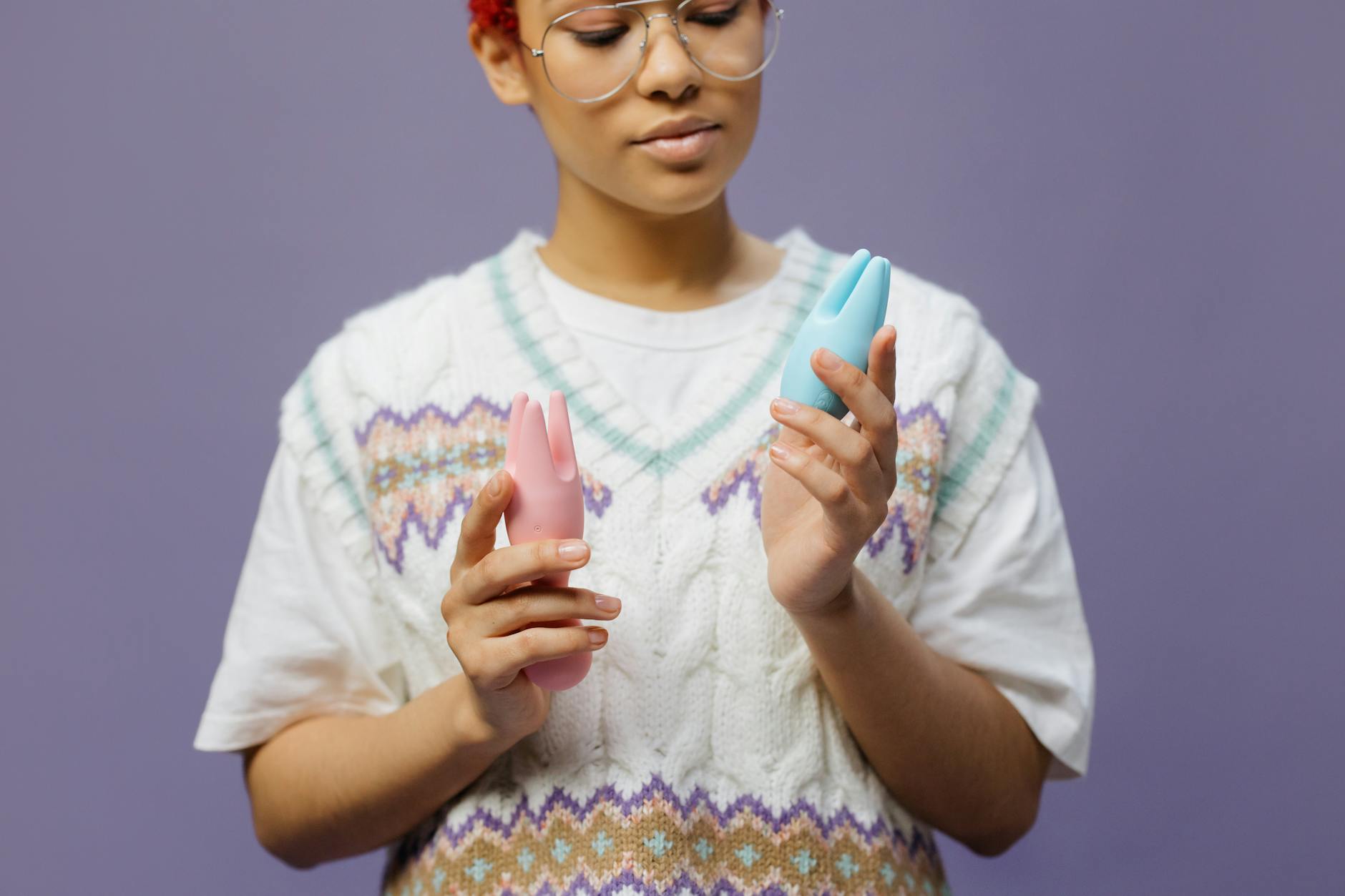
How to Use Lemon Vibrators When Arousal Takes Longer to Build
Let's be real: arousal used to feel automatic, and now it doesn't. Maybe it takes 20 minutes instead of five. Maybe your body needs a different kind of touch. Maybe your mind is still halfway through the day's to-do list when your partner is ready to go. Whatever the shift, you're not broken. You're just operating differently now.
This is one of the most common things I hear in my practice, and it's also one of the easiest to address once you stop treating it like a problem and start treating it like information. Your body is telling you something. The question is what you're going to do about it.
Why arousal takes longer (and it's usually not what you think)
People assume slow arousal is always hormonal. Sometimes it is. But in my experience, it's more often one of three other things.
Attention is harder to gather. Your nervous system has been stretched thin. Work, family stuff, financial pressure, relationship stress. You're trying to shift into desire while your brain is still in solving-problems mode. That's not a personal failure. That's neurology.
Touch quality has shifted. What worked at 25 might not register at 35 or 45. Sensitivity changes. Nerve endings respond to different kinds of stimulation. Generic friction that used to light you up might feel like nothing now, or worse, slightly irritating. This is why many people find that lemon clitoral vibrators, which use suction and pulsing rather than direct vibration, wake up pleasure pathways that weren't responding the way they used to.
You're not actually turned on yet. And that's okay. Arousal isn't something that happens to you. It's something you build. The problem isn't that it takes longer. The problem is that we've been taught to expect it to happen instantly, like flipping a switch. When it doesn't, we panic. When we panic, it takes even longer.
How lemon clitoral vibrators work for slow arousal
The lem vibrator and other lemon-style suction devices are particular good tools when arousal is sluggish because they don't require you to be already aroused to start responding.
Traditional vibrators work best when you're already somewhat stimulated. They layer intensity on top of existing sensation. But lemon suction vibrators create their own sensation from the ground up. They stimulate nerve clusters through gentle suction and pulsing patterns, which means your body can respond even when you're not yet primed.
That's not a small thing when arousal is taking its time. It means you're not waiting for your body to cooperate before you start. You're starting the conversation, and your body joins in from there.
The other advantage: suction feels novel. Your nervous system perks up for new sensations in a way it doesn't for the same old vibration pattern you've been using for years. That novelty can jumpstart arousal when the standard approach isn't landing.
Building your warm-up ritual
If arousal takes longer, the fix isn't to push harder or add more intensity. It's to plan for it.
I tell my clients to think of this as a ritual, not a race. That reframe alone changes how you approach the time.
Set aside 30 to 45 minutes. Not 10. Not "whenever we get around to it." Block time like you would for anything that matters. Your nervous system settles into time, and that settling is half the work.
Start without the lemon vibrator. Touch your partner, or touch yourself. Let attention move to sensation. This isn't foreplay in the old sense. It's attention training. You're teaching your brain where you want it to live.
Introduce the device slowly. Use a low pattern first. The lem vibrator has multiple intensity settings for exactly this reason. Start at setting one or two. Let your body register what's happening. Arousal will build from there.
Stay with patterns, not intensity. When arousal is slow, people often think "I need stronger." Usually what helps more is rhythm. The pulsing patterns on most lemon clitoral vibrators are designed to build sensation gradually. They're doing the work of building arousal for you, not just adding noise on top of it.
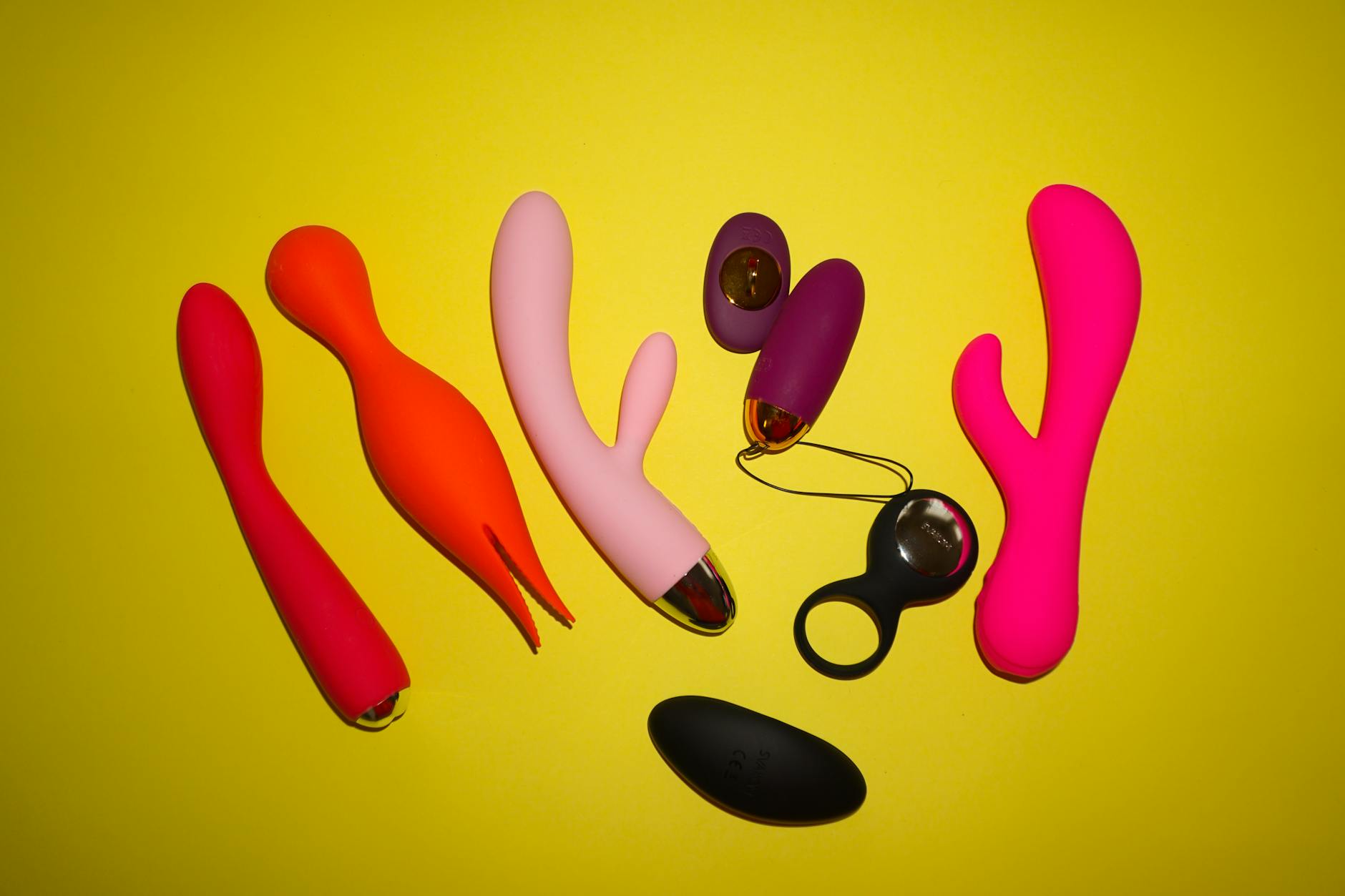
Photo by FounderTips on Pexels
The mindset shift that changes everything
Here's what I've noticed over years of working with couples: the moment someone stops viewing slow arousal as a deficit and starts viewing it as information, everything shifts.
Information about what? About what your body actually needs right now. About pacing that works for you, not the pace you think you should be operating at. About the tools and touch and attention that will actually land.
When you fight against slow arousal, you make it slower. You create a feedback loop of frustration, which makes your nervous system tighten further, which makes arousal even harder to access. But when you accept that this is how your body is moving right now and you build a practice around that, something changes.
You stop performing arousal and start actually experiencing it.
That's where lemon adult toys come in. They're not a workaround for broken arousal. They're a tool for the arousal rhythm you actually have now. And that rhythm, by the way, often leads to more intense and complex pleasure than the quick spike you used to have.
Troubleshooting: what to do when even the lem vibrator isn't working
Sometimes you set everything up perfectly, and nothing happens. That's useful information too.
First, check whether you're actually relaxed. Slow arousal often lives alongside low-grade tension. Your shoulders are up. Your jaw is clenched. You're thinking about whether you're supposed to be feeling something by now. That anxiety will block sensation every time. Drop the vibrator for a minute. Breathe. Move your body. Come back when your nervous system has actually downshifted.
Second, consider whether your attention is actually available. I've had so many clients tell me they're "trying" to be in the moment, but really they're thinking about work emails or what they're making for dinner. That's not a failing. That's a sign you need either more transition time (take a bath first, go for a walk), or a different location (somewhere that doesn't smell like a to-do list).
Third, ask whether you need manual touch first. Some people find that fingers or a partner's mouth wakes up sensation in a way that even the best lemon clitoral vibrator can't do alone. That's not a problem with the tool. That's you knowing what your body needs.
If arousal is still sluggish after those adjustments, it might be worth exploring whether something else is at play. Stress hormones can genuinely suppress arousal. So can relationship tension that isn't directly about sex. So can medication side effects. Those conversations are worth having with a partner or a therapist, not just a vibrator.
When a partner is involved
If you're working with someone, communication matters more than the device.
Tell them directly: arousal takes longer now, and that's not about them. It's not about attraction. It's about how your nervous system is operating. That distinction keeps a partner from taking it personally and makes the whole experience collaborative instead of one-directional.
Then tell them what helps. "I need you to touch me without expecting a response for 15 minutes" or "I want to use the lemon vibrator while you watch" or "I need to masturbate first to warm up, then I can be with you." That's not a rejection. That's an invitation to a rhythm that actually works.
People also ask
How long is too long for arousal to take?
There's no such thing. Some people warm up in two minutes. Others need 45. Both are normal. The only "too long" is if it bothers you or if it's been a sudden change that signals something else is going on (stress, medication, relationship tension). If slow arousal is consistent and you're not frustrated by it, it's just your body.
Will using a lemon vibrator make arousal faster over time?
Sometimes. Using a device regularly can help your nervous system remember how to access pleasure. But that's not the point. The point is pleasure now, not some future version of your body. If slow arousal is how you're wired, that's the rhythm to build around, not fix.
Can slow arousal be a sign of low desire?
Not necessarily. Slow arousal and low desire are different. You can have slow arousal and high desire for a specific person or situation. You can have quick arousal and low desire overall. Slow arousal is about speed. Desire is about wanting. Conflating them creates confusion. Check in with yourself about what's actually true before assuming one predicts the other.
Is slow arousal more common at certain ages?
It becomes more common as people move through their 30s and 40s, particularly after stress, life transitions, or hormonal changes. But I've worked with 22-year-olds with slow arousal and 55-year-olds with instant arousal. Age is a factor. It's not the whole story.
Should I be using a lemon clitoral vibrator if arousal is slow?
If you're asking because you think you should, no. If you're asking because you're curious whether it might help, yes. Try it. The right tool is the one that creates sensation you actually enjoy. For many people with slow arousal, that's lemon suction vibrators, because the pattern and pulsing create response without requiring existing arousal. For others, it's something different. Experiment.
What if my partner thinks slow arousal means I'm not attracted to them?
That's a conversation, not a vibrator problem. Talk to them directly about what slow arousal means (nothing about attraction) and what helps (specific touch, more time, maybe how to use a lemon vibrator as a couple). If they still take it personally, that's relationship tension worth exploring together or with a therapist.
The bigger picture
Slow arousal isn't a glitch. It's not something to optimize away. It's information about what your body needs, and once you start listening to that instead of fighting it, everything gets easier.
The right tool, the right pacing, the right partner communication. Those three things together transform slow arousal from something that feels broken into something that feels intentional.
And intentional pleasure, I've found, often runs deeper than the spontaneous kind anyway.
If you're still figuring out what works for you, or if slow arousal is connected to other relationship stuff, let's talk. Reach out to Hello Nancy and we can discuss what's actually going on for you.