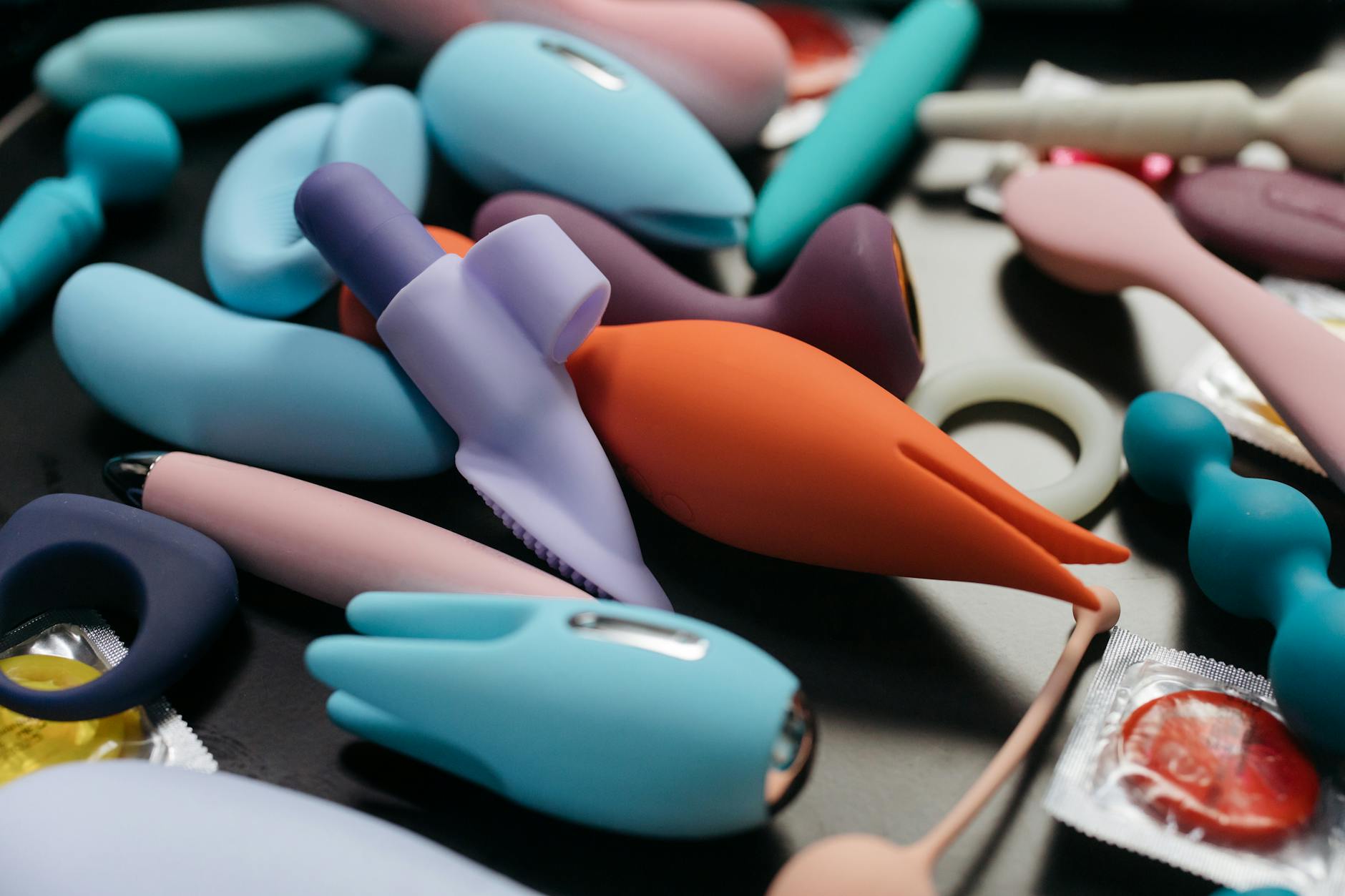
Your sex drive isn't supposed to be a steady hum. It's supposed to flux. But somewhere between puberty and now, most of us internalized the idea that desire should show up on schedule, like a good employee. That's fiction. Real desire arrives when stress drops, when you feel seen by your partner, when your nervous system isn't running on fumes, when your hormones aren't mid-surge, when you're not worried about money or your mother.
Inconsistent sex drive isn't a dysfunction. It's a feature. It means you're wired to respond to your actual context instead of bulldozing through it.
Here's the problem: when desire is unpredictable, partnered sex becomes a negotiation. Someone wants it tonight, but you don't feel it yet. Someone's disappointed. You feel guilty for not feeling guilty. The whole thing becomes a performance instead of a pleasure. And if you're solo, an inconsistent drive can feel even more confusing because there's no one else to blame—it's just you, waiting for the mood to arrive, sometimes wondering if it ever will.
Most people approach pleasure like this: wait for arousal to build naturally, then engage. Which is great if arousal shows up on cue. When it doesn't, you're stuck.
A lemon clitoral vibrator (or any well-designed clitoral toy) flips that script. It creates stimulation independent of your baseline arousal level. You're not waiting for desire to arrive and then escalating it. You're using external input to kickstart the pathway. Sometimes arousal builds from there. Sometimes the stimulation itself becomes the thing, and you don't need the traditional desire-buildup at all.
This matters because inconsistent sex drive often comes from one of three places: stress or external life pressure, hormonal variance (cycle, medications, life stage), or patterns of disconnection from your own body. In all three cases, waiting passively for arousal to arrive is fighting your neurology, not working with it.
A lemon sucker or clitoral vibrator works because it doesn't require you to already be aroused. It meets you where you actually are.
This is the thing nobody says out loud: when your nervous system is in high alert, your body deprioritizes pleasure. This isn't laziness or low libido. It's your vagus nerve doing its job. If you're carrying financial anxiety, caregiving stress, or relationship tension, your body is literally redirecting blood flow and neurochemical resources away from the sexual response system and toward survival.
You can't willpower your way out of that. But you can use external stimulation to interrupt the pattern.
When stress is high, try this: set 10 minutes aside with a lemon vibrator. You don't need to "get in the mood" first. Start on a lower pattern (patterns 1 or 2 if you're using a Hello Nancy Lemon). Let the suction do the work while your brain stays offline. Often, after 5-7 minutes of consistent, gentle stimulation, your nervous system begins to downshift. Your body starts to recognize it's safe to feel something. That might lead to arousal. It might just be pleasant sensation with zero fantasy involved. Both are wins.
If you're menstruating, hormone levels are swinging wildly across your cycle. Day 10 of your cycle feels neurologically nothing like day 22. If you're on hormonal birth control, your arousal floor might sit lower than it did off it. If you're transitioning between medications or dealing with thyroid issues, your baseline desire can shift month to month.
None of this means your sex drive is broken. It means your chemistry is changeable, and expecting static desire across a dynamic biochemistry is a setup for disappointment.
Here's what helps: tracking. Not obsessively, just noting when you actually feel desire across a few weeks. You'll likely see patterns. Maybe you notice genuine arousal spikes mid-cycle but flatlines during the luteal phase. Maybe you feel sexual on weekends when work stress drops but not Wednesday nights. Maybe you feel desire more readily after exercise or after connection with your partner, even non-sexual touch.
Once you see the pattern, you can work with it instead of pretending it doesn't exist. On high-desire days, lean into partnered sex if that's available. On low-desire days, solo play with a lemon vibrator or another tool removes the negotiation. You get sensation and release without the pressure to "be in the mood."
Here's a paradox: people with inconsistent desire often feel more pressure in partnered settings. Your partner wants sex, you don't feel like it yet, so you either decline (guilt, rejection worry) or perform (resentment, disconnection). Both outcomes tank desire further.
Solo play with lemon vibrators or other clitoral vibrators breaks that cycle. It's permission to access pleasure on your own terms, without negotiation. It also teaches your body what arousal actually feels like when there's zero pressure involved. You learn your own patterns. You discover what patterns of stimulation work when you're not stressed about someone else's experience.
And weirdly, this often improves partnered sex. When you're not starved for sensation, partnered play becomes easier and more fun. You're not desperate for release. You're already somewhat resourced. That changes everything.
Instead of chasing some imaginary "normal" sex drive, try this:
First, let go of frequency. Whether you want sex once a month or three times a week, that's your rhythm. Other people's rhythms aren't relevant.
Second, track what happens before desire actually shows up. Do you need three hours of disconnection from work? Do you need physical exercise? Do you need a specific type of touch from your partner? Do you need your nervous system fully offline? Do you need to feel financially secure that month? That information is gold.
Third, build pleasure into your solo routine without waiting for desire first. Use your lemon vibrator or clitoral vibrator once or twice a week, or whenever suits you, without waiting for arousal. Let the stimulation create the sensation. After a few weeks, your body will start anticipating it. You'll feel desire building in anticipation. That's not forced. That's your brain and body learning a new pattern.
Fourth, communicate with your partner about what you're learning. "I noticed I feel more desire when I've had solo time first," or "My arousal is really unpredictable on high-stress work weeks, and that's not about you," or "I want to stay connected to pleasure even when my drive dips." That conversation is way more useful than pretending to feel desire you don't.
If your sex drive has completely vanished and hasn't returned in months, or if inconsistent desire is tied to depression, anxiety, or medication side effects, a therapist or sex-positive doctor is the move. Sometimes inconsistency is just chemistry. Sometimes it's pointing to something that needs attention.
But most of the time, especially if you've just been assuming your desire should work like someone else's, it's permission you need. Permission to feel what you feel. Permission to use tools that work for your actual neurochemistry. Permission to build a pleasure practice that fits your real life instead of the fantasy version.
A lemon vibrator or clitoral vibrator is just a tool that gives you that permission in physical form. It says: you don't have to wait. You don't have to perform. You can access sensation and pleasure on your timeline.
That's the whole thing. Your sex drive isn't wrong. Your body isn't broken. Your pleasure just needs a slightly different strategy.
Completely normal. Desire fluctuates based on stress, hormones, relationship quality, sleep, health status, and a hundred invisible variables. People who report "consistent" desire usually aren't—they're just not paying attention to the variation. If your drive shifts across your cycle, with stress levels, or alongside relationship dynamics, you're in the majority.
No. The opposite is true. When you remove the pressure to "get aroused first," you actually reduce the anxiety that kills desire in the first place. Using a lemon clitoral vibrator solo, without expectation, teaches your body that pleasure is available and safe. That foundation often makes partnered desire easier, not harder.
About three to four weeks if you're tracking. You need enough data points to separate signal from noise. Note when you feel genuine arousal, what was happening before, and what your life stress looked like that day. After a month, patterns usually emerge. Then you can adjust expectations and timing around reality instead of fiction.
That's one of the most common disconnects in long-term partnerships. Have the conversation from a place of "this is how my body works, not how I feel about you." Propose solo time before partnered sex on nights when your drive is predictably lower. Suggest using a lemon vibrator together sometimes so there's no performance pressure. And honestly, sometimes one partner needs to accept that their partner's desire will never match theirs—and find ways to stay connected that don't center on perfectly synchronized sex drive.
Often yes, but with a caveat. If your low desire is anxiety-driven, forcing stimulation when you're panicked will backfire. But using a lemon vibrator in a low-pressure moment—maybe after a walk or a shower, when your nervous system is slightly calmer—can help you build a positive association with pleasure again. If anxiety is severe, pairing vibrator use with therapy or meditation creates a better container.
Both have different value. Solo use teaches you what your body wants without performance pressure. Using a lemon clitoral vibrator together can reduce the burden on your partner to "get you there" and make the experience collaborative instead of one-sided. Experiment with both and see what serves your actual desire, not what you think should happen.
Inconsistent sex drive isn't a problem to solve. It's data to listen to. Once you do, you can build a pleasure practice that fits your real life—not the imaginary "normal" that never existed in the first place. A lemon vibrator just makes that easier, because it lets you access sensation on your actual timeline, not a fantasy one.