Let's talk about pelvic floor dysfunction and pleasure
Here's the thing about pelvic floor dysfunction: it messes with more than just comfort. It messes with your sense of what's possible. When your pelvic floor is tight, painful, or just plain confused, the idea of using a lemon vibrator can feel like choosing between two bad options. Skip pleasure entirely, or trigger pain. Honestly, that's a false choice.
Pelvic floor dysfunction is real, it's common, and it absolutely changes how you approach intimacy. But it doesn't end it. What you need is a different strategy, not surrender.
Understanding pelvic floor dysfunction and sensation
Your pelvic floor is a group of muscles that support your bladder, uterus, and bowel. When they're tight, weak, or uncoordinated, you get pain during or after sex, difficulty with penetration, urinary issues, or that constant ache in your lower belly. It's not in your head. It's real muscle tension.
The tricky part: pelvic floor dysfunction makes tissues more sensitive to pressure and vibration. Traditional vibrators, which rely on direct stimulation through vibration alone, can make things worse. They're essentially pushing pressure into an already-tight system.
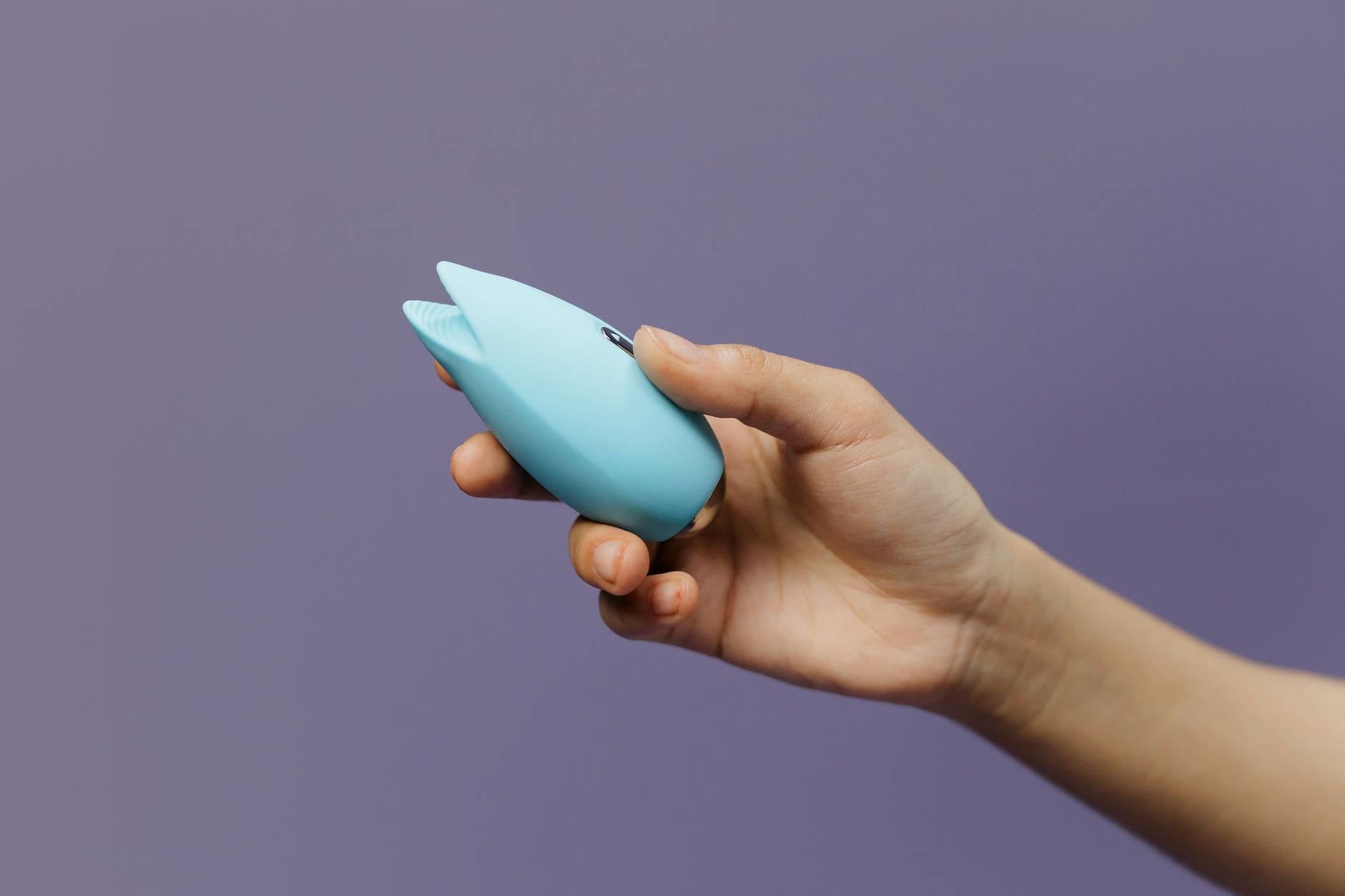
That's where the lemon vibrator changes the game. The suction mechanism of Hello Nancy's Lem vibrator works differently. Instead of hammering tissue with vibration, suction gently draws tissue upward and stimulates the nerve endings in a way that's often less triggering for people with pelvic floor tension.
Why suction works better than vibration alone
When you have pelvic floor dysfunction, your nervous system is often in a state of hypervigilance. It's primed to perceive threat. Direct vibration can read as irritating rather than pleasurable because the muscles are already contracted and protecting.
Suction, on the other hand, creates a different sensation. It's less of a "hammering" and more of a gentle lifting and releasing. The nerve activation happens at a slower, gentler pace. For people with pelvic floor issues, this often feels significantly better than traditional vibration.
I've had clients with severe pelvic floor dysfunction find that lemon clitoral vibrators work better for sensitive tissues because the suction pattern is less jarring. That's not accidental design. It's clinical thinking applied to pleasure.
Preparing your body before using a lemon vibrator
Don't skip this part. Preparation matters more when your pelvic floor is already tight.
Warm up first. Spend 5-10 minutes doing something that loosens your body. That might be a hot bath, gentle stretching, or just lying down with a heating pad on your lower belly. Warmth tells your nervous system it's safe to relax. Cold tension and pelvic floor dysfunction together make vibration feel worse.
Breathe. Before you even touch yourself, spend a few minutes on diaphragmatic breathing. In through your nose for four counts, out through your mouth for six. This activates your parasympathetic nervous system and literally relaxes your pelvic floor muscles. Do this for two minutes minimum.
Lubricate generously. Water-based lubricant isn't optional here. It reduces friction and makes everything feel smoother. Even if you're naturally lubricated, add more. The goal is zero resistance.
Start external only. If you have pain with penetration or insertion, that's a clear signal to avoid internal stimulation. The clitoris has over 8,000 nerve endings. You do not need to go inside to feel intense pleasure.
Using the Lem vibrator with pelvic floor dysfunction
Okay, so you've warmed up, breathed, and lubricated. Now here's the protocol.
Start on the lowest setting. The Lem vibrator has multiple intensity levels. With pelvic floor dysfunction, begin at level 1 or 2. Your goal is not to reach orgasm on the first try. Your goal is to teach your nervous system that this sensation is safe and pleasant.
Apply light pressure only. Place the Lem against your clitoris or the external genital area, but don't press hard. The suction does the work. You're not trying to grind it in. Think of it as resting it there, letting the suction do what it's designed to do.
Use short sessions. Fifteen minutes is plenty. Twenty is the maximum when you're retraining a dysregulated pelvic floor. Longer sessions can build tension rather than release it.
Notice what happens. Some people feel sensation build gradually. Others feel nothing the first few times. That's normal. Your nervous system might need 3-5 sessions before it gets the message that this is safe. Don't rush it.
Stop if you feel pain. This is crucial. Discomfort is different from pain. Pressure or intensity that feels strong but not painful is fine. Sharp, shooting, or stabbing sensation is your body saying "no." Stop immediately.
The role of relaxation in recovery
Here's something most people miss: pelvic floor dysfunction is partly about physical tension and partly about nervous system regulation. Your pelvic floor muscles are literally holding stress, trauma, or pain memory.
When you use a lemon vibrator with dysfunction, you're not just chasing pleasure. You're slowly retraining your body to recognize sensation as safe rather than threatening. That's a nervous system reset, and it takes time.
Some of my clients find that combining the Lem vibrator with pelvic floor physical therapy speeds recovery dramatically. The vibrator helps you feel sensation again. The PT helps you relax the muscles. Together, they're more powerful than either alone.
Positioning and modifications
Your positioning matters way more when you have pelvic floor tension.
Lying on your back is safest. Gravity isn't pulling your pelvic floor downward. Your muscles aren't working against weight. This is the easiest position for someone with dysfunction.
Knees bent or legs supported. If straight legs feel uncomfortable, bend your knees or prop pillows under them. Any tension in your legs travels to your pelvic floor. Support your body fully.
Avoid kegels before play. If you're doing pelvic floor physical therapy, you're probably doing kegels or pelvic floor exercises. Don't do them right before using the lemon vibrator. Use the vibrator first, when muscles are fresher, or do PT on separate days.
When to bring a partner into this
If you're in a relationship, communication is everything. Your pelvic floor dysfunction is not your fault and not a reflection of your attraction or desire. But your partner needs to know what's happening.
Here's what helps: "My pelvic floor is tight right now. I'm exploring ways to feel good that work with my body instead of against it. I might need to go slower or stop if something doesn't feel right." That's it. No shame, no explanation needed beyond that.
Some partners want to help. Cool. They can apply warmth, offer time and space, or just listen while you figure out what feels good. What doesn't help is pressure, impatience, or the assumption that you need to "push through" discomfort. You don't.
The timeline for improvement
Don't expect instant results. Pelvic floor dysfunction developed over months or years. Rewiring it takes weeks to months of consistent, gentle practice.
Week 1-2: You're mostly learning your body's responses. Sensation might feel muted or weird.
Week 3-4: Things might start feeling a bit better. Or they might feel the same. That's fine.
Month 2-3: If you're consistent and working with a pelvic floor PT, improvement usually becomes noticeable. Pleasure returns in small ways.
Month 4+: Many people report that sensation is almost back to baseline or even better than before, because they're more aware of their body.
The key is consistency without pressure. Use the lemon vibrator when it feels good, not as homework you're forcing yourself to do.
When to see a specialist
If you've been working on this for two months and nothing is improving, see a pelvic floor physical therapist. Not a regular PT. A pelvic floor specialist. They can assess whether your dysfunction is from tension, weakness, trauma, or a combination, and they can guide you accordingly.
You might also need to see a gynecologist who specializes in sexual health. Sometimes pelvic floor dysfunction has an underlying cause (endometriosis, nerve issues, hormonal factors) that needs treatment.
The Lem vibrator is a useful tool. But it's one piece of recovery, not the whole picture.
You deserve pleasure, even with dysfunction
Let me be clear: having pelvic floor dysfunction doesn't make you broken. It doesn't mean you need to give up sensation or orgasm. It means you need a different approach, more patience, and maybe some professional support. But pleasure is absolutely still available to you.
Many of my clients with pelvic floor dysfunction who've done the work report that their relationship with their own pleasure becomes deeper and more intentional. They're slower. They pay attention. They listen to their body instead of ignoring it. That's not a loss. That's a skill.
The lemon vibrator, with its gentle suction design, is genuinely one of the best tools available for people navigating this. Start low, go slow, and give your body time to remember that sensation can feel good.