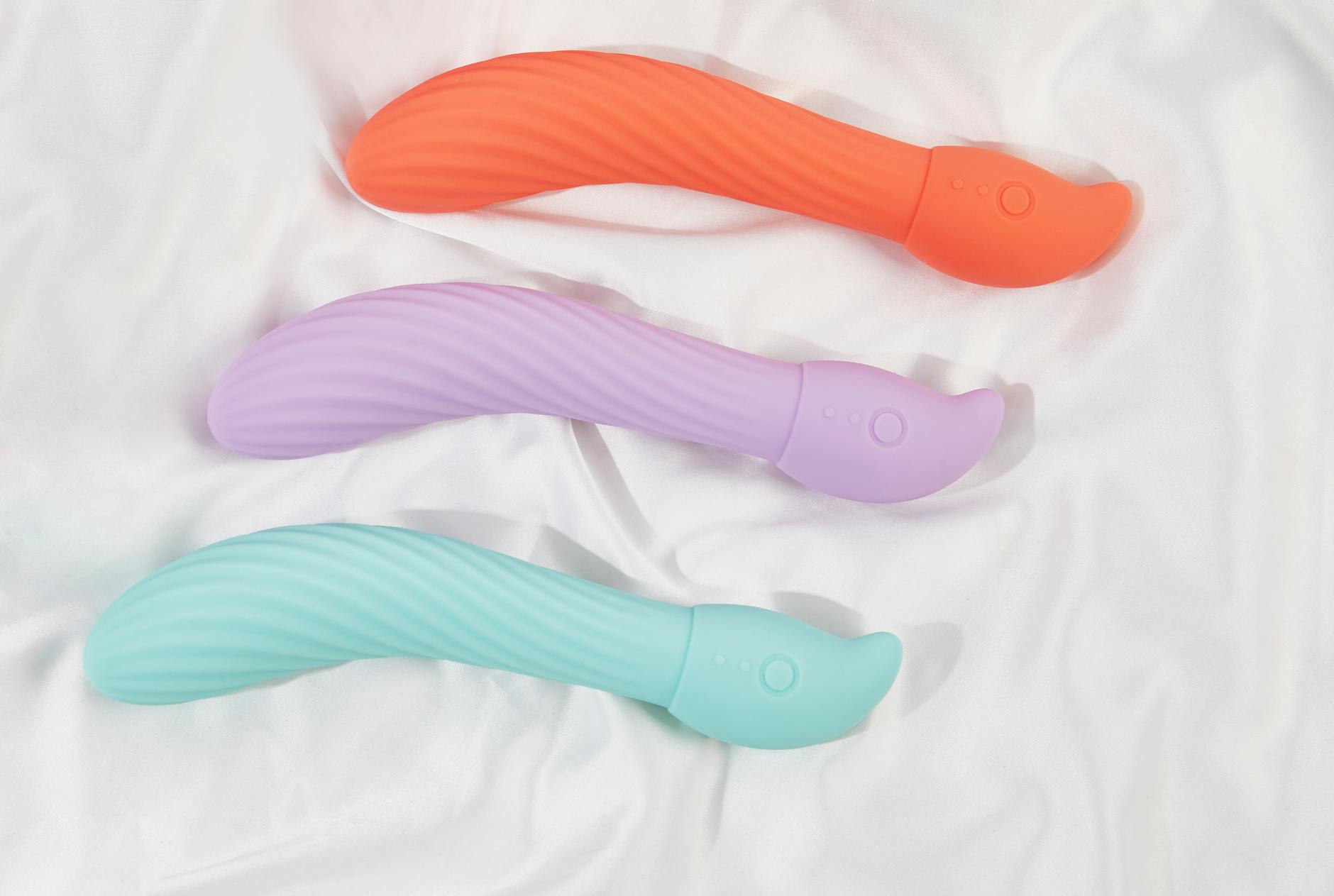
Why Lemon Vibrators Feel Different After Menopause
Let's be real: menopause changes how pleasure feels. Not whether it happens. Not whether you deserve it. But the actual mechanics shift, and most of the information out there pretends otherwise.
I work with women navigating this transition regularly. What I hear most often is some version of: "Everything feels numb" or "I used to love vibrators, now nothing works the same way." Here's what's actually happening, and why lemon clitoral vibrators have become such a game-changer for so many of my clients.
How menopause physically rewires sensation
When estrogen drops, tissue thickness changes. The vulva and vaginal wall become thinner, more delicate. Lubrication decreases not because you're broken, but because the glands that produce it respond directly to estrogen levels. Blood flow to the clitoris shifts. Arousal takes longer to build. Your pelvic floor loses some of its elastic support.
This is not permanent damage. It's a recalibration.
What doesn't change: the clitoral nerve density. The capacity for orgasm. The neural pathways for pleasure. Your brain doesn't forget how to feel good. Your body just requires different input to get there.
Why traditional vibrators often feel too intense
Most vibrators on the market use either rotational or continuous buzzing mechanisms. Both create direct, sustained friction against sensitive tissue. After menopause, that friction can feel overwhelming, even painful. The tissue is thinner. It needs gentler stimulation that doesn't rely on mechanical pressure.
That's where the design philosophy behind lemon vibrators matters. Lemon clitoral vibrators use suction and pulsing rather than direct friction. They create a sensation that mimics the natural response of blood flow to the area, without the harsh vibration that can feel abrading on post-menopausal tissue.
It's not that your body has stopped responding. It's that it's responding to a different kind of input now.
The suction advantage for sensitive post-menopausal tissue
Suction-based stimulation works by creating a gentle pulse around the clitoris rather than pressing against it. For women navigating tissue sensitivity after menopause, this is significant. The lem vibrator, for instance, uses air-pulse technology that doesn't require the kind of direct pressure that can feel uncomfortable.
One client described it like this: "It's not aggressive. It feels like something is actually happening, but it doesn't hurt." That distinction matters. After menopause, sensation becomes more nuanced. You're not numb. You're just differently sensitive.
Lemon sexual toys designed with this mechanism allow arousal to build more gradually and comfortably. There's no need to grit your teeth through discomfort to get to pleasure.
Arousal timeline shifts: why patience matters more
Before menopause, many women could reach peak arousal in 5 to 10 minutes. After menopause, that window expands. Fifteen to twenty-five minutes becomes normal. This isn't a flaw. It's actually an opportunity.
The research is clear on this: longer arousal periods often lead to more intense, full-body orgasms. Your brain has time to fully engage. Sensation builds. You're not rushing.
When you're using lemon clitoral vibrators designed with this timeline in mind, the pulsing pattern encourages this gradual build rather than forcing a peak. You're working with your body's new rhythm instead of against it.
Lubrication becomes a tool, not a sign of failure
This is important: using lubricant after menopause is not admitting defeat. It's using a basic tool that makes the experience better. Full stop.
Water-based lubricant works beautifully with lemon adult toys because it reduces any remaining friction while the suction mechanism does its work. Many women find that this combination—lube plus air-pulse vibrator—creates the most satisfying sensations they've experienced in years.
Think of lube as removing an unnecessary variable. Your body has already adjusted to lower natural lubrication. Why add friction on top of that? You're not broken. You're just being smart about your setup.
The emotional component often overlooked
Menopause doesn't just change your body. It changes your context. Children often leave home. Work pressure shifts. Long-term partnerships either deepen or show cracks. Grief arrives in unexpected forms.
When pleasure changes, the instinct is to blame hormones. Sometimes it's hormones. Often it's the weight of everything else landing at the same time. I've worked with many women who discovered that once they addressed the emotional landscape, physical sensation came roaring back.
Using a device like a lemon clitoral vibrator can actually help here. Solo pleasure is one of the clearest ways to recalibrate what your body is capable of without the pressure of a partner's expectations. You can take time. You can explore. You can build trust with your own body again.
Why lemon vibrators specifically work better than buzz-heavy alternatives
The lemon-shaped design isn't just clever branding. The form factor matters. The wider surface area allows the suction cups to work effectively without requiring exact positioning. The shape fits naturally in your hand. The ergonomics mean less fussing, more focus on sensation.
Combine that with the fact that lemon clitoral vibrators use air-pulse technology rather than traditional buzzing, and you have a device engineered for tissue that's become more delicate and sensation that's become more complex.
After menopause, that matters.
The adjustment period is real and normal
If you've been using traditional vibrators for decades, switching to a lemon vibrator might feel strange at first. The sensation is different. The rhythm is different. That doesn't mean it's wrong. It means your nervous system is learning something new.
Give yourself three to five sessions before deciding if it works for you. Let your body adjust. Arousal might build differently. Orgasms might feel different in texture, intensity, or timing. All of that is normal.
What to expect when you start exploring post-menopausal pleasure
You might discover that your favorite positions don't work the same way anymore. Your timeline might be longer. What used to feel amazing might feel overwhelming. And here's what often surprises women: you might find sensations you didn't even know were available.
Many clients report that post-menopausal orgasms are somehow richer. Not faster or stronger necessarily, but more psychologically present. You're not distracted by fertility concerns or hormonal chaos. You're just there.
That's the gift in this transition, if you're willing to explore it.
Practical setup for success with lemon sexual toys
Three simple things: time, lubrication, and patience.
Time means not rushing. Set aside twenty minutes minimum. Lubrication means using it generously. A water-based lube designed for sensitive skin pairs beautifully with lemon sexual toys and helps reduce any remaining friction. Patience means letting your body respond at its own pace, especially in the first few months after menopause when everything is still shifting.
With those three elements in place, most women find that pleasure doesn't diminish post-menopause. It transforms.
Frequently Asked Questions
Why do lemon clitoral vibrators work better for post-menopausal bodies?
Lemon clitoral vibrators use air-pulse or suction-based technology rather than direct vibration, which reduces friction against thinner, more sensitive tissue. The mechanism creates a pulsing sensation that mimics natural arousal response without harsh mechanical pressure. Traditional vibrators often feel too intense post-menopause because they rely on continuous buzzing or rotation against tissue that's become more delicate.
How long does it take to feel pleasure differently after menopause?
Tissue changes happen gradually over about a year post-menopause, though the most noticeable shifts occur in the first six months. Your arousal timeline, orgasm intensity, and overall sensation will continue adjusting. That said, pleasure itself doesn't disappear. It shifts and often deepens once you adjust your approach. Using tools designed for post-menopausal bodies, like lemon vibrators, speeds up this adjustment significantly.
Is using lubricant after menopause a sign something's wrong?
No. It's a practical tool. Lower estrogen means less natural lubrication, which is purely physiological, not pathological. Water-based lubricant eliminates friction so you can focus on sensation rather than discomfort. Most women find that lube plus a device like a lemon sucker creates more satisfying experiences than struggling without it. You're not compensating for failure. You're optimizing your setup.
Can you still have orgasms after menopause?
Yes. The clitoral nerve density doesn't change. The neural pathways for pleasure don't disappear. What changes is how quickly you reach arousal and possibly the texture or intensity of orgasm. Many women report their most satisfying orgasms come after menopause because they're not rushed and they're not clouded by fertility anxiety. The capacity is absolutely there. Sometimes the delivery mechanism just needs adjustment.
What if my partner notices the change in my arousal timeline?
Communicate directly. Separate the conversation about your changing body from the conversation about your relationship. "My body responds differently" is not the same as "I don't want you anymore." Most partners respond well when they understand it's a physiological shift, not a reflection of attraction. Many couples actually use this transition as a reset point to explore together in a way they hadn't before. Longer arousal can mean more quality time, more connection, more presence.
Should I see a doctor if pleasure feels completely different after menopause?
Yes, if pain accompanies the change. Genitourinary syndrome of menopause (GSM) is common and highly treatable. Topical estrogen creams, moisturizers, and systemic hormone therapy are all available options. If pain-free sensation is just different rather than absent, you likely don't need medical intervention. But if pleasure has completely vanished and desire has disappeared, a menopause-trained provider can assess whether low testosterone or other factors are at play. Many women benefit from treatment. It's worth exploring.
Menopause isn't the end of your sexual life. For many women I work with, it's the chapter where pleasure finally becomes simple. You're not managing hormonal chaos. You're not worried about pregnancy. You're just present with sensation. Tools like lemon vibrators and lemon sexual toys are designed specifically for this phase of your body's life.
If you're navigating this shift and want support, reach out. We're here to help you rebuild confidence and pleasure during this transition.